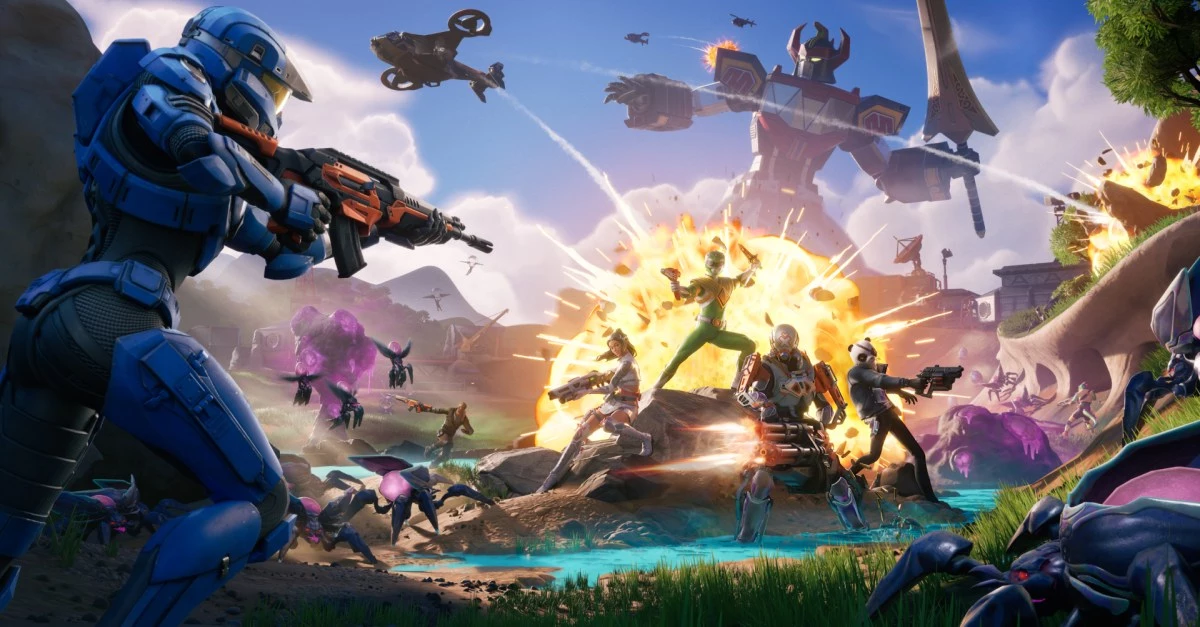

Fortnite’s Metamorphosis: From Battle Royale to Creator-Driven Marketplace
Epic Games has set the stage for a profound transformation of Fortnite, reimagining its flagship title not as a mere game, but as a programmable, multi-sided platform. This December, a new era begins: island creators will be empowered to sell bespoke virtual items directly to players, retaining the full “V-Bucks value” of their sales through 2026—a bold, time-limited offer that signals Epic’s intent to catalyze a creator economy at unprecedented scale. After this promotional window, creators will still keep roughly half of their revenues, a split that remains highly competitive in the digital marketplace.
This shift is more than a financial recalibration; it is a reengineering of Fortnite’s very DNA. By layering on a Roblox-style marketplace atop its 100-million-plus monthly active users, Epic is betting that the gravitational pull of user-generated content (UGC) will not only drive engagement but also unlock new vectors for profitability and platform resilience.
The Strategic Architecture: Infrastructure, Incentives, and the Network Flywheel
Epic’s pivot is rooted in a deliberate reframing of Fortnite—from a single intellectual property into a programmable substrate for digital creation. This move leverages Epic’s considerable investments in servers, anti-cheat infrastructure, and moderation, transforming these sunk costs into defensible platform moats. The company is, in effect, converting its operational backbone into a springboard for a new generation of micro-entrepreneurs.
Key pillars of this strategy include:
- Promotional Revenue Share: The “100%-through-2026” split is an aggressive customer acquisition cost (CAC) play, outpacing Apple’s 70/30 and Roblox’s ~28% creator share. This is not just generosity; it is a calculated lure for professional studios and solo creators alike, incentivizing migration and experimentation within Fortnite’s ecosystem.
- Sponsored Discovery and Community Messaging: Paid “sponsored rows” in discovery, coupled with a new community messaging layer, grant creators tools to amplify their reach and foster direct engagement. This dual-pronged approach mimics the stickiness of Discord while keeping players—and their data—firmly within Epic’s walled garden.
- Unreal Editor and Verse-Based APIs: By democratizing access to advanced tooling and expressive scripting languages, Epic lowers the technical barriers for creators. These enhancements not only accelerate UGC production but also cultivate a pipeline of talent for the broader Unreal Engine ecosystem, quietly expanding Epic’s influence beyond gaming.
Competitive Dynamics and the Evolving Digital Economy
Fortnite’s demographic advantage is subtle but significant. Its player base skews older than Roblox’s, offering fertile ground for aging Gen-Z gamers seeking richer, Unreal-powered experiences. As digital tastes mature, Epic’s platform provides a natural migration path for those outgrowing “blocky” aesthetics, positioning Fortnite as the next logical destination for UGC innovation.
The introduction of direct creator payouts—circumventing the friction and fees of external app stores—serves as both a strategic hedge and a competitive differentiator. In a landscape where Epic continues to challenge Apple and Google’s in-app payment regimes, internalizing the V-Bucks economy grants the company greater control over margins and user experience.
For brands, the implications are equally profound. The ability to embed and monetize branded virtual goods within themed islands transforms Fortnite into a high-fidelity venue for experiential commerce. Early adopters in digital marketing—Nike, Coca-Cola, and others—now have a measurable conversion funnel that bridges media spend and e-commerce, potentially siphoning budgets from traditional advertising channels.
Implications for Stakeholders: Studios, Brands, Investors, and Regulators
The ripple effects of Epic’s platform pivot are already being felt across the industry:
- Enterprise Game Studios gain option value by porting Unreal assets into Fortnite, unlocking incremental revenue streams and de-risking new concepts before full-scale launches.
- Consumer Brands can now experiment with branded virtual goods, linking attention directly to transaction within immersive, themed environments.
- Competing Platforms face mounting pricing pressure. Epic’s aggressive revenue share will likely force Roblox, Meta Horizon, and others to revisit their splits or enhance their toolsets to retain top creators.
- Investors are watching for a margin inflection point as Epic transitions from pure engagement payouts to transaction-based economics—a shift that promises improved unit economics and reduced cash burn per user.
- Regulators will inevitably scrutinize the rise of digital labor and cross-border tax obligations, as creator earnings in virtual economies become both material and global.
Signals to monitor include the uptake of the sponsored discover row—an early indicator of marketplace health—and the share of playtime devoted to UGC. Should user-generated content surpass the 50% threshold, Fortnite’s evolution from game to platform will be all but complete, demanding new governance models and regulatory frameworks.
Epic’s latest gambit is not merely about selling skins or emotes; it is about asserting architectural control over a nascent metaverse. By front-loading creator economics, integrating programmable tooling, and introducing paid discovery, the company is constructing a self-reinforcing ecosystem—one that could redefine the competitive landscape of user-generated gaming platforms and, perhaps, the future of interactive media itself.

 By
By

 By
By
 By
By
 By
By


 By
By