
The Evolution of Rugged Storage: LaCie SSD4’s Leap into the Mobile Creative Era
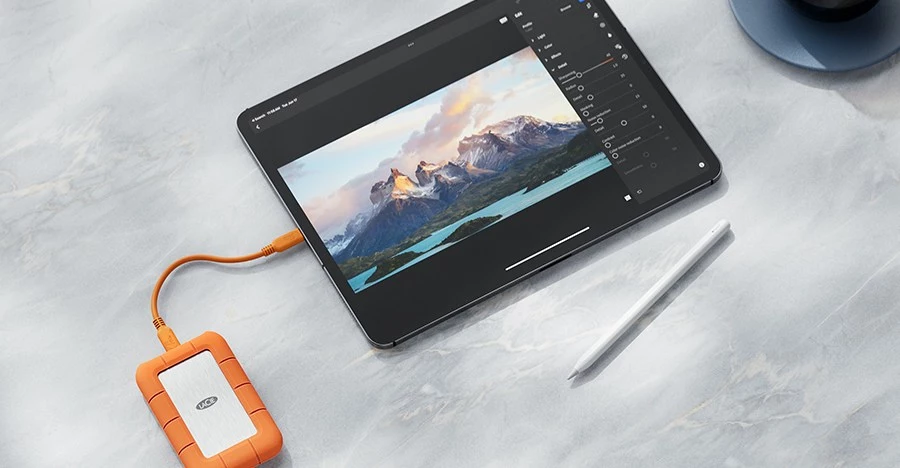
Seagate’s unveiling of the LaCie Rugged SSD4 marks a pivotal moment in the ongoing transformation of portable storage. The new drive, available in 1 TB, 2 TB, and 4 TB capacities, is not merely a spec bump; it is a strategic response to the shifting tectonics of content creation, connectivity, and device convergence. At street prices of $135 to $480, the SSD4 is engineered for a generation of creators who demand both velocity and resilience—qualities that have become non-negotiable in the age of mobile-first, high-resolution video capture.
The signature “orange bumper” design persists, but beneath that familiar exterior, the SSD4 is a study in purposeful refinement. Its brushed-aluminum chassis and centrally positioned USB-C port are more than aesthetic choices; they are the result of a deliberate effort to optimize thermal dissipation and electrical efficiency. The result: peak sequential read speeds of 4 GB/s and write speeds of 3 GB/s—doubling the throughput of its predecessor and placing it in a league of its own among mainstream rugged drives.
Performance and Engineering: Meeting the Demands of Modern Content Creation
The SSD4’s technical prowess is not an isolated achievement; it is a direct response to the evolving realities of field production. As USB 4 and Thunderbolt 3 interfaces proliferate across laptops, tablets, and even smartphones, the bottleneck is no longer the port, but the storage device itself. The SSD4’s 4 GB/s ceiling aligns perfectly with USB 4’s real-world bandwidth, delivering a near-internal-SSD experience for mobile editors and videographers—without the compromises of NVMe enclosures or external power.
- Thermal Management: The central port placement shortens the PCB trace to the controller, reducing impedance and boosting sustained write performance. The aluminum shell acts as a passive heatsink, crucial for handling the relentless data rates of 4K and 8K ProRes video ingestion.
- Ruggedization: With an IP54 rating and a drop tolerance of approximately 10 feet, the SSD4 is built for the unpredictable environments that define modern content capture—whether that’s a windswept beach or a bustling city street.
- Workflow Integration: Certification for 4K 120 fps ProRes capture on USB-C iPhones positions the SSD4 squarely within the “phone-as-camera” revolution, a trend accelerated by Apple’s aggressive push into professional-grade mobile video.
Market Dynamics: Navigating the New Economics of Flash Storage
Seagate’s timing is no accident. The global NAND market is in a trough, with 3D TLC NAND prices hovering 35% below late-2022 peaks. By leveraging this cost advantage, Seagate can bundle high-performance flash with premium ruggedization—defending margins even as commodity storage prices erode. The strategic elimination of the 500 GB SKU is telling: creative professionals routinely generate 50–100 GB of footage per hour, rendering sub-terabyte drives obsolete and unprofitable.
- Competitive Differentiation: The SSD4’s 4 GB/s throughput dwarfs the 2 GB/s ceilings of rivals like Samsung’s T9 and SanDisk’s Extreme Pro. By bifurcating its lineup—SSD4 at 4 GB/s, SSD Pro5 at 6.7 GB/s—LaCie creates a two-tier performance ladder that competitors have yet to match.
- Channel Strategy: For retailers catering to creators, the simplified capacity mix and higher average selling prices promise improved inventory turns and better margins. The inclusion of bundled services, from data recovery to Adobe Creative Cloud trials, further cements ecosystem loyalty.
Strategic Implications: Preparing for the Next Wave of Content and Connectivity
The LaCie Rugged SSD4 is more than a product; it is a harbinger of how storage vendors are repositioning for a future defined by mobile UHD capture, ubiquitous high-bandwidth connectivity, and the convergence of hardware and services. As external SSDs increasingly supplant traditional shuttle drives and on-site SAN ingest, organizations must recalibrate their field kits and procurement strategies.
- Workflow Convergence: The rise of USB 4 across devices means rugged, bus-powered SSDs are rapidly becoming the standard for distributed content operations.
- Security and Compliance: While IP54 is adequate for most creative environments, sectors like defense and energy may require supplemental protection or higher-rated SKUs; data-at-rest encryption should be scrutinized for regulatory compliance.
- Sustainability Considerations: The move toward brushed-aluminum, potentially recyclable enclosures hints at a broader ESG narrative, though formal life-cycle assessments remain forthcoming.
Looking ahead, the advent of spatial video and the swelling bit-rate requirements of next-generation media will only amplify the need for ultra-fast, resilient storage. The SSD4’s launch is an early signal: performance-tier differentiation is the new battleground in portable storage. For technology and business leaders, the message is clear—align roadmaps, partnerships, and procurement with this accelerating shift, or risk being left behind in the wake of the mobile content revolution.

 By
By
 By
By
 By
By
 By
By
 By
By