
The Distributed Newsroom: A Blueprint for 24/7 Knowledge Work
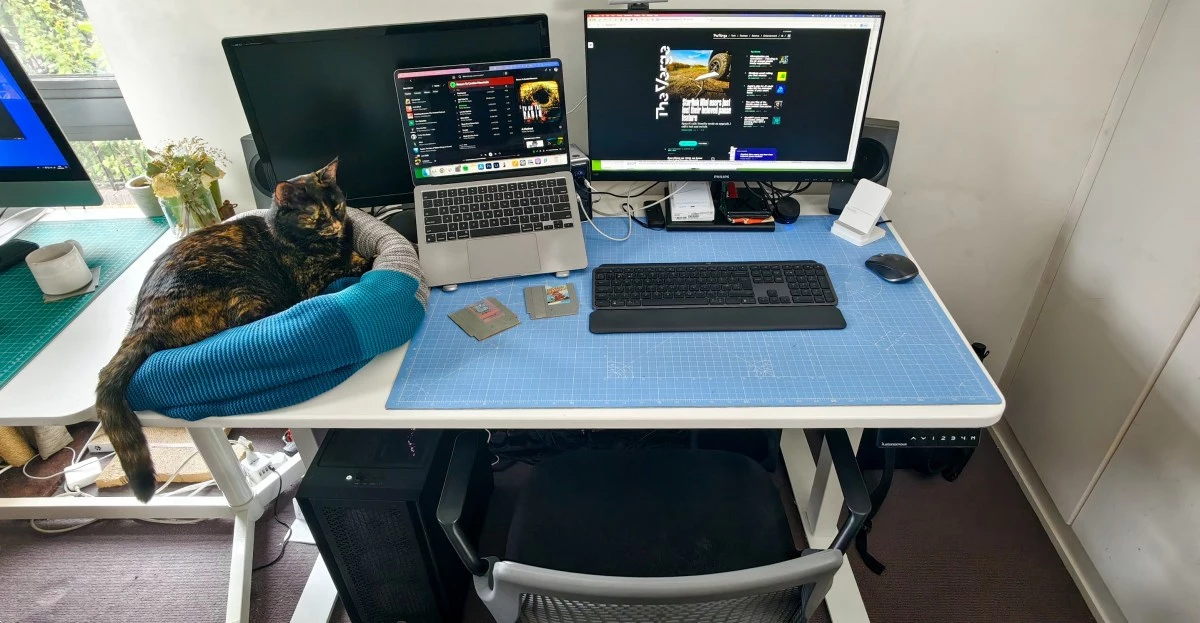
In the heart of London, Dominic Preston’s home office is more than a personal workspace—it is a living experiment in the future of distributed knowledge work. As a news editor at The Verge, Preston’s UK-morning shift extends the publication’s reach well beyond the confines of U.S. time zones, embodying the “follow-the-sun” model that is quietly transforming not only media but a swath of global enterprises. Unlike traditional shift work, this approach leverages geographic diversity to deliver continuous coverage and analysis, compressing the time from insight to action.
For organizations, this distributed model offers a compelling economic logic: by shifting decision rights and responsibilities to satellite teams, companies can reduce the marginal costs associated with overnight staffing, while accelerating responsiveness. The strategic placement of teams—London for APAC late evenings and early U.S. mornings, for instance—enables faster content cycles, securing early SEO advantages and premium ad inventory. The implications are clear: performance metrics must evolve, prioritizing latency eliminated over hours logged, and empowering high-autonomy pods to operate as agile centers of execution.
Consumerization of the Professional Tech Stack: From Desk to Device
Preston’s hardware arsenal—a sleek M2 MacBook Air, Logitech MX peripherals, Brio webcam, and an Autonomous standing desk—reflects a broader trend: the consumerization of enterprise technology. Today’s knowledge workers demand tools that are as intuitive and powerful as those they use at home, blurring the line between personal and professional gear. The benefits are tangible: commodity pricing yields significant cost savings, but introduces new complexities in lifecycle management and security.
The proliferation of unreleased Android devices on Preston’s desk highlights the reality of bring-your-own-device (BYOD) culture. For security leaders, this means adapting to a landscape where heterogeneous firmware and beta operating systems are the norm, not the exception. As sustainability considerations rise, the move toward energy-efficient, space-saving hardware—such as consolidating to a single 4K display—offers both ecological and economic incentives, especially when scaling remote work environments.
Niche Expertise, Micro-Brands, and the Newsletter Economy
Preston’s editorial focus on Android phones “never sold in the U.S.”—from Vivo to Fairphone—signals a shift in the epicenter of mobile innovation. Markets in India, Southeast Asia, and eco-conscious corners of Europe are now the crucibles where new features and form factors emerge. For device manufacturers, carriers, and component suppliers, early coverage in English-language outlets accelerates market intelligence and informs product roadmaps, even before formal U.S. entry.
But Preston’s influence extends beyond journalism. By curating both The Verge Daily and his own food newsletter, Braise, he exemplifies the dual-monetization model: leveraging the reach of a corporate platform while cultivating a personal micro-brand. Newsletters, with open rates far surpassing social media engagement, have become powerful vehicles for first-party data and audience loyalty. For employers, this trend is double-edged—talent with monetizable side projects command greater bargaining power, but also offer opportunities for co-marketing and expanded reach if managed astutely.
Analog Pursuits as a Counterbalance to Digital Saturation
Amid the relentless hum of digital notifications, Preston’s analogue-adjacent hobbies—film photography, tabletop gaming, and the company of pets—offer a restorative counterweight. These pursuits are not mere diversions; they are strategic acts of cognitive load management. Emerging HR analytics suggest that employees who engage in such analogue activities exhibit lower burnout risk and enhanced creative output, metrics that are increasingly valued in high-performance organizations.
Forward-looking companies are responding by institutionalizing support for these practices: micro-stipends for analogue gear, board game club budgets, and wellness initiatives that recognize the value of unplugging. These investments, modest in scale, yield outsized returns in talent retention and reduced healthcare costs.
—
Dominic Preston’s workspace, at first glance idiosyncratic, is in fact a microcosm of seismic shifts in how value is created in the knowledge economy. Distributed teams, consumer-grade agility, niche expertise, and analogue revival—these are not isolated trends, but interlocking gears in a new machinery of work. Organizations that orchestrate these elements with intention will find themselves not only more resilient, but fundamentally better positioned to thrive in a world where the boundaries of time, space, and expertise are being redrawn in real time.

 By
By
 By
By
 By
By
 By
By



 By
By