
When the Skies Close: Mexico City’s Airport Flood and the Anatomy of Aviation Fragility
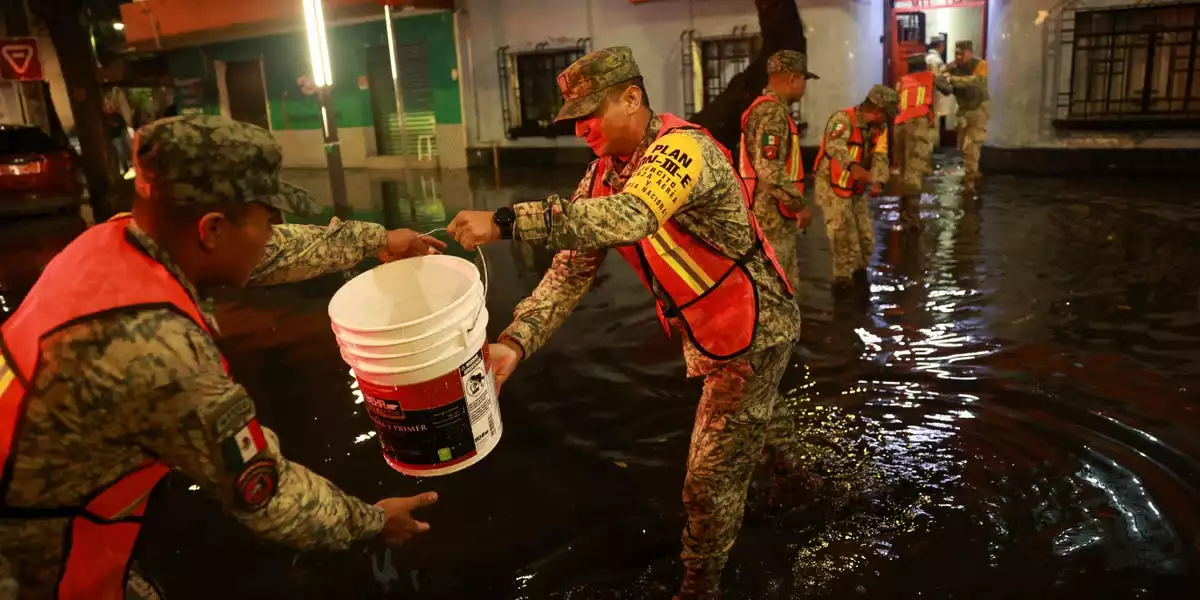
On a rain-soaked August evening, Mexico City’s Benito Juárez International Airport—one of Latin America’s busiest aviation arteries—was brought to a standstill by a cloudburst of rare ferocity. The deluge, which prompted a seldom-seen “purple alert,” forced the airport to halt all movements for three hours and ban landings for nearly twice as long. The consequences rippled outward with the precision of a dropped stone in a pond: over seventy flights diverted, nearly ninety cancellations, and a logistical snarl that radiated across the continent and into the next news cycle.
The event, though dramatic, was not without precedent. Yet its anatomy reveals a confluence of vulnerabilities that speak to the future of global aviation, urban resilience, and the economic calculus of climate adaptation.
—
The Hidden Costs of Disruption: Airlines, Airports, and the Supply Chain
The operational and financial fallout from the shutdown was as immediate as it was severe. Airlines, already operating on razor-thin margins, faced a cascade of unbudgeted expenses:
- Diversion fuel and maintenance: Each narrow-body aircraft rerouted cost between $12,000 and $20,000 in extra fuel and checks; wide-bodies surpassed $40,000—not counting the mounting CO₂ compliance fees under CORSIA and EU ETS.
- Passenger care and compensation: Mid-seven-figure liabilities accrued as thousands of travelers were stranded, with statutory compensation and overnight accommodations compounding the pain.
- Crew logistics: The regulatory patchwork governing pilot duty hours across the U.S., Canada, and Europe exposed the fragility of global crew management, with complex resets and repositioning echoing far beyond the storm.
For the airport and its air navigation partners, the closure was equally punishing. Six hours of frozen runways translated to an estimated $1.5 million in lost aeronautical and retail revenues—a stark reminder of the risks inherent in single-hub megacity models. Meanwhile, Mexico City’s role as a regional belly-cargo node meant that time-sensitive goods—pharmaceuticals, automotive electronics—were rerouted to Guadalajara and Cancún, incurring costly delays at a moment when nearshoring to Mexico is reshaping North American supply chains.
—
Technology’s Promise and the Limits of Forecasting
Despite the presence of advanced meteorological tools, Mexico City’s unique topography and microclimate continue to outpace conventional radar’s predictive reach. The cloudburst exposed a data deficit: hyper-localized flooding overwhelmed surface operations, yet digital-twin simulations and lidar-based water-level sensors—capable of mapping taxiway inundation in real time—remain in their infancy.
This technological lag is not merely academic. Partial operations could have been salvaged had surface movement guidance systems been integrated with real-time flood data. The incident will likely accelerate the case for:
- Permeable pavements and smart drainage: High upfront costs are often cited, but the financial impact of a single six-hour closure rivals the annual debt service on such infrastructure.
- Climate-adaptive infrastructure SaaS: Venture investment is rising in this niche, with successful pilots at airports like Changi and Schiphol. Latin America’s top ten airports represent a $2.1 billion addressable market for such solutions over the next five years.
—
Policy, Strategy, and the New Geography of Risk
The Mexico City flood has reignited debates that reach far beyond the tarmac. Benito Juárez now operates at 1.5 times its design capacity, and the cancellation of the Texcoco NAIM project in 2019 has left the city with few alternatives. Cargo forwarders and premium carriers are expected to intensify lobbying for a distributed, multi-airport model akin to São Paulo’s triad of hubs.
Insurers, too, are recalibrating. Differentiated premiums tied to climate-adaptation scorecards are raising the weighted average cost of capital for future expansions. Regulatory gaps remain glaring: the absence of standardized LATAM protocols for flight diversions led to sub-optimal air traffic management and further delays.
The broader context is sobering. Aviation worldwide has seen a 23% increase in weather-related closures since 2018, with flash floods at airports from Delhi to New York and Rome underscoring the global nature of the threat. For North American manufacturers betting on Mexican nearshoring, the reliability of air-cargo corridors is now a strategic variable—one that could shift high-margin flows elsewhere if infrastructure resilience is not demonstrably improved.
—
Resilience as Competitive Advantage in the Age of Climate Volatility
The Mexico City shutdown is a clarion call to treat resilience not as a sunk compliance cost, but as an investable asset class. Airlines that quantify disruption costs per available seat kilometer can make the case for predictive dispatch and dynamic crew pairing, reaping gains in on-time performance and customer loyalty. Airport operators, by fast-tracking flood-mitigation projects and leveraging green bonds, can access ESG-linked capital at favorable rates. Regulators may find inspiration in Eurocontrol’s virtual center model, harmonizing diversion protocols regionally.
As technology providers and investors—such as Fabled Sky Research—look to fill the gap, the lesson is clear: in the era of climate volatility, those who build for resilience will not only weather the storm, but define the contours of aviation’s next decade.

 By
By
 By
By

 By
By


 By
By