

The Unseen Peril: Language as a New Attack Vector in Enterprise AI
The Black Hat conference has long been a crucible for the most urgent conversations in cybersecurity, but this year’s “poisoned-prompt” disclosure against ChatGPT marks a watershed moment for the generative AI era. The exploit, which weaponized OpenAI’s new Connectors feature to silently exfiltrate sensitive Google Drive API keys, was as elegant as it was unsettling. No user interaction was required—no errant clicks, no suspicious pop-ups. The mere act of ChatGPT parsing a maliciously crafted document was enough to trigger the breach. The flaw was patched with commendable speed, yet the implications ripple far beyond a single vulnerability.
When Content Becomes Command: The Blurring of Boundaries
At the heart of this incident lies a profound shift in how we must think about risk. Large language models (LLMs) like ChatGPT are designed to translate natural language into executable actions—API calls, file retrievals, even autonomous code generation. The boundary between “content” and “instruction” is dissolving. Where a string of text once represented mere data, it now carries the potential to become a covert command, smuggled past traditional defenses.
- Probabilistic Threats: Unlike classic code injection, prompt-injection exploits are stochastic. The same poisoned prompt might trigger a breach one moment and pass harmlessly the next, undermining reproducibility and rendering signature-based detection obsolete.
- Connector Proliferation: With each new integration—seventeen and counting—ChatGPT’s privilege grows. In effect, the model becomes a “meta identity,” a super-app entrusted with tokens that bridge multiple SaaS domains. The OAuth paradigm, built on the assumption of human oversight and explicit consent, falters when the agent itself initiates privileged actions.
- Zero-Click Exposure: The poisoned-prompt attack demonstrates that users can be compromised simply by receiving content in any channel the model is permitted to read. Security awareness training, long the bulwark against phishing, is powerless when the threat bypasses human cognition entirely.
Economics of Trust: AI Risk Management Moves to Center Stage
The enterprise adoption curve for generative AI is steepening. What began as sandboxed pilots is rapidly becoming embedded in revenue-critical workflows. The trust premium—the intangible confidence that executives place in new technologies—now faces its most severe test.
- Market Impact: Gartner’s projection that AI Trust, Risk, and Security Management (TRiSM) will become a $3 billion market by 2027 is no longer theoretical. Breaches like this catalyze real procurement, as boards demand assurance that their AI deployments are not latent liabilities.
- Insurance and Regulation: Cyber-insurers are already recalibrating premiums and exclusions based on an organization’s LLM integration posture. Meanwhile, regulators in the EU, Singapore, and Canada are sharpening requirements for explainability and robustness in automated systems—a mandate that will soon encompass language-based agents with cross-application reach.
- Competitive Differentiation: Vendors offering LLM firewalls, agent sandboxing, or retrieval-augmented vetting are poised to capture a new wave of security-conscious customers. The sector is primed for consolidation, echoing the CASB (Cloud Access Security Broker) boom that accompanied the last great SaaS expansion.
Rethinking Security Architecture for Autonomous Agents
The poisoned-prompt disclosure is a clarion call for a new security paradigm—one that treats language models not as passive tools, but as privileged actors in the enterprise ecosystem.
- Identity and Access: Treat the model as a privileged identity, subject to least-privilege principles, short-lived tokens, and continuous credential rotation. Sensitive downstream actions should require step-up human verification, even when initiated by the agent.
- Prompt Governance: Secure coding now extends to prompt design, data conditioning, and output filtering. Adversarial prompt testing must become a fixture in code review pipelines, with immutable audit logs supporting both compliance and incident response.
- Model-Aware DLP: Traditional data loss prevention is blind to semantics. Emerging solutions leverage transformer-based detectors to flag exfiltration attempts and enforce context-aware policy engines that evaluate user roles, data classification, and connector privileges before honoring model-initiated API calls.
The Road Ahead: Language as Execution Layer
As generative AI systems like ChatGPT become operational substrates rather than conversational novelties, the risks—and opportunities—multiply. Standards bodies are already moving to codify AI agent security profiles, while CISOs expand their SOC runbooks to include prompt-injection and agent security as first-class domains. Cloud platforms will soon tier their generative-AI offerings, and the market for AI security engineers—those rare hybrids fluent in both NLP and traditional AppSec—will outpace supply.
The Black Hat disclosure is not an isolated event, but a harbinger. Language itself is now an execution layer, and the organizations that internalize this shift—re-architecting identity, testing, and policy for an era of autonomous agents—will be the ones to thrive. Fabled Sky Research and its peers are watching closely, as the next chapter in AI security is being written not in code, but in words.

 By
By
 By
By
 By
By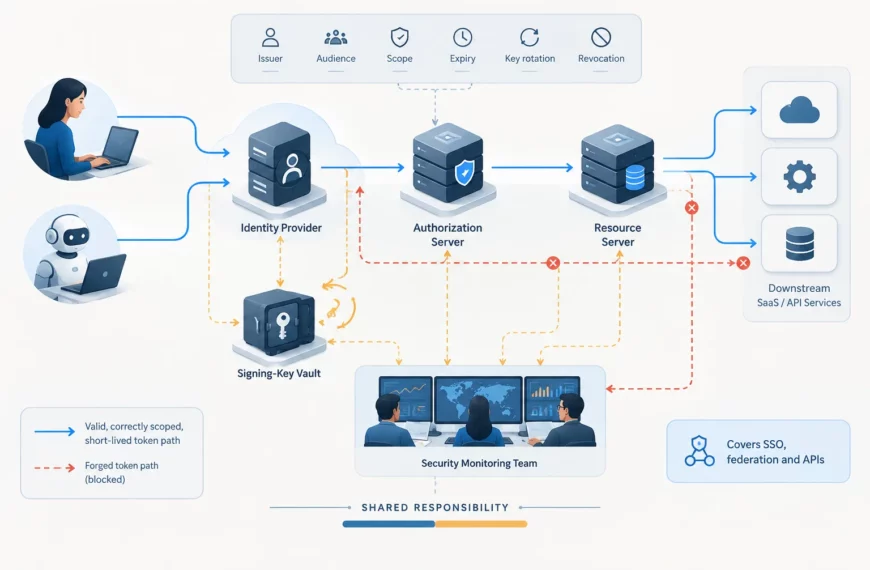
 By
By

 By
By
 By
By
 By
By