
Tesla’s Ride-Hailing Pivot: Navigating the Divide Between Vision and Regulation
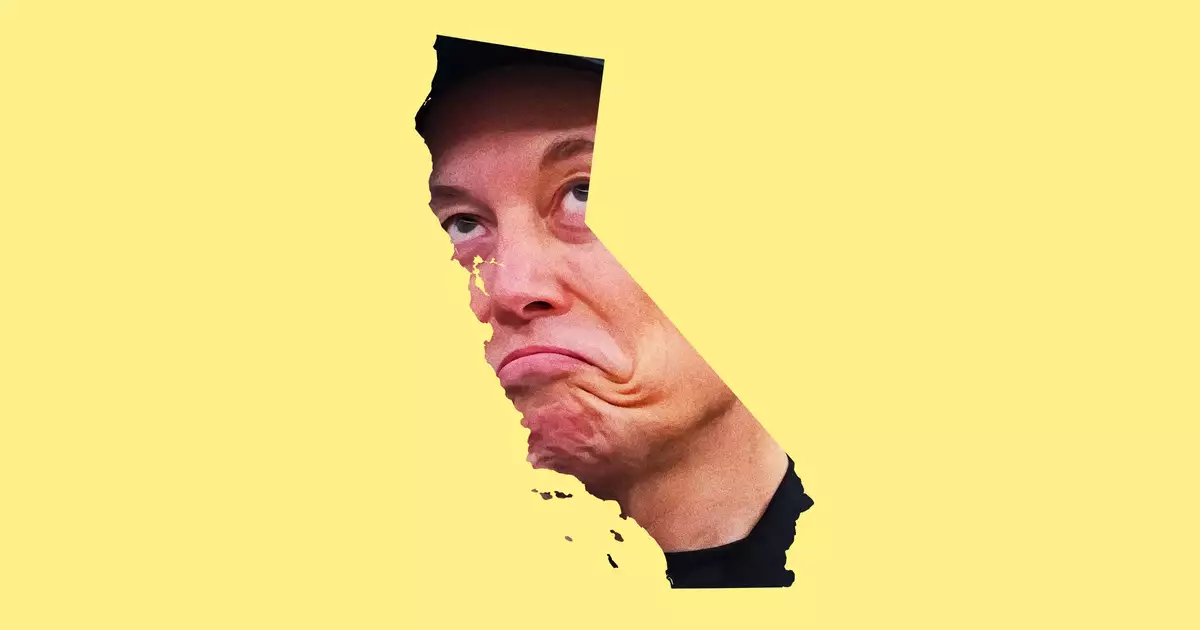
Tesla’s latest foray into the ride-hailing market—launching a paid pilot in San Francisco—marks a telling inflection point for the company and, by extension, for the autonomous vehicle (AV) sector at large. Once the vanguard of “robotaxi” bravado, Tesla now finds itself threading a regulatory needle, its ambitions tempered by the realities of both technology and oversight. The result is a pilot program that, for all its futuristic branding, is rooted firmly in the present: every vehicle is piloted by a human driver, the same “Full Self-Driving” (FSD) beta stack hums beneath the surface, and the word “robotaxi” is nowhere to be found in official communications.
The Technological Plateau: Ambition Meets Edge Cases
Tesla’s admission that its ride-hailing fleet runs on the consumer FSD beta—software regulators do not recognize as autonomous—signals a sobering plateau in the company’s technological trajectory. The requirement for a human supervisor in every car is not a mere regulatory box-check; it is an implicit acknowledgment that the system lacks the robust fallback maneuvers and safe-state handling required for Level 4 autonomy. Where rivals like Waymo and Cruise lean on high-definition mapping and geo-fenced operational domains to mitigate edge-case risk, Tesla’s end-to-end neural network approach appears constrained by the unpredictable complexity of real-world driving.
The industry is increasingly recognizing that raw miles driven are no longer the gold standard for AV progress. Instead, the decisive differentiators are:
- Curated edge-case data
- Formal verification of safety-critical behaviors
- Regulator-approved operational design domains (ODDs)
Tesla’s data aggregation strategy, once its ace, is now hemmed in by regulatory limits on public fleet scale. Competitors, meanwhile, are amassing higher-quality operational data in tightly controlled environments, threatening to erode Tesla’s once-vaunted data moat.
Regulatory Realpolitik: From Disruption to Permission
The California Public Utilities Commission’s (CPUC) firm stance—Tesla may not transport the public in autonomous mode—reflects a broader shift in the regulatory zeitgeist. After high-profile NHTSA investigations and the GM Cruise fleet suspension, U.S. regulators are moving from reactive oversight to pre-emptive scrutiny. The result is a market where compliance, not just code, is the gating asset.
This shift has profound implications for the sector:
- Regulatory goodwill is emerging as a strategic asset, accrued by companies like Waymo and Zoox through transparent safety cases and proactive engagement.
- Brand risk looms large for Tesla, as the gap between public statements and regulatory filings exposes the company to potential securities and consumer protection liabilities.
- Litigation overhang is a persistent threat: any incident during the pilot could trigger sweeping restrictions, echoing the regulatory backlash faced by Cruise.
For Tesla, the economic calculus is shifting. The presence of a safety driver neutralizes the cost advantage that underpins the robotaxi thesis, aligning unit economics with traditional ride-hailing. Meanwhile, competitors pursue operational cost reduction through tele-operation and remote assistance—interim steps Tesla has yet to publicize.
Strategic Crossroads: Platform Play or Data Moat Dilemma?
By positioning the pilot as “like Uber,” Tesla signals a pragmatic, if temporary, platform strategy: capture demand, manage payments and routing, but outsource ultimate safety to the human driver. This echoes the early Amazon marketplace years—building a funnel before vertical integration. Yet, unlike e-commerce, mobility is a permissioned market, where regulator buy-in is the true bottleneck.
If restrictions on unsupervised operation persist, Tesla’s data advantage—long the cornerstone of its autonomy narrative—may erode. Competitors, operating in geo-fenced “green-light corridors,” are poised to accumulate richer, regulator-sanctioned datasets. The prospect of Tesla licensing external mapping or safety-validation frameworks, once anathema to its full-stack ethos, becomes increasingly plausible as capital discipline tightens.
Implications for Investors, Operators, and Policymakers
The AV market is bifurcating:
- “Green-light corridors”—where Level 4 autonomy is permitted and operationalized by players like Waymo and Zoox
- “Human-in-loop zones”—where legacy OEMs and Tesla operate supervised pilots
Capital allocation strategies must now account for region-specific payback periods and the rising importance of cost-per-validated-mile, not just fleet scale. The growing gap between marketing and regulatory messaging is creating fertile ground for compliance technologies—tools that automate safety-case generation, scenario simulation, and audit trails.
As autonomy timelines extend, the intersection with insurance and risk markets will deepen. Partnerships with insurers and telematics providers are poised to become pivotal, with new products tailored for supervised AV fleets likely to emerge.
Should regulatory friction persist, even Tesla may be forced to consider joint ventures or licensing deals to accelerate compliance—a marked departure from its historical culture, but one that may prove necessary in the maturing landscape of autonomous mobility.
Tesla’s San Francisco pilot is a microcosm of the sector’s evolution: engineering bravado now shares the stage with regulatory choreography, safety-case rigor, and capital discipline. Those who recalibrate their expectations and strategies to these new realities will be best positioned to capture the value as autonomous mobility transitions from headline promise to permitted practice.

 By
By
 By
By
 By
By
 By
By

 By
By