
Tesla’s Robotaxi Gambit: A High-Stakes Experiment in Bay Area Streets
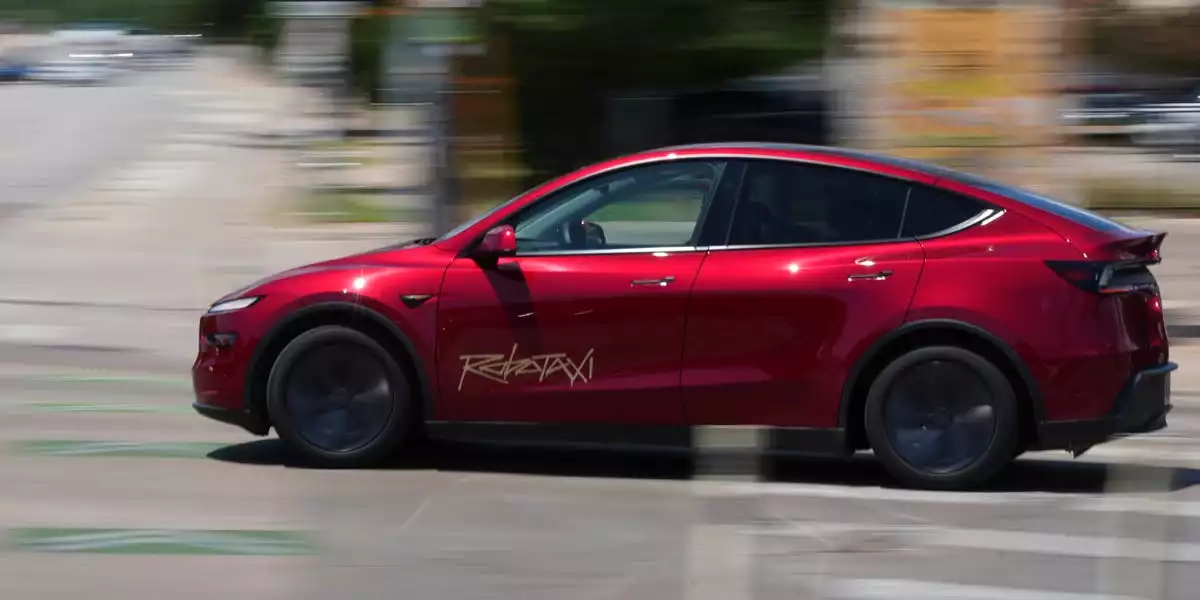
This weekend, the Bay Area becomes the crucible for Tesla’s most audacious bet yet: a safety-operator-assisted Robotaxi service, expanding on the quiet pilot that began in Austin. The fleet—modified Model Ys bristling with new cameras and high-bandwidth telematics—will ferry select riders within a tightly geofenced zone. The launch, notably absent a California DMV permit for driverless commercial operations, thrusts Tesla into a regulatory gray area, testing not only the limits of autonomous technology but also the patience and adaptability of lawmakers.
The timing is as calculated as it is fraught. Facing revenue pressure and an 8% dip in share price, Tesla’s move signals a willingness to court controversy in pursuit of a future where mobility is as much about software and data as it is about wheels and steel. Elon Musk’s ambition is clear: to scale this model nationally—and, eventually, globally—transforming the company’s revenue mix and redefining what it means to be an automaker.
The Pivot from Vision-Only: Hardware, Data, and the Edge of Autonomy
Tesla’s approach to autonomy has long been characterized by a dogmatic faith in vision-based systems. Yet the new Robotaxi fleet’s sensor suite—augmented with additional cameras and robust telecom stacks—marks a subtle but significant departure. This pivot toward a hybrid sensor philosophy, echoing the early days of Waymo, acknowledges the complexity of urban driving and the necessity of richer perception data at scale.
- Incremental Autonomy: By deploying safety operators, Tesla mirrors the staged rollouts of its competitors, collecting invaluable edge-case data while assuaging public-safety concerns. Each mile driven under human supervision feeds the company’s proprietary AI inference stack, accelerating the refinement of its Full Self-Driving (FSD) software and the utilization of the Dojo supercomputer.
- Vertical Integration: Factory-level retrofitting of these vehicles in Austin compresses iteration cycles and reduces costs, a testament to Tesla’s relentless pursuit of efficiency. The resulting data flywheel—where every trip strengthens the autonomy stack—may prove to be the company’s most formidable moat.
Economic Stakes and Competitive Tensions
The economics of autonomy are tantalizing. Once driver costs are eliminated, Robotaxi margins could eclipse even Tesla’s current industry-leading vehicle margins, with targets north of 25%. Yet the interim phase—where safety operators remain behind the wheel—reintroduces labor expenses, tempering near-term profitability. The real prize lies in Mobility-as-a-Service (MaaS): a diversified, recurring revenue stream that could insulate Tesla from the cyclical swings of vehicle demand.
- Capital Markets Signaling: The Bay Area launch is more than a technical milestone; it’s a narrative intervention. Amidst a Q2 revenue contraction and sector-wide multiple compression, the move offers a high-volatility catalyst that could re-energize growth-oriented investors. Yet, with so much of Tesla’s equity valuation now tied to autonomy optionality, any execution misstep could amplify downside risk.
- Competitive Dynamics: Tesla’s willingness to operate in a regulatory limbo—eschewing permits in favor of rapid data accumulation—contrasts sharply with the caution of Alphabet’s Waymo and GM’s Cruise, both of whom have faced setbacks after high-profile incidents. Incumbent ride-hailing giants such as Uber and Lyft are watching closely, aware that Tesla’s integrated approach could allow it to bypass them entirely, much as Apple did with its hardware-software-services stack.
Navigating the Regulatory Maze and the Road Ahead
Tesla’s Robotaxi rollout is as much a regulatory experiment as a technological one. The company is leveraging the patchwork nature of U.S. governance—testing in permissive states like Texas and now California, where scrutiny is intense and the legal landscape unsettled. With federal autonomous vehicle legislation stalled, liability questions remain unresolved, and a single high-profile incident could provoke a swift regulatory backlash.
- Risk Management: The specter of a San Francisco-style moratorium looms large. Tesla’s contingency planning—for crisis communications and rapid software rollback—will be tested in real time, as will its ability to maintain regulator trust.
- Strategic Outlook: In the short term, expect iterative geofence expansions and a focus on securing driverless permits through data-driven negotiations. Over the next several years, as autonomy KPIs improve, Tesla could transition to fully driverless service in regulatory-friendly states, unlocking new revenue streams from subscriptions and bundled services.
The long game is even more ambitious: a Robotaxi network that doubles as a distributed energy grid, integrating seamlessly with Tesla’s Powerwall and Megapack ecosystems. In this vision, the company’s total addressable market extends far beyond transportation, challenging both automakers and utilities to rethink their roles in a software-defined future.
As the Bay Area pilot unfolds, the stakes are clear. Success could redraw the boundaries of profit and possibility across mobility, energy, and data. Failure would not only reignite skepticism about autonomy timelines but could also strain the very narrative that has propelled Tesla’s meteoric rise. For industry stakeholders, investors, and policymakers, the time to recalibrate strategies is now—before the regulatory and data moats deepen, and the next chapter of mobility is written on the streets of California.

 By
By

 By
By

 By
By

 By
By
 By
By