
Tesla’s Era of Disruption Meets Its Reckoning
The mythos surrounding Tesla—the Silicon Valley automaker that electrified not only vehicles but also the global imagination—now finds itself at a crossroads. The recent exodus of key executives, a stalling sales engine, and a tumbling share price have converged to signal a profound shift. What was once a company propelled by unassailable technological momentum now faces the sobering realities of industry maturation, intensifying global competition, and the volatility of its own governance.
Cracks in the Foundation: Leadership, Demand, and Perception
Tesla’s executive bench, long a source of both mystique and muscle, has been abruptly thinned. The departure of Troy Jones, Vice President of Sales, Service, and Delivery for North America, follows closely on the heels of manufacturing leader Omead Afshar and humanoid robotics chief Milan Kovac. These are not the quiet exits of mid-level managers; they are seismic departures that leave operational and strategic gaps across sales, manufacturing, and the company’s vaunted future-tech ambitions.
This leadership volatility is unfolding against a backdrop of unmistakable demand softness. North American sales incentives, five consecutive months of declining European deliveries, and a 9% drop in Q1 2025 global deliveries all reveal a lineup that is aging and a consumer base increasingly fatigued by incremental refreshes. The once-fervent “hyper-growth” narrative that justified Tesla’s premium multiples has flattened, as evidenced by a year-to-date share price contraction exceeding 15% and the company’s first annual revenue decline.
Meanwhile, the competitive landscape has shifted. BYD, with its scale and vertically integrated battery supply chain, has overtaken Tesla in global EV volume. Tesla’s cost advantage, once formidable, is being eroded by Chinese incumbents shipping sub-$20,000 EVs and leveraging local supply chains and policy subsidies. In Europe, regulatory momentum now favors sensor redundancy and data sovereignty—areas where Tesla’s camera-only approach and software-centric vision face mounting scrutiny.
Techno-Optimism Meets Operational Gravity
Tesla’s technological playbook, once the envy of the automotive world, is encountering its own plateaus. Battery innovation, the engine of EV cost deflation for a decade, now faces constraints from raw material availability and the laws of physics. The much-publicized 4680 cell ramp has yet to meet internal targets, while BYD’s LFP Blade batteries continue to ride a low-cost curve adequate for mass-market adoption.
Autonomy, the next great frontier, is similarly fraught. Tesla’s camera-only Full Self-Driving (FSD) strategy stands in stark contrast to the multimodal sensor stacks now standard among Chinese and European rivals. Regulatory winds are shifting: UNECE Level 3 clauses and China’s draft safety rules increasingly favor redundancy, diluting the cost-centric advantage that Tesla has long championed. The Austin-based “micro-robotaxi” pilot, for all its technical bravado, has yet to yield a scalable, regulator-approved business model.
The sidelining of the humanoid-robotics program, while subtle, speaks volumes. It suggests a resource triage—an implicit admission that the era of speculative moonshots may be giving way to a renewed focus on immediate vehicle and software profitability.
Strategic Crossroads: Brand, Governance, and the Innovation Pipeline
Tesla’s turbulence is not merely operational—it is existential. The string of executive departures hints at either a cultural tightening around a shrinking inner circle or growing frustration with strategic ambiguity. Both scenarios threaten the organizational learning loops essential for sustaining innovation velocity.
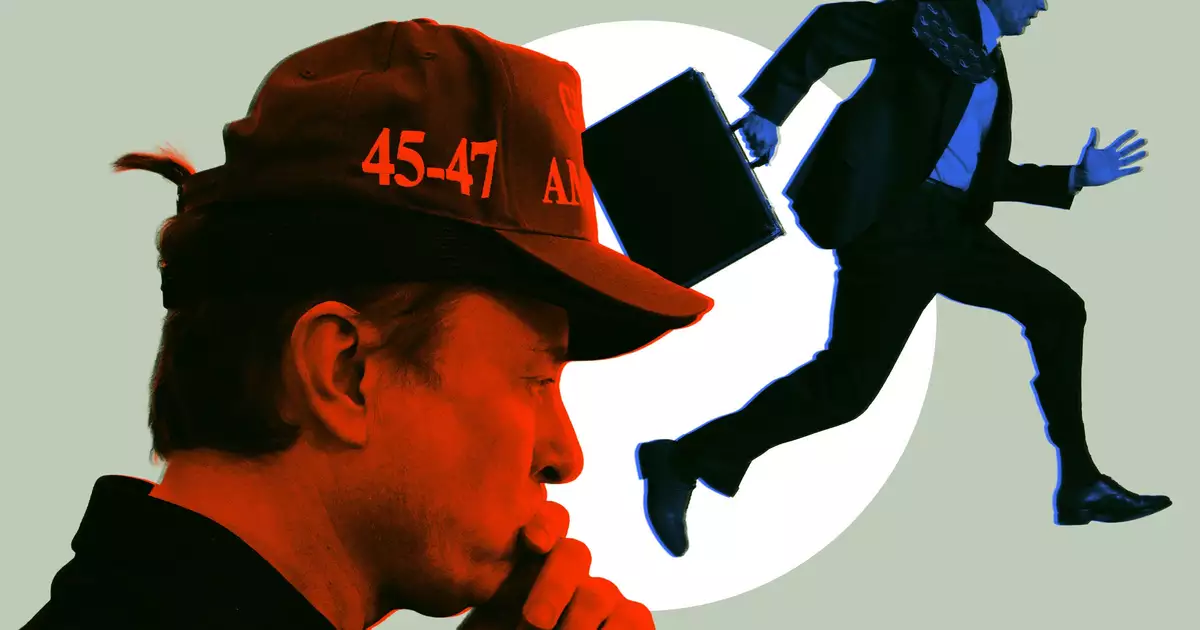
Brand polarization is now an economic variable. CEO Elon Musk’s increasingly visible political signaling has moved from idiosyncratic to materially consequential, with consumer sentiment data indicating a bifurcation in Tesla’s traditional urban, left-leaning strongholds. The market’s patience for audacious timelines is waning: Cybertruck production, the elusive $25,000 model, and expanded FSD features are now judged by the unforgiving standards of a mature auto sector, not the beta-testing ethos of Silicon Valley.
Tesla’s optionality—whether in licensing its NACS charging standard, drivetrain IP, or autonomy stack—remains, but monetization depends on restoring third-party confidence. Executive churn and strategic opacity cast a long shadow over such ambitions.
Navigating the New EV Order: Implications and Watch Points
For decision-makers across the automotive and technology sectors, Tesla’s current turbulence offers a window into the evolving EV landscape:
- Supply-Chain Realignment: The race for LFP and sodium-ion chemistries will intensify, with suppliers modeling for demand shocks as Tesla recalibrates its volume targets.
- Portfolio Rationalization: Traditional OEMs and fleet operators may find strategic value in Tesla’s underutilized assets—such as Dojo AI compute or robotics IP—should capital constraints tighten.
- Regulatory Arbitrage: As U.S. credits favor domestic assembly and Europe tightens data and sensor standards, the regulatory chessboard will determine winners and losers.
- Capital Market Dynamics: Activist investors are likely to demand board refreshment, clearer model rollout schedules, and potential separation of autonomy software from hardware.
Key watch points will include Q2 gross margins, 4680 cell yield metrics, regulatory filings for robotaxi deployment, and European market share in the second half of 2025.
Tesla’s journey now stands as a case study in the interplay between brand equity, governance, and technological ambition under the unforgiving glare of market maturity. For industry leaders and observers alike, the company’s next act will illuminate not only the fate of a singular automaker, but the broader contours of the global EV revolution.

 By
By
 By
By
 By
By
 By
By
 By
By


 By
By