
Google’s AI Summaries in Discover: The Quiet Redesign of Digital Attention
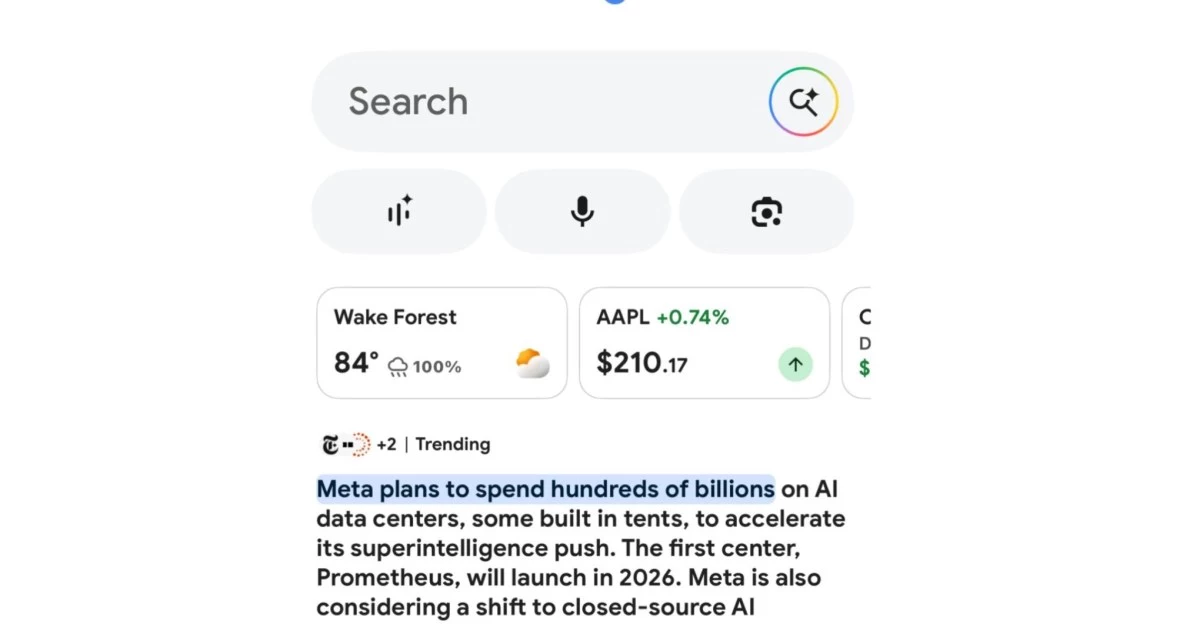
In a move that signals more than a mere interface update, Google has begun rolling out AI-generated three-line summaries in the Discover feed of its Search app for U.S. users on iOS and Android. These succinct, algorithmically distilled snippets now greet users in place of publisher headlines and logos, echoing the “AI Overviews” that have already begun to reshape core search experiences. The change is subtle in appearance but seismic in implication: Google is not just curating information, but actively reframing it—consolidating its grip on the digital discovery funnel at a moment when the very ecosystem that feeds it is under acute stress.
The Architecture of Summarization: Abstraction, Compression, and Control
Beneath the surface, Google’s approach leverages large language models—likely extensions of its Gemini-based distillation stack—to perform real-time, retrieval-augmented summarization. The technical choreography is intricate: signals of freshness and authority are prioritized, then compressed into mobile-friendly morsels. The user interface, meanwhile, is engineered to subtly redirect the locus of trust and engagement. Publisher brands are visually demoted; a clustered-icon UI hints at the breadth of sources, but requires extra taps to reveal them. The result is a two-step interaction funnel that, by design or by consequence, raises the friction for users to reach original content.
This rewiring is not just aesthetic. Each user interaction—whether to expand, tap through, or ignore—feeds a sophisticated feedback loop, refining Google’s personalization graphs and deepening the platform’s moat. The Discover feed becomes less a window onto the open web and more a walled garden of algorithmic curation, one where Google’s voice is foregrounded and publishers’ identities are increasingly obscured.
Economic Realignment: Zero-Click Gravity and the Content Supply Paradox
The economic ramifications are profound. By substituting AI-generated summaries for direct links, Google intensifies the “zero-click” paradigm—a trend that shifts value capture from the originators of content to the platform that intermediates attention. Time spent within Discover is now monetizable via in-feed ads, with less incentive for users to click through to publisher sites. For news organizations already reeling from plummeting referral traffic and newsroom closures, this compounds existential pressures.
Yet there is a paradox at play. As publishers shutter and the supply of high-quality, open-web content shrinks, the very corpus that Google’s models rely on for training and summarization is imperiled. The risk is systemic: a diminished content supply could erode the future accuracy, diversity, and relevance of AI-generated outputs. What appears as platform optimization today may, in time, threaten the informational substrate on which the platform itself depends.
This consolidation of power is not lost on regulators. By collapsing the boundaries between search, social feed, and news aggregation, Google heightens antitrust sensitivities already simmering in the U.S. and Europe. Meanwhile, the global push for “link taxes”—from Canada’s C-18 to the EU’s Digital Markets Act—foreshadows a world in which platforms may be compelled to compensate content creators directly. Google’s pivot to AI summaries can be read as a preemptive hedge: if links become costly, suppress the link.
Strategic Ripples: Adaptation, Bargaining, and the Future of Discovery
For publishers, the imperative is clear. Survival will depend on diversifying beyond referral-dependent models—investing in direct audience capture, structured content for LLM reuse, and collective bargaining to negotiate fair licensing. Advertisers, too, must recalibrate: impressions within AI summaries may become critical upper-funnel touchpoints, even as attribution frameworks lag behind. Technology leaders face their own set of challenges, from provenance-tracking infrastructure to the economics of GPU allocation as inference volumes soar.
The competitive landscape is shifting in real time. Apple News pays publishers; Meta is down-ranking news; TikTok experiments with creator-authored summaries. Google’s move narrows the differentiation gap, forcing rivals to clarify their own content economics strategies. The arms race for premium, licensed data is underway, with the open web at risk of becoming a lower-fidelity training ground.
The arc of digital discovery is bending toward multimodal agents—voice, AR, and beyond—where control of first-party behavioral data and premium licensed corpora will define the next era of defensible advantage. In this new order, content is both product and training asset, and those who understand its dual value will shape the future of information economics.
As the dust settles, it is clear that Google’s latest deployment is not a mere UX tweak. It is a structural reordering of the digital information landscape—a signal to decision-makers across publishing, advertising, and technology that proactive adaptation is not optional, but existential. The battle for attention has entered a new phase, and the rules are being rewritten in real time.

 By
By
 By
By
 By
By
 By
By
 By
By
 By
By