

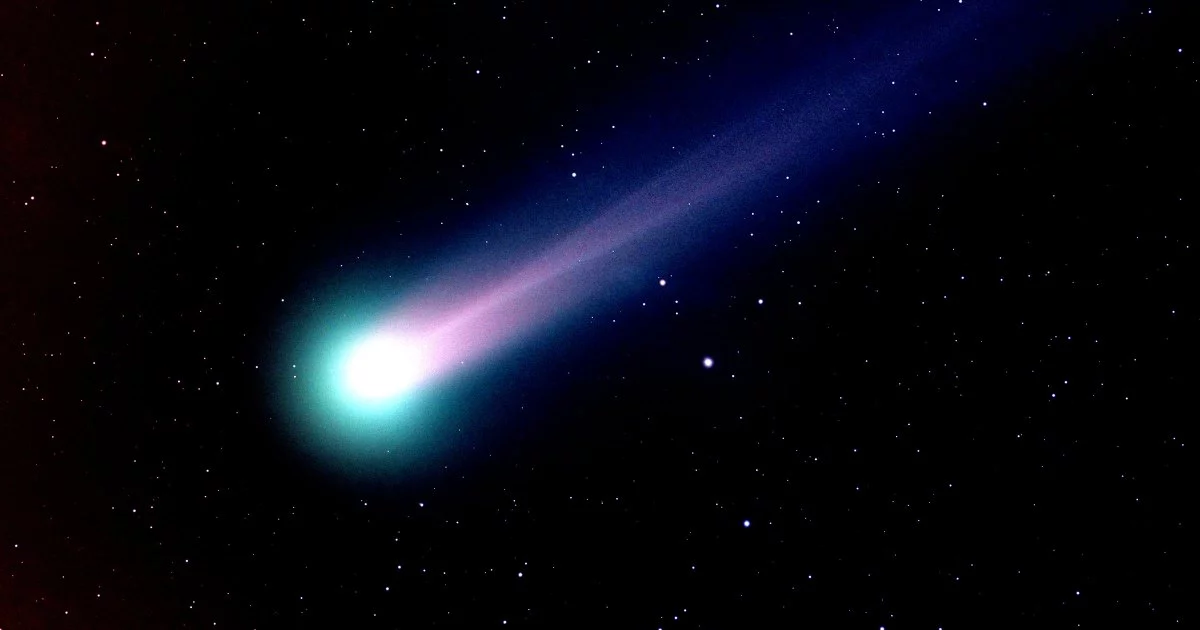

A Celestial Outlier: 3I/ATLAS and the Expanding Frontier of Space Vigilance
The arrival of interstellar object 3I/ATLAS—a cosmic interloper threading a path through our Solar System—has electrified the astronomical community and sent ripples through the corridors of space policy, finance, and technology. Only the third such visitor ever observed, 3I/ATLAS is not merely a scientific curiosity; it is a mirror reflecting the strengths and vulnerabilities of humanity’s space infrastructure and strategic posture. Its peculiarities—size, composition, and the enigmatic “anti-tail” jet—have even prompted luminaries like Harvard’s Avi Loeb to speculate on the possibility of engineered origin, underscoring just how little we truly know about the objects that traverse the interstellar dark.
Decoding the Anomalies: 3I/ATLAS as a Laboratory for Next-Gen Observation
3I/ATLAS’s trajectory, slicing along the ecliptic plane, is a statistical rarity among interstellar bodies. Its composition, unusually rich in carbon-dioxide ice, and the persistent, narrowly aligned Sun-facing jet, challenge existing models of cometary physics. Loeb’s estimate—a mere 0.5% chance of such jet alignment occurring naturally—has fueled both scientific debate and public fascination.
For astronomers, this event is a crucible for their observational toolkits:
- Instrumentation Under Pressure: The Two-meter Twin Telescope’s detection of subtle jet wobble has validated the capabilities of medium-aperture observatories, revealing how distributed, rapidly deployable networks can bridge the gap between flagship telescopes and nimble small-sat platforms. The imminent deployment of advanced near-infrared spectrographs—on both the James Webb Space Telescope and ground-based Extremely Large Telescopes—will further sharpen our ability to parse the chemical signatures of such objects, guiding the design of future planetary-defense sensor suites.
- Propulsion Insights from Nature: The anti-tail’s orientation evokes the controlled outgassing seen in solar-sail or ISRU thruster concepts, offering engineers a rare chance to study “natural propulsion.” The lessons gleaned here may well inform the next generation of non-chemical micro-thrusters for CubeSats and deep-space probes.
- AI and Data Synergy: Real-time anomaly detection is now training advanced machine learning models, crucial for space-domain awareness (SDA) as the orbital environment grows more congested. These datasets will underpin the regulatory and insurance frameworks that govern future space traffic.
Capital, Risk, and the New Space Economy
The economic reverberations of 3I/ATLAS are as profound as its scientific ones. Each interstellar detection acts as a flywheel, drawing media attention and capital into the deep-tech sector. This momentum is reshaping the investment landscape:
- Space-Infrastructure Investment: Astrophysics startups—specializing in adaptive optics, cryogenic sensors, and autonomous scheduling—stand to benefit as venture capital flows beyond traditional satellite communications and Earth observation. The narrative is shifting: deep space is no longer the exclusive domain of government agencies.
- Insurance and Actuarial Evolution: The appearance of anomalous interstellar bodies is forcing insurers to revisit their models. Lloyd’s-type underwriters are now factoring “black-swan” space events into their risk portfolios, potentially recalibrating premiums for orbital assets and interplanetary missions.
- Procurement and R&D: Government agencies are poised to accelerate rapid-response funding mechanisms, such as SBIR-style solicitations, for dual-use observation platforms. This opens the door for corporate R&D labs—especially those with photonics, quantum lidar, or hyperspectral capabilities—to secure non-dilutive funding and shape the future of space science.
Strategic Imperatives and the Architecture of Cosmic Governance
The passage of 3I/ATLAS is more than a scientific milestone; it is a stress test for planetary-defense doctrine and international space governance. Detection gaps for high-inclination or low-albedo objects have become glaringly apparent, prompting calls for expanded radar and optical coverage. As great powers vie for influence beyond Earth orbit, mastery of deep-space anomaly characterization is emerging as a new form of soft power, reminiscent of the geopolitical symbolism of early polar exploration.
The legal and regulatory vacuum surrounding interstellar artifacts is equally striking. Existing treaties remain silent on protocols for “first contact” or sample return, fueling calls for multilateral frameworks—perhaps under the auspices of the United Nations or COPUOS—to pre-empt unilateral actions that could destabilize the fragile equilibrium of space diplomacy.
For industry leaders and policymakers, the implications are clear:
- Reevaluate capital exposure to mid-cap instrumentation, anomaly-detection SaaS, and specialty cryogenics.
- Integrate interstellar object scenarios into satellite fleet risk management.
- Forge public-private consortia to pool observational assets and shape emerging data standards.
- File IP around adaptive propulsion algorithms inspired by natural outgassing phenomena.
- Engage proactively with national and international policy bodies to shape the regulatory landscape.
The boundary between astronomy and enterprise is dissolving, as events like 3I/ATLAS crystallize the need for rapid detection, diversified investment, and agile governance. Those who heed these signals will not only capture emerging value but also help define the contours of humanity’s engagement with the wider cosmos.

 By
By
 By
By
 By
By



 By
By
 By
By







