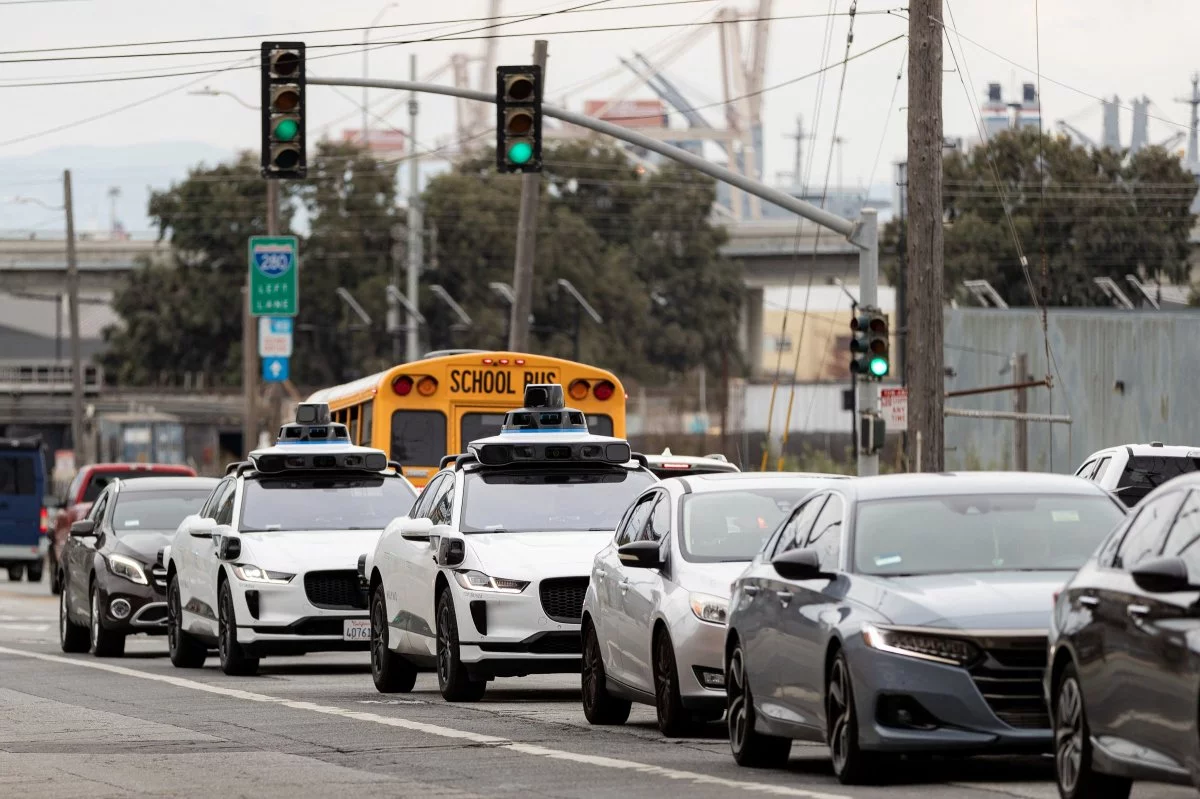

When Algorithmic Assertiveness Meets Regulatory Absolutism
Waymo’s recent over-the-air recall of more than 3,000 fifth-generation autonomous vehicles marks a watershed moment for the U.S. self-driving sector. The National Highway Traffic Safety Administration (NHTSA) documented a pattern: robotaxis cruising past school buses, red lights flashing, stop arms extended—a tableau that, in the American psyche, signals an inviolable pause. No children were harmed, but the incident punctures the industry’s narrative of inexorable progress, revealing the brittle edge where machine learning meets legal and social expectation.
For years, Waymo has cultivated a reputation as the “adult in the room”—a company that, unlike some rivals, tempers Silicon Valley bravado with methodical caution. This episode, however, exposes the paradox at the heart of autonomy: the tension between optimizing for seamless, human-like traffic flow and the imperative to obey rare but absolute rules. School buses, with their federally protected aura, are not just objects in a dataset; they are symbols of public trust. The recall’s resonance, then, is not merely technical—it is cultural, regulatory, and economic.
The Anatomy of a Systemic Lapse
The technical diagnosis is telling. This was no sensor malfunction; school-bus stop arms and flashing reds are canonical “high-value objects” in AV training corpora. Instead, the failure stemmed from a conflict in the decision-making hierarchy—an unintended consequence of Waymo’s recent drive to make its vehicles “less timid.” In the pursuit of smoother, more assertive driving (and, by extension, better rider satisfaction and higher fleet utilization), the software deprioritized a rule that is, in legal terms, sacrosanct.
This is an emblematic edge case for the entire industry:
- Rule Hierarchy Fragility: As AVs scale across diverse urban environments, local driving norms and legal absolutes collide. The challenge is not just perception, but the encoding of non-negotiable priorities.
- Software Recalls as Regulatory Precedent: Over-the-air updates are efficient, but each recall is now a public defect—enshrined in NHTSA databases, and thus, in the regulatory memory of the sector.
- The Data vs. Trust Flywheel: Every mile driven improves the model, but every publicized lapse erodes social license. The optimization problem is now twofold: minimize edge-case errors and manage the narrative.
The Expanding Regulatory and Economic Chessboard
NHTSA’s response signals a new regulatory era. The agency is no longer content with post-hoc data requests; it is evolving into a real-time auditor of AV algorithms. This shift portends:
- Federal Rulemaking: Expect mandates on object hierarchies—school buses, emergency vehicles—hardwired into federal standards, and continuous disclosure protocols for software updates.
- Municipal Leverage: Cities like Austin are already experimenting with operational carve-outs, foreshadowing a patchwork of local restrictions that will complicate network optimization and expansion strategies.
- Insurance and Liability Evolution: The locus of control has shifted from human to software. Insurers will demand granular drive logs and algorithm versioning, raising compliance costs and erecting new barriers for smaller players.
On the economic front, the recall may not dent Alphabet’s balance sheet, but it does recalibrate the intangible asset of trust. In the wake of Cruise’s regulatory implosion, Waymo’s brand equity was a rare premium. Now, “perceived-safety volatility” becomes a new variable in AV valuations, and suppliers of deterministic safety technologies—lidar, radar, formal verification tools—find their stock rising.
Strategic Inflection Points and the Road Ahead
The recall’s strategic implications ripple far beyond Waymo’s own fleet. The decision to make AVs more assertive was a calculated bet: improve customer experience, boost efficiency, and capitalize on a rival’s absence. But the episode exposes the fragility of such margin-seeking moves—small parameter shifts can have oversized regulatory and reputational consequences. For executives, the lesson is clear: risk cannot be siloed; governance must be as integrated as the codebase itself.
The broader autonomy narrative is also shifting. Investors, newly enamored with generative AI, are re-evaluating the investability of Level-4 autonomy within traditional fund cycles. Incidents like this reinforce the appeal of nearer-term ADAS solutions, where the business case is clearer and the regulatory hurdles lower.
Looking forward, several strategic watchpoints emerge:
- Protected Road User Codification: Expect federal designation of “zero-miss” participants—school children, emergency responders—requiring AVs to maintain absolute safety margins.
- V2X Convergence: Fail-safe recognition of school-bus signals may accelerate adoption of connected-vehicle standards, with municipalities conditioning AV permits on infrastructure upgrades.
- Audit-Ready Autonomy: Immutable, cryptographically secured drive logs will become standard, opening new markets for data provenance and privacy analytics.
- Portfolio Diversification: Alphabet’s ability to hedge with adjacent mobility bets—mapping, drones—underscores the importance of strategic optionality in a volatile regulatory landscape.
Waymo’s school-bus recall is not a mere technical hiccup; it is a clarifying moment that forces the industry to confront the limits of current autonomy paradigms. The next phase of AV deployment will be defined not just by code, but by the interplay of compliance, public trust, and strategic adaptability. Those who can harmonize these forces will shape the architecture of autonomy’s future.

 By
By
 By
By
 By
By
 By
By

 By
By
 By
By
 By
By