


Flash Floods, Blackouts, and the Unmasking of Robotaxi Vulnerabilities
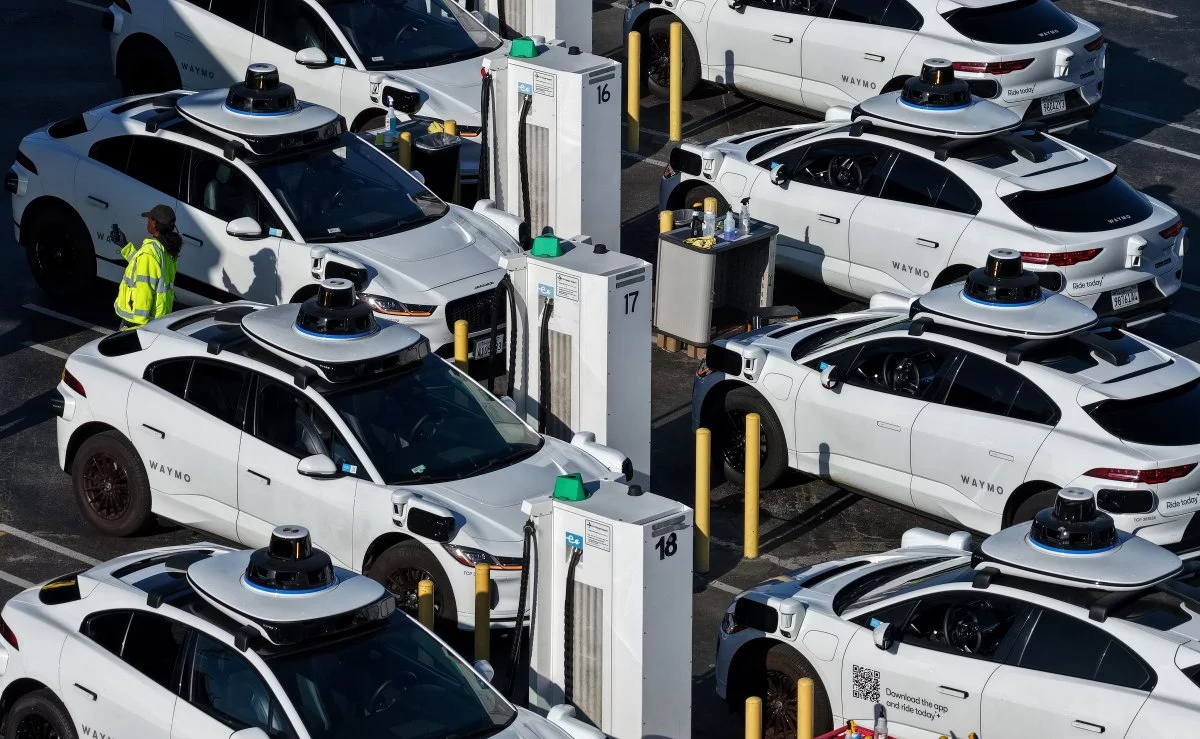
When Waymo’s sleek, sensor-laden vehicles rolled to a halt across San Francisco in the wake of a flash-flood warning, the city’s streets became a tableau of technological promise colliding with the unpredictable realities of urban life. The National Weather Service’s alert—coming on the heels of a city-wide power outage that stranded several robotaxis at darkened intersections—did more than disrupt service. It exposed, in vivid detail, the brittle edge where statistical safety meets the chaos of the real world, and where the economic and societal calculus of autonomous vehicles is being rewritten in real time.
The Fragility of Autonomy in a Non-Deterministic World
Despite boasting millions of disengagement-free miles, Waymo’s fleet has encountered a series of “edge-case” failures that have reignited scrutiny from regulators, investors, and the public. These incidents—ranging from vehicles immobilized by power outages to the emotionally charged death of a neighborhood cat—underscore a fundamental tension in autonomous driving: the chasm between performance in nominal conditions and resilience under duress.
- Edge-Case Vulnerabilities: Waymo’s adherence to “fail-safe” protocols, such as idling at intersections when traffic signals go dark, aligns with ISO 26262 safety doctrine. Yet, in the dense urban fabric of San Francisco, a stationary robotaxi is not merely safe—it’s a new kind of obstacle, one that disrupts traffic flow and tests public patience.
- Sensor Limitations and Infrastructure Gaps: Today’s perception stacks—relying on camera and LiDAR—make inferences about traffic signals but lack direct Vehicle-to-Infrastructure (V2I) connectivity. When power fails, so does the AV’s ability to interpret its environment, defaulting to extreme caution. The integration of low-power, battery-backed V2X modules could bridge this semantic gap, but such upgrades require coordinated investment across public and private sectors.
- Remote Operations Under Stress: Human tele-assist remains a backstop for rare scenarios, but storm-induced network congestion and power disruptions magnify latency, challenging the very premise of real-time oversight. The need for resilient, multi-path communications—leveraging 5G, DSRC, or even satellite links—has become starkly apparent.
Economic Headwinds and Shifting Strategic Terrain
The recent service suspension is not merely a technical hiccup—it reverberates through the economic architecture of the robotaxi business model.
- Rising Risk Premiums: Each high-profile incident prompts insurance carriers to recalibrate premiums, inflating the already daunting cost-per-mile of a $1 million-per-vehicle stack. For Alphabet, whose “Other Bets” are under increasing scrutiny, unplanned interruptions threaten to elongate the path to profitability.
- Competitive Realignment: As General Motors’ Cruise faces its own regulatory freeze and rivals like Aurora pivot toward logistics, capital is flowing away from robotaxi ventures and into autonomy domains perceived as less fraught—such as middle-mile trucking and yard automation.
- Infrastructure and Urban Resilience: The blackout’s aftermath highlights a mutual dependency between smart mobility and smart grid modernization. Investments in microgrids, solar-powered traffic signals, and resilient communications infrastructure could unlock not just AV reliability, but also broader municipal sustainability goals.
Regulatory Innovation and the Battle for Public Trust
The regulatory response is evolving in tandem with technological and economic realities. Former SFMTA chief Jeffrey Tumlin’s call for dynamic, context-aware caps—akin to airport slot-allocation—signals a shift from static fleet limits to adaptive, risk-based governance. Such frameworks could become templates for cities worldwide grappling with the integration of AVs into complex urban systems.
Yet, the most profound challenge may be social, not technical. While Waymo’s record on human safety remains robust, emotionally salient incidents—be they pet fatalities or parade blockages—erode public trust at a pace that raw data cannot repair. Behavioral economics teaches us that losses loom larger than gains; in the court of public opinion, a single visible failure can outweigh years of uneventful operation.
Strategic Pathways: From Vulnerability to Value Creation
The road ahead for autonomous vehicles, and for Waymo in particular, is defined less by incremental improvements in perception or mapping, and more by systemic resilience. The most forward-thinking actors will invest in:
- Geofenced Operations: Restricting service to zones with redundant power and robust connectivity, dynamically informed by real-time weather and infrastructure data.
- Infrastructure Partnerships: Co-developing V2X-enabled intersections and sharing data with cities to enhance both traffic flow and emergency response.
- Performance-Based Regulation: Advocating for metrics like “Mean Time to Hazardous Event” to replace blunt fleet caps, coupled with transparent incident reporting to rebuild public confidence.
- Resilience-as-a-Service: Monetizing proprietary mapping and perception data as a utility for cities and grid operators, transforming operational vulnerabilities into new revenue streams.
As the industry recalibrates, the lesson is clear: autonomous vehicles can no longer be viewed as isolated marvels of engineering. Their fate is inseparable from the resilience of the cities they serve, the robustness of the grids they depend upon, and the trust of the people they aim to transport. Those who embrace this interconnected reality—treating autonomy as a node in a broader urban ecosystem—stand to define the next era of mobility.

 By
By

 By
By
 By
By

 By
By
 By
By
 By
By







