


The Quiet Revolution: Berkshire Hathaway’s Leadership Shift Amid a Changing Capital Landscape
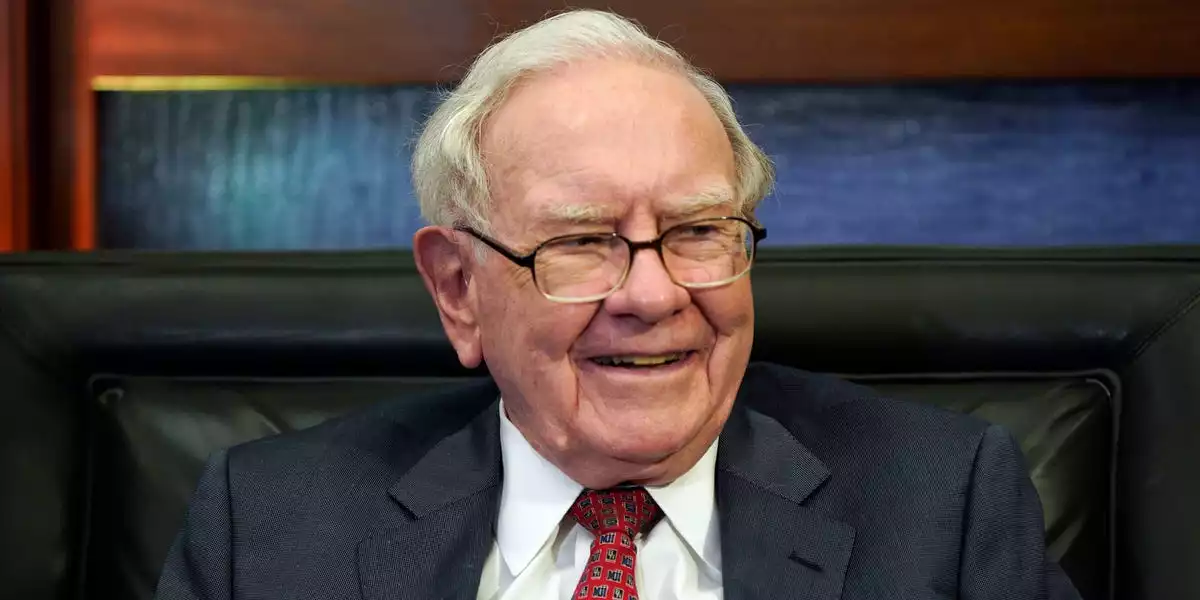
When Warren E. Buffett, the “Oracle of Omaha,” announced his plan to step down as CEO of Berkshire Hathaway at age 95, the business world paused—not out of surprise, but in recognition of a moment that redefines the architecture of American capitalism. Buffett’s six-decade tenure has been a masterclass in patient capital, decentralized autonomy, and the alchemy of insurance float. Yet, as he transitions to non-executive chairman, the hand-off to Vice-Chair Greg Abel is less a rupture than a meticulously choreographed evolution. This is not a passing of the torch, but a recalibration of how conglomerates can thrive in an era of higher interest rates, regulatory scrutiny, and AI-driven disruption.
From Oracle to Operator: Rethinking Capital Allocation
Buffett’s departure from daily operations is buffered by his continued presence in Omaha, where he will remain a source of strategic counsel and acquisition origination. Investors, long wary of “key-person risk,” are reassured by the institutionalized discipline he and the late Charlie Munger embedded:
- Decentralized decision-making empowers subsidiary CEOs,
- Hurdle-rate discipline ensures capital is allocated only when risk-adjusted returns are compelling,
- No mandated holding periods allow for opportunistic flexibility.
Greg Abel, however, brings a distinctly operational pedigree, having steered Berkshire Hathaway Energy through the complexities of regulated utilities and renewable infrastructure. His ascendancy signals a potential pivot: less emphasis on mega-cap public equity wagers, more on reinvesting in core businesses—railroads, manufacturing, and energy. This mirrors a broader market shift from financial engineering to capex-driven value creation, as the cost of capital rises and the margin for error narrows. For a conglomerate with $350 billion in equities and $400 billion in operating revenue, the question is not whether to adapt, but how swiftly and surgically it can do so.
The Modern Conglomerate: Moats, Markets, and the Information Edge
Berkshire’s enduring appeal lies in its structural advantages—chief among them, the ability to convert low-cost insurance float into a competitive funding source. While the likes of GE and Johnson & Johnson have splintered to unlock value, Berkshire has thrived on aggregation, not disaggregation. The delta? Information asymmetry and a fortress balance sheet.
Yet, this moat faces new threats. Higher real rates challenge the economics of float, and regulatory capital requirements are tightening. Abel’s stewardship will be tested by whether Berkshire can sustain its additive model in a world where cheap leverage is no longer a given. The conglomerate’s governance model—eschewing dual-class shares and embracing GAAP transparency—sets a standard that quietly pressures tech titans who rely on more opaque structures.
Insurance, Energy, and the AI Imperative
The convergence of insurance, energy, and technology will define Berkshire’s next act. Abel’s experience in energy infrastructure aligns perfectly with a U.S. policy environment channeling over $400 billion into grid modernization and clean energy. Here, Berkshire can leverage scale and regulatory savvy to become a pivotal aggregator—especially as AI and data-center demand reshape the grid.
On the insurance front, the stakes are existential. GEICO’s sluggish adoption of telematics has ceded ground to Progressive and insurtech upstarts. The next phase will demand:
- AI-driven risk selection to refine underwriting,
- Usage-based pricing to align premiums with real-world behavior,
- On-chain claims settlement for speed and transparency.
Whether Berkshire builds, buys, or partners in this space will be a litmus test of its adaptability. The margin-compressed, data-intensive future of P&C insurance requires a leadership team as comfortable with machine learning as with actuarial tables.
Strategic Latitude in a Capital-Scarce World
Berkshire’s $157 billion cash war chest is a strategic lever in a higher-rate regime. With T-bills alone generating $5 billion in annual pretax income, the opportunity cost of patience has diminished. Expect Abel to deploy capital judiciously—favoring bolt-on acquisitions in industrials, specialty manufacturing, and renewables, each under $5 billion, where Berkshire’s operational expertise and inflation-hedging capabilities shine.
The conglomerate’s latitude—its ability to redeploy cash across traditionally siloed industries—remains a vital advantage. As capital becomes scarcer and the lines between sectors blur (energy plus data infrastructure, insurance plus real-time analytics), Berkshire’s model looks less like an anachronism and more like a blueprint for the 21st-century holding company.
Buffett’s shadow will linger, but Abel inherits more than a balance sheet—he inherits a philosophy, a culture, and a platform uniquely suited to the volatility and convergence of the modern economy. The challenge now is to translate the DNA of value investing into a world where algorithms, climate risk, and regulatory flux are the new constants. The next chapter of Berkshire Hathaway will be written not in the margins of the past, but in the bold, uncertain whitespace of the future.

 By
By
 By
By
 By
By
 By
By
 By
By


 By
By







