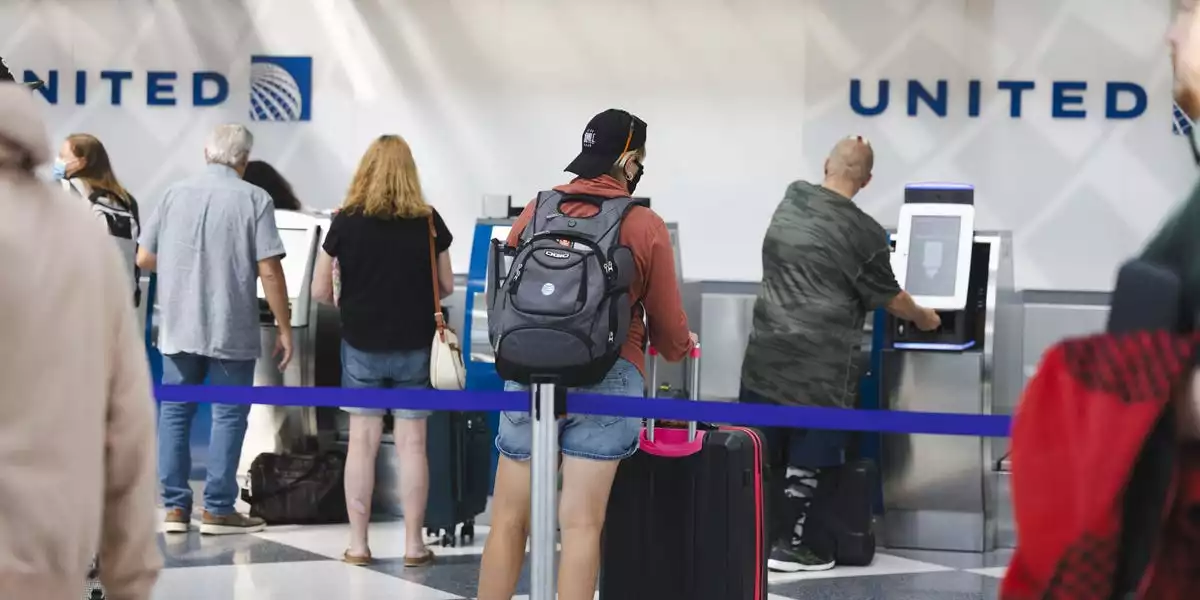

A $10 bag-fee hike that signals a broader airline pricing reset
United Airlines’ decision to raise its first checked-bag fee by $10 effective April 3, 2024 is more than a routine tweak to ancillary pricing—it is a visible marker of how U.S. airlines are choosing to manage cost shocks while keeping headline fares competitive. Under the new structure, United will charge $45 when paid online at least 24 hours before departure, $50 at curbside, and $75 at the gate. The tiering is not incidental; it is a deliberate nudge toward digital prepayment and operational predictability, while reserving the highest price point for last-minute, high-friction transactions.
United is not acting in isolation. JetBlue’s earlier bag-fee increases—ranging roughly $4 to $9 depending on travel days—and similar moves by Alaska Airlines and other carriers underscore an industry-wide recalibration. The common thread is that baggage fees have become one of the fastest levers airlines can pull to protect margins without triggering the immediate consumer backlash that often follows a base-fare increase.
Notably, United is preserving fee waivers for strategically valuable segments, including:
- United Chase credit-card holders
- MileagePlus Premier elites
- Active-duty military
- Premium-cabin passengers
This carve-out is central to the modern airline business model: fees rise for the occasional traveler, while the most profitable customers experience a “protected” product—reinforcing loyalty economics and co-branded credit-card value propositions.
Fuel volatility and the U.S. industry’s exposure to spot-market reality
The proximate catalyst behind these fee hikes is energy. The reported ~50% surge in Brent crude (to around $109 per barrel) and a doubling of jet fuel to nearly $200 per barrel, linked to heightened geopolitical tensions involving Iran, has reintroduced the kind of input-cost volatility that airlines can neither ignore nor fully absorb.
Airlines have always lived and died by fuel, but the strategic difference today lies in risk posture. Many U.S. carriers generally avoid broad fuel-hedging programs, leaving them more exposed to spot-market swings than several global peers. By contrast, some European low-cost carriers—Ryanair is a frequently cited example—have historically locked in meaningful portions of fuel consumption at lower prices through hedging, smoothing near-term earnings and enabling more stable pricing.
The U.S. approach has its own logic: hedging can be expensive, complex, and politically fraught when it “fails” in a declining price environment. Yet the trade-off is clear. When fuel spikes, airlines without hedges must respond quickly. They typically do so through a mix of:
- Ancillary fee increases (baggage, seats, priority services)
- Capacity and schedule adjustments on marginal routes
- Yield management tightening (fewer discounted seats, more restrictive fare buckets)
Bag fees, in this context, function as a targeted pass-through mechanism—less visible than fare hikes, faster to implement than network changes, and more controllable than broad surcharges that invite regulatory scrutiny.
The economics of unbundling: why bag fees now anchor airline margin strategy
The rise of baggage fees is inseparable from the broader “unbundling” trend that has reshaped airline revenue architecture over the past decade. Since JetBlue introduced a $30 checked-bag fee in 2018, the competitive landscape has shifted from fare-only comparisons to a more complex marketplace of add-ons and bundles. For many U.S. carriers, ancillary revenues can approach 20% of total revenue, a dramatic increase from the low-single-digit contribution typical in earlier eras.
United’s three-tier fee design—$45 vs. $50 vs. $75—also reflects a sophisticated segmentation strategy:
- Price-sensitive leisure travelers are incentivized to prepay online, lowering airport transaction costs and reducing uncertainty.
- Time-constrained travelers pay more at curbside, where staffing and throughput are at a premium.
- Last-minute gate checkers face the steepest fee, discouraging behavior that can disrupt boarding and on-time performance.
This is yield management applied to the airport journey itself. Increasingly, airlines treat each touchpoint—baggage, seat selection, boarding priority, onboard connectivity—as a monetizable micro-market. The practical implication is that the “true fare” becomes individualized, shaped by traveler behavior, timing, and willingness to pay.
At the same time, fee proliferation carries reputational and regulatory risk. Consumer advocates and policymakers continue to monitor whether airlines disclose total trip costs clearly and whether fee structures are fair, especially when they appear punitive at the airport. That tension is pushing carriers toward more transparent digital experiences—because the same fee that boosts revenue can erode trust if it feels surprising or unavoidable.
Technology, loyalty ecosystems, and the next phase of airline revenue design
Behind the pricing headlines sits a technology story. Airlines are investing heavily in digital ancillary platforms that can personalize offers and optimize conversion—often using machine-learning models that evaluate route economics, booking windows, customer profiles, and real-time demand. The goal is not merely to charge more, but to charge more intelligently, with fewer defections and higher perceived value.
Several strategic trajectories are becoming clearer:
- Dynamic bundling: packaging baggage, seat selection, and priority boarding into tailored “micro-bundles” that adjust in real time.
- Loyalty-based insulation: expanding fee waivers and perks tied to elite status and co-branded credit-card engagement, effectively shifting costs toward infrequent travelers.
- Operational digitization: steering customers to prepay and self-serve to reduce airport friction and staffing pressure.
- Fleet and fuel-efficiency pressure: high jet fuel prices strengthen the business case for next-generation aircraft, weight-reduction initiatives, and longer-term sustainable aviation fuel (SAF) partnerships—moves that reduce exposure to future fuel spikes.
United’s bag-fee increase, then, is best read as a signal of where airline strategy is converging: protect the base fare narrative, expand ancillary monetization, and use loyalty and technology to decide who feels the increase—and who barely notices it. As fuel volatility returns to the center of airline economics, baggage fees are no longer a side story; they are a core instrument in how carriers balance profitability, competitiveness, and customer experience in real time.

 By
By
 By
By
 By
By

 By
By

 By
By