


The Unraveling of Naval Certainty: Ukraine’s Drone Gambit in the Black Sea
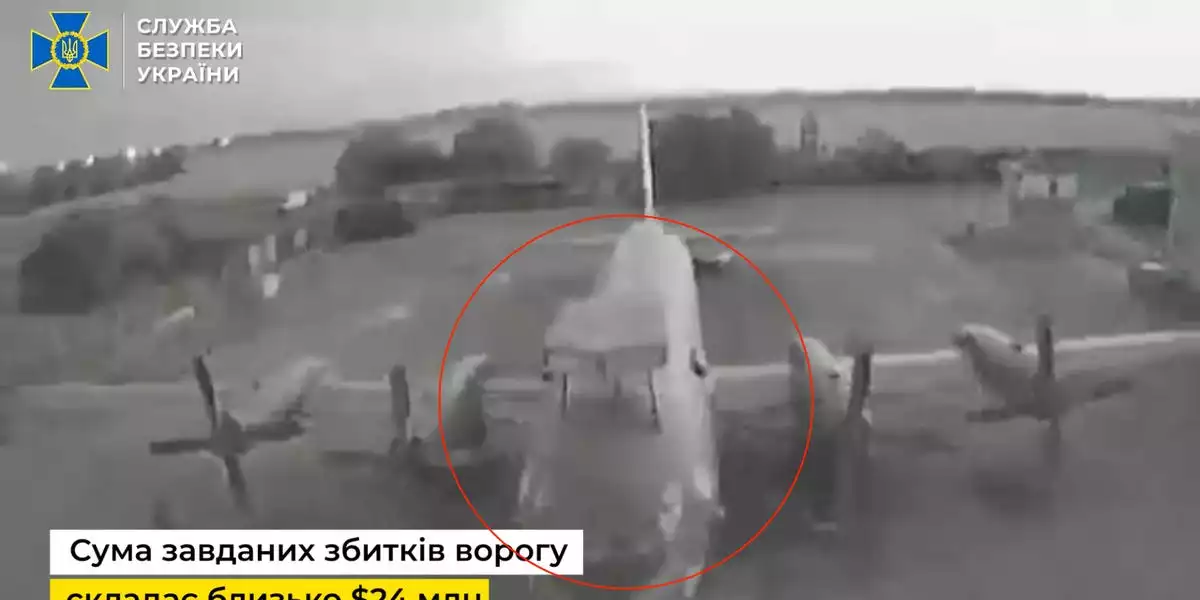
The Black Sea, once a theater of stately naval maneuvers and submarine cat-and-mouse games, is undergoing a transformation as profound as it is unsettling. Ukraine’s recent operation—disabling Russia’s only Il-38N “Sea Dragon” maritime patrol aircraft and striking a Kilo-class cruise-missile submarine deep within Novorossiysk—has upended assumptions about security, sanctuary, and the economics of military power. This was not the work of billion-dollar destroyers or stealthy submarines, but of low-cost, highly autonomous drones, orchestrated with chilling precision.
Asymmetry and the Dismantling of Old Doctrines
Ukraine’s embrace of distributed, autonomous systems is more than a tactical adaptation; it is a strategic provocation. By pairing airborne and subsea drones, Kyiv is executing a form of “distributed coastal denial”—a doctrine that imposes outsized costs on Russia’s Black Sea Fleet without the burden of maintaining a conventional navy. The disabling of the Il-38N, a linchpin of Russian anti-drone surveillance, was not merely a blow to hardware but a calculated disruption of the “sensor-kill chain.” This tactic, reminiscent of doctrines now under scrutiny by NATO and the Indo-Pacific Quad, exposes fleeting windows of vulnerability in adversary defenses.
The implications ripple far beyond the Black Sea. Novorossiysk, long considered a secure rear-area port, is now exposed, its sanctity eroded by the reach of autonomous systems. Submarines, once protected by depth and distance, find themselves vulnerable to swarms of drones guided by real-time ISR (intelligence, surveillance, reconnaissance) and AI-driven targeting. The message to global navies is unmistakable: there are no longer safe harbors.
The Modular Revolution: Integration Over Invention
The technological underpinnings of Ukraine’s strike are as significant as the targets themselves. The operation fused commercial quad-rotors, bespoke warheads, satellite navigation, and video-guided flight into a modular, rapidly reconfigurable “robotics stack.” The real advantage lay not in cutting-edge hardware, but in the integration skill—the choreography of off-the-shelf components into a lethal, adaptive system.
- Air-burst fragmentation warheads, dispersing thousands of fragments, maximized damage against parked aircraft—a design echoing the latest in counter-UAV defense algorithms.
- Cloud-based mission planning and machine-vision navigation compressed the operational kill chain from hours to minutes, a tempo that is beginning to reverberate in civilian logistics and autonomous shipping.
This compression of the digital kill chain—enabled by Starlink-class connectivity and AI—foreshadows a regulatory reckoning. Dual-use technologies, once the domain of hobbyists and commercial supply chains, are now central to the calculus of both military planners and corporate compliance officers.
Economic Disruption and the New Defense-Industrial Equation
The economic logic of these strikes is as disruptive as their tactics. A single attack drone, costing less than $100,000, can neutralize assets worth hundreds of millions. The cost-imposition ratio—estimated at 1:7,000—forces a re-evaluation of defense portfolios. Ministries are being nudged toward swarming, attritable systems and away from the tyranny of exquisite, single-platform dominance.
- Russia, already grappling with sanctions-induced supply chain constraints, faces acute replacement pressure for high-value assets like submarines and patrol aircraft.
- Venture capital is flowing into “attritable autonomy,” with software-defined payloads and maritime robotics start-ups attracting record investment. Insurance markets, too, are responding: war-risk premiums for Black Sea shipping are rising, echoing the volatility of the COVID-era supply chain crisis.
The regulatory back-draft is inevitable. EU authorities are tightening export controls on dual-use drone components, a trend likely to spill over into broader electronics and AI chip sectors. Multinationals with interests in logistics, agriculture, or even cinematography should anticipate compliance friction—and perhaps a new wave of re-shoring.
Navigating the Autonomous Threat: Imperatives for Industry and State
The Black Sea strikes signal a structural inversion in maritime power economics and operational risk. For shipbuilders, integrating layered counter-UAV and USV sensors is no longer optional; retrofitting will be costlier and slower as threat timelines accelerate. Logistics and energy majors must diversify port calls and invest in drone-hardening measures—RF shielding and rapid-deploy nets may soon be as standard as double hulls.
Defense ministries are being pressed to rebalance toward quantity, redundancy, and rapid innovation cycles, with AI/ML vetting frameworks to stay ahead of adversarial adaptation. Insurers and lenders must stress-test exposure to high-risk marine corridors, while investors should monitor the emergent drone-counter-drone ecosystem for signs of consolidation and technological leapfrogging.
The Black Sea is now a proving ground for the future of autonomous conflict—a future where the balance of power, cost, and risk is being rewritten in real time. For industry leaders and policymakers alike, the margin for error is narrowing. The lesson is stark: treat autonomy and multi-domain integration as core strategic issues, or risk being overtaken by events that move at the speed of code.

 By
By
 By
By

 By
By
 By
By

 By
By
 By
By







