

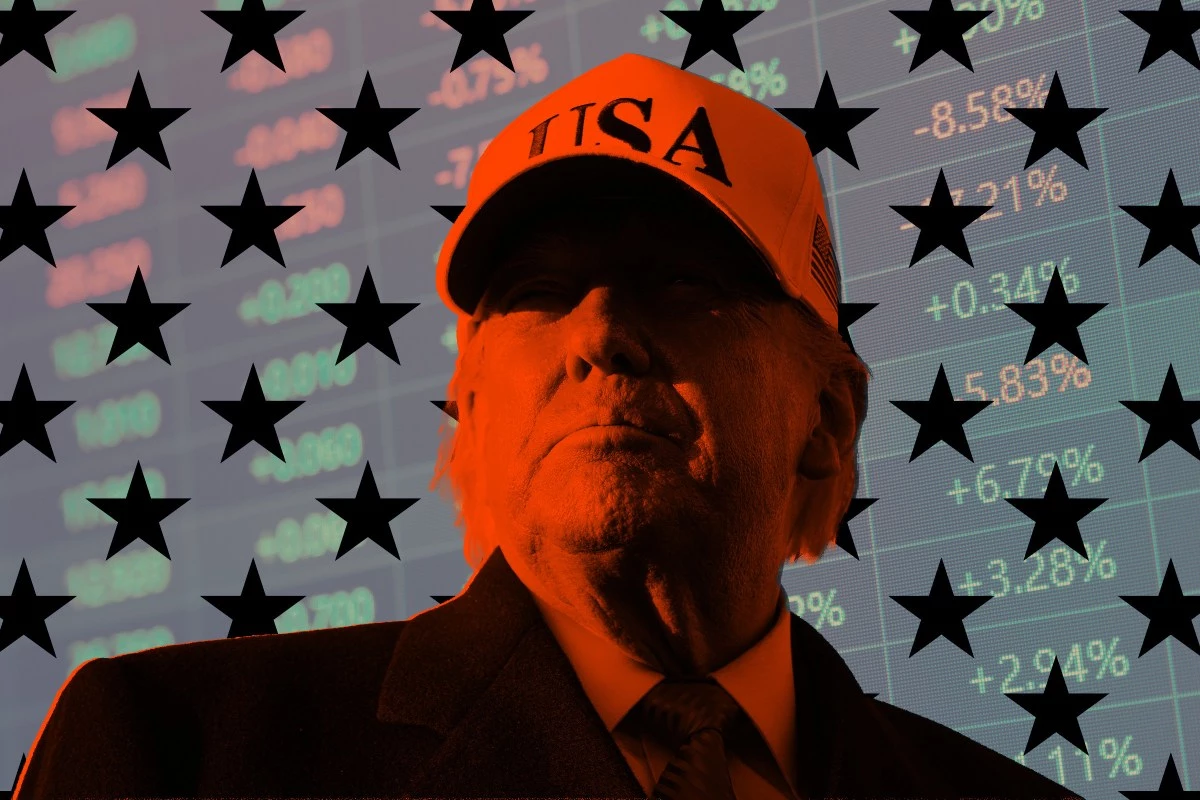

A 24-hour cycle that rewired geopolitical signaling—and market expectations
The events of March 20 underscored a defining feature of modern geopolitical risk: policy is no longer communicated solely through formal channels, and markets no longer wait for official communiqués to reprice. Over a single day, President Donald Trump delivered a rapid sequence of statements on U.S. military posture toward Iran—declaring victory, announcing a Marine deployment, then reversing to “no boots on the ground.” In parallel, he issued threats tied to the Strait of Hormuz, then announced a five-day pause in hostilities via Truth Social.
For investors, corporates, and allied governments, the practical consequence is not merely confusion—it is the creation of a persistent uncertainty premium. When the world’s largest military power appears to toggle between escalation and de-escalation in near real time, traditional methods of interpreting intent—diplomatic backchannels, Pentagon briefings, allied coordination—are forced to compete with social-media immediacy. That compression of the signaling cycle changes behavior:
- Markets price the probability distribution, not the declared policy—especially when declarations conflict.
- Adversaries and allies must infer intent from a blend of official action, informal posts, and rapid reversals.
- Corporate planning horizons shorten, as procurement, shipping, and hedging decisions become more reactive than strategic.
This is not simply a communications problem; it is a structural shift in how geopolitical power is expressed and interpreted. In an era where a single post can move energy prices and equity futures, the boundary between “announcement” and “event” has blurred.
Oil’s sharp repricing reveals the fragility of energy chokepoints in the algorithmic age
The most immediate macro signal was crude’s abrupt decline—from roughly $112 to $97 per barrel—a move that reflects how quickly markets recalibrate when perceived supply disruption risk is reduced, even temporarily. The Strait of Hormuz remains one of the world’s most sensitive energy chokepoints; threats to it typically widen risk premia across crude, shipping insurance, and broader inflation expectations. Yet the five-day pause message appears to have been interpreted as a near-term de-escalation cue, prompting a swift repricing.
This episode highlights a deeper reality for global energy security and inflation dynamics: geopolitical risk is increasingly “short-cycle.” Instead of slow-building crises that allow for staged hedging and inventory adjustments, markets now confront sudden, high-amplitude swings driven by rapid-fire messaging. That volatility can propagate through:
- Supply chains, as fuel costs and shipping rates reprice quickly
- Inflation expectations, complicating central bank calibration
- Corporate margins, especially for transport-intensive and petrochemical-linked industries
- Emerging market stability, where energy import bills can shift sharply in days
For energy producers and large end-users alike, the implication is clear: resilience increasingly depends on flexible procurement, diversified sourcing, and hedging strategies designed for abrupt reversals—not just long-duration geopolitical cycles.
Futures spikes, information asymmetry, and the growing scrutiny of political-market entanglement
Alongside the policy whiplash came a second, more technically consequential development: sudden, outsized trading spikes in S&P 500 e-Mini futures and West Texas Intermediate (WTI) futures immediately before the president’s announcement. Economist Paul Krugman publicly suggested the pattern may indicate insider knowledge among individuals close to the president, drawing parallels to an earlier episode involving Venezuelan policy. He has called for a formal investigation—an intervention that shifts the story from volatility to market integrity.
The underlying concern is not novel—markets have long wrestled with privileged access—but the mechanism has changed. Today’s trading ecosystem is built around algorithmic execution and real-time ingestion of text signals, including social media. In that environment, even a narrow informational edge can be monetized at scale:
- Latency arbitrage allows firms to act in sub-millisecond windows once a signal is detected.
- Hybrid advantage emerges when human foreknowledge (who knows what, and when) is paired with automated execution.
- Retail and slower institutions face a widening gap versus players with advanced analytics and faster market access.
If the reported pre-announcement spikes are validated as anomalous relative to baseline patterns, the episode becomes a test case for whether existing surveillance and enforcement tools are adequate for a world where political communication is both market-moving and digitally distributed.
What an investigation would need to prove—and why the precedent matters
Calls for inquiry raise immediate questions about jurisdiction, evidence, and standards. A credible review would likely require coordination among the SEC, the CFTC, and potentially the Department of Justice, given the intersection of derivatives markets, public communications, and possible misuse of nonpublic information.
Key analytical questions would include:
- Timing and order-flow forensics: Were the futures spikes statistically abnormal, and did they cluster around specific accounts or intermediaries?
- Information pathways: Who had access to deliberations about the pause, deployment posture, or Hormuz-related messaging before publication?
- Intent and benefit: Did any parties trade with knowledge that was material, nonpublic, and obtained through proximity to decision-making?
- Platform dynamics: How did Truth Social dissemination timing interact with newswires, data vendors, and algorithmic parsing systems?
Beyond any single case, the precedent is significant. If markets come to believe that major geopolitical announcements can be front-run by politically connected actors, the damage extends past a day’s price action. It erodes confidence in fair access, increases the cost of capital through higher risk premia, and deepens public skepticism about the ethical boundary between governance and private gain.
For corporations and institutional investors, the practical response is already taking shape: scenario-based war-gaming, continuous monitoring of geopolitical sentiment and derivatives markets, and stronger governance over AI models that trade on political-risk inputs. For regulators and policymakers, the challenge is sharper: modern market integrity may depend on rules and enforcement models built specifically for the convergence of high office, social platforms, and high-speed finance—a convergence that is no longer theoretical, but operational.

 By
By
 By
By

 By
By
 By
By

 By
By
 By
By







