


The Age of Synthetic Spectacle: Generative AI and the New Political Theater
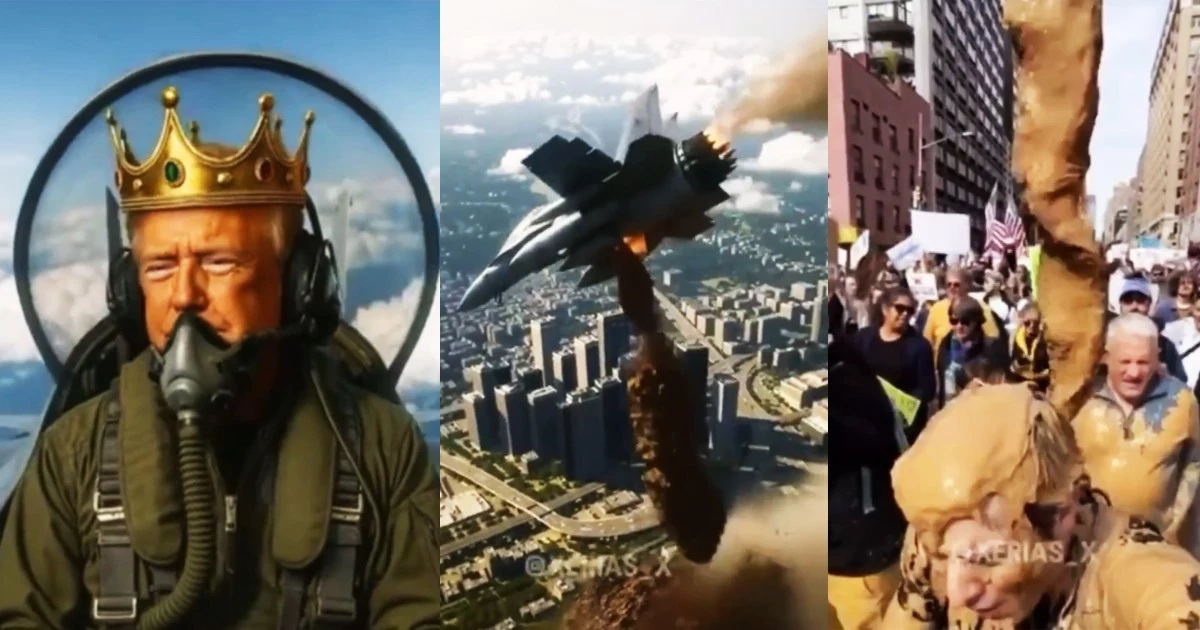
In a week that saw millions take to the streets for the “No Kings” protests, the American political stage was abruptly upended by a pair of AI-generated videos shared by former President Donald Trump on Truth Social. These videos, depicting Trump and Vice-President JD Vance as quasi-monarchical figures vanquishing their adversaries, were not merely digital curiosities—they were clarion signals of a new era in political communication, where the boundaries between satire, intimidation, and propaganda dissolve in a haze of algorithmic artifice.
The immediate aftermath was a maelstrom of copyright complaints—most notably from artist Kenny Loggins, whose iconic “Danger Zone” was appropriated without consent—alongside a torrent of ridicule from political influencers and a renewed debate over the ethics and risks of AI-assisted disinformation. Yet, beneath the surface spectacle lies a deeper, more consequential shift: the commoditization of generative AI has collapsed the barriers to high-impact media creation, while the mechanisms to prevent its misuse remain perilously underdeveloped.
Generative AI’s Double-Edged Sword: Accessibility and Abuse
The technology underpinning these viral videos is no longer the exclusive province of Hollywood studios or well-funded campaigns. Consumer-grade generative AI models now enable anyone with a laptop to conjure cinematic imagery, complete with surreal, low-fidelity aesthetics that have become a calling card of the genre. This “slop” is not a technical failing but a feature—a deliberate embrace of the absurd that signals irreverence, fuels memetic virality, and, paradoxically, shields creators from fact-checkers with the retort: “It’s obviously fake.”
Yet, this visible artificiality does little to blunt the emotional impact or the shareability of the content. Instead, it blurs the line between parody and propaganda, seeding narratives that can ricochet across both fringe and mainstream platforms at a velocity regulators and platforms struggle to match. The absence of robust attribution standards—such as universal watermarking or C2PA-compliant metadata—creates an attribution vacuum, allowing synthetic content to proliferate unchecked and untraceable.
Economic Fallout and Strategic Risks in the Synthetic Media Era
The economic and strategic ramifications of this new media landscape are profound:
- IP Risk Surface Expansion: The unauthorized use of copyrighted music and branded imagery in these videos highlights a rapidly growing conflict between generative content creators and rights-holders. As the volume and velocity of synthetic media rise, so too will calls for statutory damages and automated takedown mandates—raising compliance costs for platforms, advertisers, and creators alike.
- Attention-Economy Dynamics: Outrage-centric synthetic media is a magnet for engagement, driving donations, merchandise sales, and subscriptions around polarizing figures. However, this comes at a cost: traditional advertisers face escalating brand-safety risks, prompting a retreat to curated inventory and a surge in demand for contextual-AI ad technology.
- Security Externalities: The same toolchains that generate viral political content are capable of fabricating market-moving deepfakes—imagine a synthetic CEO announcement or a fictitious geopolitical crisis. For financial institutions, these incidents are not mere curiosities but harbingers of sovereign-level information warfare, with the potential to roil markets in minutes.
Regulatory Crosscurrents and the Next Frontiers of Synthetic Influence
Legislators and industry leaders are scrambling to catch up. The finalization of the EU AI Act, ongoing U.S. Senate AI Insight Forums, and a patchwork of state bills are converging on watermarking, disclosure, and liability standards. The Trump videos, with their brazen disregard for IP and their memetic potency, provide fresh ammunition for those advocating stricter guardrails.
Enterprise vendors—Adobe, Microsoft, OpenAI—are investing heavily in digital provenance infrastructure, yet interoperability remains a challenge, particularly across platforms that resist mainstream pressure. Meanwhile, political strategists are formalizing “AI ops” teams, recognizing that generative AI is the new meme currency, flattening distinctions between campaign communication, entertainment, and harassment.
For legacy media, the challenge is existential. Satirical late-night hosts and editorial cartoonists now compete with algorithmically generated content for cultural mindshare, threatening traditional revenue streams. Public figures and brands, too, face new liabilities: their likenesses can be algorithmically inserted into defamatory or obscene narratives at scale, prompting a reevaluation of insurance underwriting and the emergence of “synthetic likeness” clauses in endorsement contracts.
Strategic Imperatives for the C-Suite
For business leaders, the message is clear:
- Adopt real-time content authentication pipelines to establish provenance norms before regulation renders them compulsory.
- Expand scenario-planning to include AI-generated hoaxes and deepfake crises, coordinating with legal, PR, and cybersecurity teams for rapid response.
- Reassess political-advertising policies to address the reputational risks of synthetic content.
- Monitor and shape IP legislation to mitigate future compliance burdens.
- Invest in synthetic-media detection to secure first-mover advantage and protect stakeholders.
The Trump AI-video episode is not an isolated provocation but an inflection point: generative AI has entered the bloodstream of political warfare, collapsing cost structures and amplifying risks across the social, legal, and economic spectrum. Organizations that treat this as a passing novelty will find themselves dangerously exposed. In this new era, proactive governance and technical investment in authenticity infrastructure are not optional—they are the price of survival.

 By
By
 By
By

 By
By
 By
By
 By
By


 By
By
 By
By


 By
By







