


A leadership vacuum meets calibrated firepower in the Gulf’s most sensitive corridor
The latest US–Israeli strikes on Iranian military and leadership compounds, arriving alongside the confirmed passing of Ayatollah Ali Khamenei, mark a rare convergence of tactical escalation and strategic uncertainty. Leadership transitions in highly centralized security states tend to compress decision cycles, widen internal contestation, and elevate the influence of hardline institutions—dynamics that can make deterrence both more necessary and more fragile.
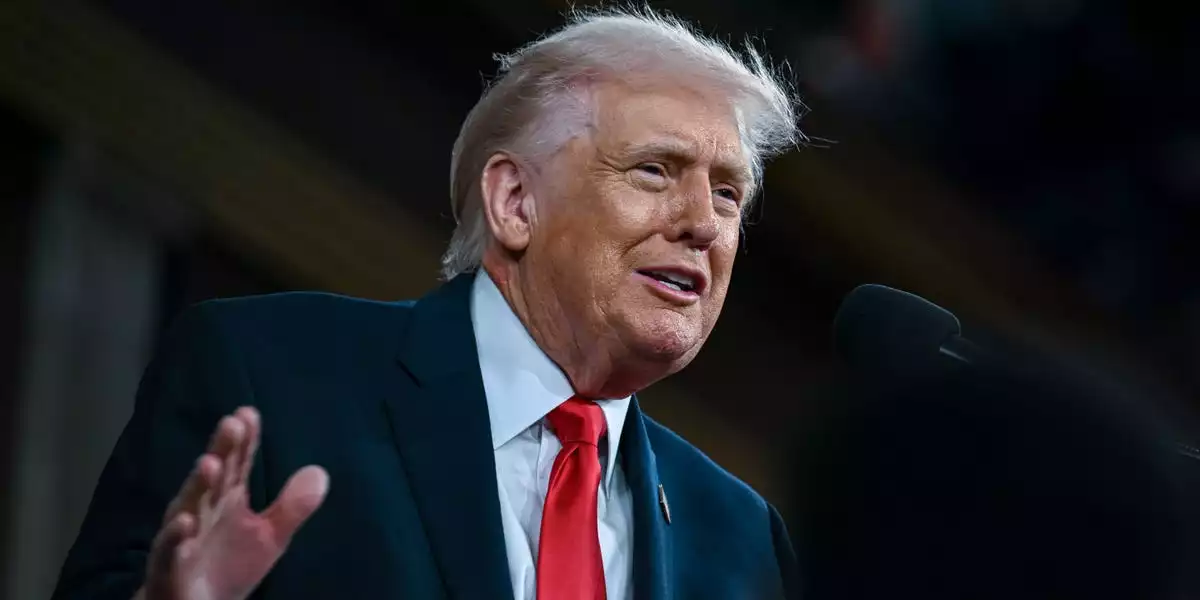
Former President Donald Trump’s warning of “unprecedented force” if Iran retaliates further adds a distinct layer of ambiguity to the crisis. The phrasing is intentionally open-ended: it signals capability and willingness without specifying thresholds, targets, or timelines. For markets and multinational operators, that ambiguity is not rhetorical noise—it is a variable that shapes risk pricing, insurance costs, and contingency planning.
Meanwhile, IRGC-backed counter-strikes have already activated US air defenses and triggered fresh Israeli operations, reinforcing a familiar escalation pattern: limited strikes, retaliatory salvos, and rapid operational adjustments across air, missile, and cyber domains. The difference now is the political backdrop—succession uncertainty in Tehran—raising the probability that signaling misreads could become materially consequential.
Key features defining the moment include:
- Compressed strategic clarity: leadership change reduces predictability in red lines and internal command authority.
- High-density military posture: increased US assets in the region raise both deterrence credibility and incident risk.
- Multi-domain escalation pathways: kinetic action is tightly coupled with cyber and information operations.
Washington’s dual-track posture: diplomacy underwritten by deterrence
The episode is unfolding against a paradox that is increasingly characteristic of modern statecraft: simultaneous nuclear-deal overtures and a bolstered American footprint in the Gulf. This dual-track approach is not necessarily contradictory; it is a form of bargaining architecture in which diplomacy is strengthened by credible coercive capacity.
Trump’s “unprecedented force” threat functions as a deterrence instrument designed to preserve adversary uncertainty—what strategists often describe as deliberate ambiguity. The objective is to raise the perceived cost of retaliation without locking the United States into a single escalatory ladder. For Iran, the challenge is interpreting intent amid a shifting leadership environment and a heightened operational tempo.
For allies and partners—particularly Israel and Gulf states—the posture offers reassurance, but it also introduces coordination complexity. As military activity increases, so does the need for synchronized rules of engagement, deconfliction channels, and intelligence-sharing protocols. In practical terms, the crisis is likely to accelerate:
- Integrated air and missile defense cooperation, including radar fusion and interceptor stockpile planning
- Maritime security operations focused on chokepoints and shipping lanes
- Sanctions and compliance tightening, especially around dual-use components and financial routing
The strategic question for global business is not simply whether escalation occurs, but how it is managed—and whether the region settles into a prolonged period of elevated friction that becomes the new baseline.
Energy markets, defense procurement, and the repricing of geopolitical risk
The most immediate economic transmission channel is energy. Any perceived threat to the Strait of Hormuz—even absent a physical disruption—tends to inject a risk premium into crude pricing. That premium can be amplified by shipping insurance costs, freight volatility, and precautionary inventory behavior among refiners and large consumers.
For corporate balance sheets, the implications are concrete:
- Oil-price volatility can pressure margins in transport, chemicals, aviation, and heavy manufacturing.
- Hedging strategies may need recalibration as implied volatility rises and correlations shift.
- Freight and insurance costs can climb quickly if threat perceptions harden around Gulf transit routes.
Defense markets are the second major channel. Heightened regional instability typically accelerates procurement cycles, not only for traditional platforms but for systems that can be fielded quickly and scaled rapidly. Likely beneficiaries include:
- Drone and counter-drone systems (detection, jamming, directed-energy roadmaps)
- ISR platforms (airborne sensors, signals intelligence, and analytics)
- Cybersecurity integrators supporting critical infrastructure and defense networks
For investors and executives, the more subtle point is that defense demand is increasingly software-defined: procurement is shifting toward data fusion, targeting intelligence, and resilient communications—areas where commercial innovation cycles outpace traditional acquisition timelines.
The technology layer: ISR, AI analytics, export controls, and cyber escalation
This crisis underscores how modern conflict is mediated by technology supply chains. Persistent surveillance and rapid targeting depend on space-based reconnaissance, signals intelligence, and AI-driven analytics that can synthesize satellite imagery, telemetry, and open-source intelligence (OSINT) into actionable assessments.
As a result, demand is likely to intensify for:
- High-resolution commercial satellite imagery and persistent monitoring services
- AI-enabled decision support that compresses detection-to-decision timelines
- Secure communications and encryption designed for contested environments
At the same time, the risk environment for technology firms is tightening. Dual-use export controls—covering semiconductors, advanced sensors, and encryption tools—can expand quickly during geopolitical shocks. That can disrupt vendor–customer relationships, force redesigns of bill-of-materials, and increase compliance overhead, especially for firms with globally distributed manufacturing footprints.
Cyber risk is the most elastic escalation pathway. As kinetic exchanges intensify, the probability rises of state-sponsored cyber operations targeting:
- Energy infrastructure (grids, refineries, pipeline controls)
- Port and logistics systems (cargo scheduling, customs platforms, terminal operations)
- Defense and aerospace networks (supply chain compromise, credential theft, disruption campaigns)
For boards and risk committees, the operational takeaway is straightforward: resilience now depends on zero-trust architectures, managed detection and response, automated containment, and crisis communications that can withstand both technical disruption and narrative pressure.
What makes this episode especially consequential is not only the exchange of strikes, but the strategic environment surrounding it: a leadership transition in Tehran, an American posture balancing diplomacy and deterrence, and a regional security architecture that increasingly runs on data, satellites, and software. In that mix, volatility is not an anomaly—it is a condition that companies, investors, and governments will have to price, plan for, and compete through.


 By
By
 By
By
 By
By
 By
By


 By
By







