

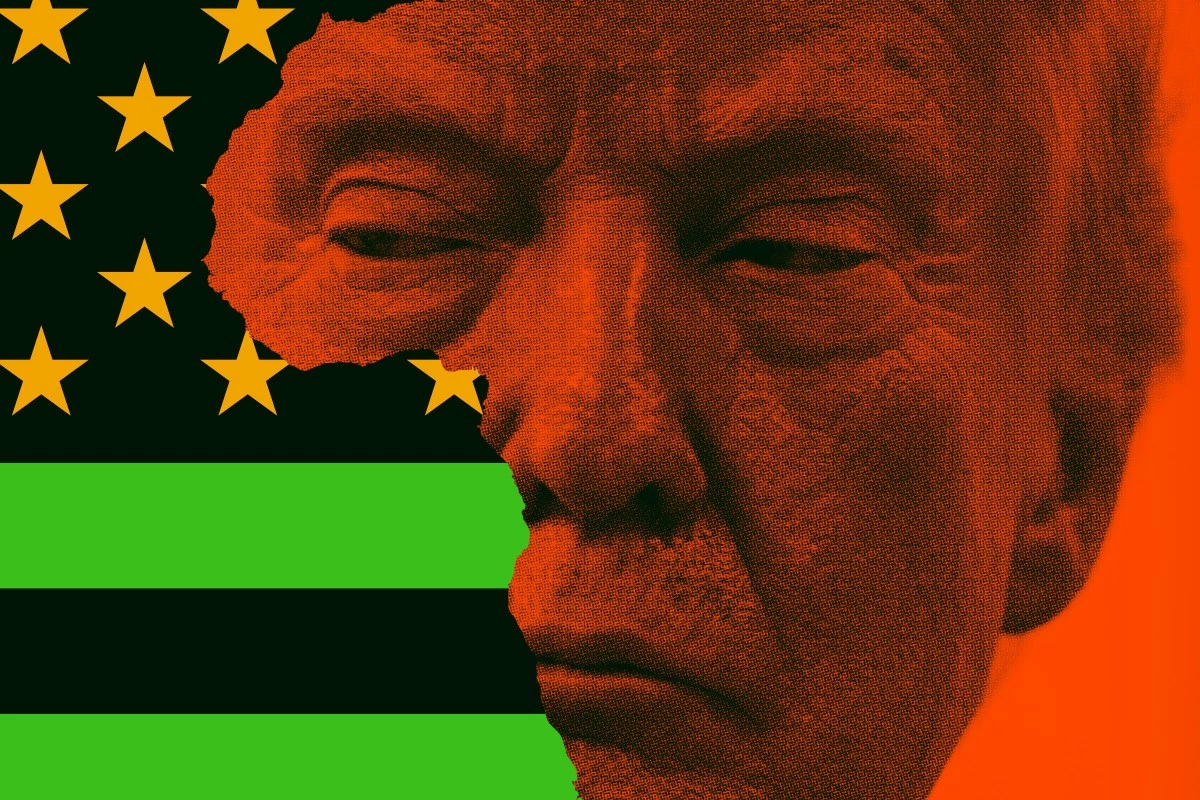

A memo that reframes U.S. global health aid as strategic leverage
A newly disclosed U.S. State Department memo—prepared for Senator Marco Rubio and reported by *The New York Times*—casts a stark light on a policy idea that would have been difficult to imagine during the peak years of bipartisan global-health consensus. The document indicates the Trump administration contemplated withholding roughly $115 million in U.S. support for HIV treatment in Zambia unless Lusaka granted expanded access to copper and other mineral assets for American firms.
The scale of what was reportedly put on the table is not abstract. U.S.-backed programs, primarily through PEPFAR and related channels, underpin antiretroviral therapy for about 98% of Zambia’s 1.3 million people living with HIV. In practical terms, this is not merely “foreign aid” in the budgetary sense; it is a core pillar of a national treatment architecture that depends on predictable funding, procurement, and distribution.
The memo’s significance lies less in whether the proposal was executed than in what it signals: a potential shift from health diplomacy as a long-term partnership tool toward a more transactional model in which lifesaving interventions become bargaining chips in a broader contest for critical minerals and geopolitical influence—particularly against China in Africa’s mining sector.
For business and technology leaders, the episode is a case study in how supply-chain security, industrial policy, and humanitarian programs can collide—sometimes in ways that create more risk than resilience.
Copper, China, and the market reality behind “critical mineral security”
The strategic rationale described in the memo reportedly centers on countering Chinese influence in Africa’s mining ecosystem. That framing aligns with a wider Western policy trend: treating copper, cobalt, lithium, and rare earths as strategic inputs for electric vehicles (EVs), renewable grids, data centers, and telecommunications infrastructure.
Yet the Zambia-specific logic appears complicated by the structure of global commodity trade. Zambia is a meaningful copper producer, but the memo’s implied leverage does not neatly map onto market flows. As summarized, Zambian copper exports largely route to Switzerland, reflecting the role of Swiss trading and refining hubs in global metals commerce. That detail matters: it suggests that “who buys” and “who benefits” from Zambian copper is mediated by intermediaries, contracts, and processing capacity—not simply by bilateral political alignment.
The comparison to Chile, which produces roughly four times more copper, sharpens the question of selectivity. If the overriding objective is supply security at scale, larger and more diversified sources might appear more directly relevant. If the objective is influence in a region where China is perceived to be gaining ground, Zambia becomes symbolically and strategically attractive—even if the immediate commodity arithmetic is less compelling.
For executives tracking critical-mineral exposure, the memo underscores a key reality: resource strategy is increasingly political, and political strategy is not always optimized for market efficiency. That mismatch can create volatility in:
- Offtake agreements and concession terms, where governments may face external pressure to “choose” partners
- Project finance, as lenders price in geopolitical risk and policy reversals
- Downstream planning, especially for EV and grid manufacturers dependent on stable copper inputs
- ESG and compliance, where reputational risk can attach to deals perceived as coercive or exploitative
When antiretroviral supply becomes a bargaining chip: technology, standards, and resilience
Conditioning HIV treatment support on mineral access introduces a different kind of supply-chain risk—one rooted in public health continuity and the integrity of global medical procurement. Antiretroviral therapy is not a discretionary product; interruptions can drive viral rebound, increase transmission risk, and accelerate drug resistance. In systems terms, the “switching cost” of disrupted treatment is paid in clinical outcomes and long-tail public expenditure.
From a technology and industrial standpoint, the memo’s approach could also catalyze second-order effects that reshape the health innovation landscape in Africa:
- Localization of pharmaceutical manufacturing: Governments and NGOs may accelerate efforts to build regional production capacity to reduce reliance on conditional external funding.
- Supplier diversification: Zambia and peer countries could deepen procurement relationships with Indian generic manufacturers or alternative donor ecosystems, including China’s health diplomacy channels.
- Standards fragmentation: A more multipolar aid and procurement environment can complicate harmonization around quality assurance, pharmacovigilance, and pricing transparency.
- Investment hesitation: If aid is perceived as contingent on unrelated concessions, private-sector partners may view health systems as politically unstable platforms for long-term investment.
For U.S. technology and life-sciences stakeholders, there is a strategic paradox here. Using medical aid as leverage may aim to strengthen U.S. positioning in critical minerals, but it can also weaken the very institutional trust that enables durable partnerships—trust that often determines whether American firms are welcomed as long-term investors rather than short-term extractive actors.
The reputational and diplomatic balance sheet for governments and multinationals
The ethical dimension is not a side issue; it is central to the policy’s likely effectiveness. Linking lifesaving HIV treatment to mineral concessions risks undermining U.S. soft power—a form of influence that has historically been amplified by PEPFAR’s visibility and outcomes. It also invites a narrative competitors can exploit: that Western engagement is conditional, transactional, and ultimately extractive.
For Zambia, coercive pressure—real or perceived—could incentivize hedging behavior: diversifying alliances, financing sources, and commercial partners to reduce vulnerability to any single external actor. That dynamic can produce the opposite of the intended geopolitical outcome, potentially deepening the role of rival powers or nontraditional financiers in the mining sector.
For multinational firms, the lesson is equally concrete: state-driven bargaining tactics can become reputational liabilities for companies seen as beneficiaries. Boards and C-suites will likely need to treat “political provenance” as part of supply-chain due diligence, alongside labor practices, environmental impact, and community consent.
A more durable model—one that aligns business incentives with stable governance—tends to rest on predictable health and development commitments, transparent mining frameworks, and multilateral guardrails that keep humanitarian programs insulated from unrelated negotiations. When those boundaries blur, the immediate leverage gained can be outweighed by longer-term costs: weakened trust, fragmented standards, and a more brittle operating environment in one of the world’s most strategically important resource corridors.

 By
By
 By
By
 By
By
 By
By
 By
By


 By
By







