

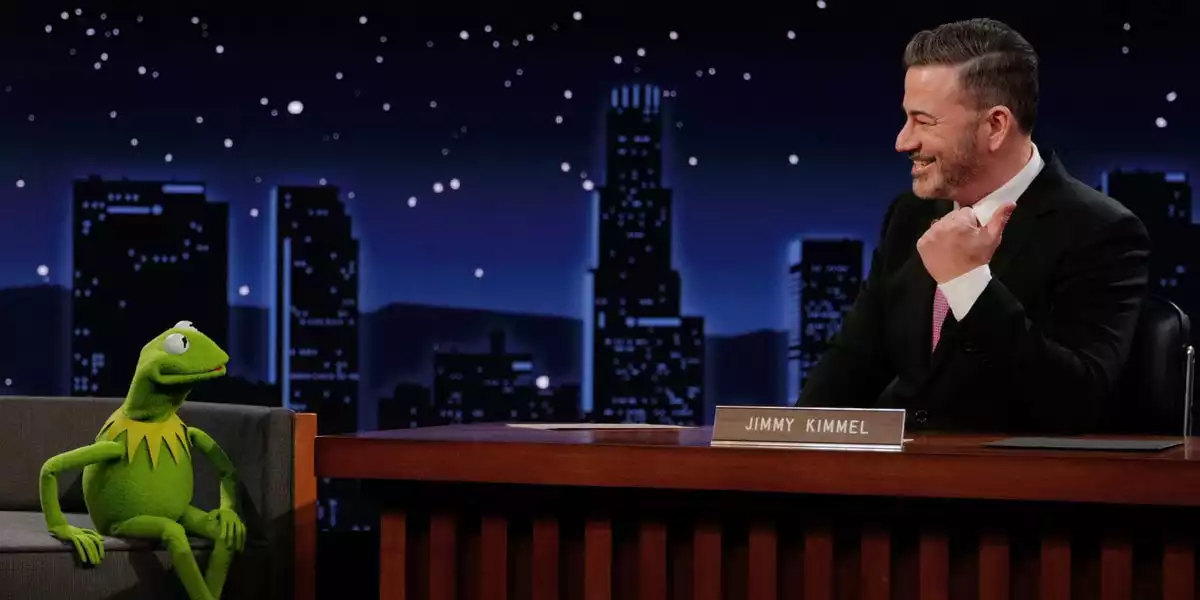

A sharpened political spotlight on Disney, ABC, and late-night speech
The renewed calls by former President Donald Trump and former First Lady Melania Trump for Disney to sanction Jimmy Kimmel’s ABC talk show revive a familiar flashpoint: the collision between partisan grievance and mass-market entertainment. What makes this episode materially different is not the rhetoric itself, but the institutional context now surrounding it—namely, an accelerated Federal Communications Commission (FCC) license review of ABC stations, initiated years ahead of the typical renewal cadence.
In the U.S. broadcast system, licenses are not merely administrative paperwork; they are the legal foundation for using scarce public spectrum. That reality creates an enduring vulnerability for legacy broadcasters: even when the odds of an actual license revocation are low, the *process* of scrutiny can become a powerful lever. The practical question for Disney is less “Will ABC lose its licenses?” and more “How does heightened regulatory attention change operational risk, affiliate behavior, and long-term investment decisions?”
Key elements shaping the moment include:
- Public political pressure aimed at a specific program and host, with echoes of last year’s confrontation that temporarily took Kimmel off-air.
- FCC action under Chair Brendan Carr, a Trump appointee, moving earlier than the scheduled 2028 cycle to review ABC station licenses.
- A signaling campaign that praises station groups such as Sinclair and Nexstar for dropping Kimmel previously—implicitly framing carriage decisions as politically consequential.
The FCC license review as leverage: legality versus signaling power
Legal and industry experts broadly view permanent revocation of Disney’s broadcast licenses as unlikely, given the statutory and procedural hurdles involved. Yet focusing only on the endgame misses the strategic utility of the move. An early license review can function as a regulatory stress test—not necessarily to win in court, but to reshape incentives across the media ecosystem.
This is the modern architecture of regulatory coercion: not overt censorship, but credible uncertainty. The threat is not “you are banned,” but “your renewal process may become painful, expensive, and unpredictable.” That dynamic can encourage self-censorship without requiring any formal content prohibition.
The broader pattern is reinforced by recent precedent. The FCC’s posture in the approval of the Ellisons’ Paramount acquisition, reportedly conditioned on appointing a conservative ombudsman, signals a willingness to attach governance or oversight expectations to regulatory outcomes. Whether such conditions are ultimately durable or contestable, they communicate a clear message to media executives: regulatory discretion can be used to influence corporate behavior.
For broadcasters and their partners, the risk radiates outward:
- Affiliates and syndicators may reassess carriage of politically controversial programming if they believe it could invite scrutiny.
- Advertisers may seek stability, pushing networks to avoid programming that triggers regulatory headlines.
- Investors and lenders may price in a “political risk premium,” even if the legal probability of revocation remains remote.
Business consequences for Disney and the broadcast sector: capex, valuation, and strategy
For Disney, ABC remains strategically valuable—not only for linear advertising revenue, but as a promotional engine for Disney’s broader portfolio, including streaming. But the reintroduction of license uncertainty complicates long-range planning in ways that are easy to underestimate.
Even marginal increases in perceived regulatory risk can:
- Raise the cost of capital for station groups and networks, widening credit spreads and dampening valuations.
- Slow or reshape capital expenditures tied to station modernization, including ATSC 3.0 (NextGen TV) deployments, newsroom upgrades, and local content investments.
- Influence portfolio strategy, nudging companies to reduce exposure to assets most vulnerable to political leverage.
Disney CEO Josh D’Amaro has publicly maintained that ABC’s licenses are secure and has shown no substantive inclination to alter programming to satisfy political demands. That stance matters: it signals confidence to markets and employees, and it reduces the chance of a rapid editorial retreat. Still, even a firm corporate posture cannot fully neutralize the second-order effects of regulatory attention—especially if the goal is to make the *example* as important as the outcome.
This is where the episode becomes a broader industry story. Legacy broadcasting is increasingly asked to operate like a modern, data-driven media business while still carrying a uniquely analog vulnerability: dependence on spectrum licenses that can be politicized, even if only through process and publicity.
Why this accelerates streaming migration—and reshapes media dealmaking
The most durable impact may be structural: heightened broadcast risk can accelerate the industry’s migration toward digital and direct-to-consumer (DTC) distribution, where the FCC’s traditional licensing leverage is far weaker. Streaming platforms offer not only insulation from broadcast renewal cycles, but also superior audience data, personalization, and measurement—capabilities that translate directly into pricing power and product iteration.
As this pressure builds, several strategic pathways become more attractive:
- Distribution diversification: shifting marquee content—news, live events, flagship talk formats—into hybrid models that reduce reliance on over-the-air carriage.
- Data-centric programming decisions: using analytics to quantify channel value and allocate investment toward scalable digital infrastructure.
- Opportunistic M&A and partnerships: regulatory volatility can discount broadcast assets, inviting buyers willing to underwrite uncertainty—private equity, contrarian strategics, or digitally native platforms seeking reach.
- Global precedent risk: if U.S. regulators are perceived as tools for content pressure, other governments may cite the example to justify similar tactics, weakening international norms around media independence and creative expression.
What emerges is a sober reality for the business of media: even when formal censorship is absent, the combination of political pressure and regulatory discretion can still shape content markets—through financing costs, affiliate decisions, and corporate risk tolerance. Disney’s immediate challenge is to defend ABC’s operational stability without allowing the license process to become a de facto editorial governor. The industry’s larger challenge is to build distribution and governance models resilient enough to withstand the next cycle of politicized scrutiny—because the signal being sent is that the spectrum bargain can be renegotiated in the court of public power, not just the rulebook.

 By
By
 By
By
 By
By
 By
By
 By
By
 By
By

 By
By







