

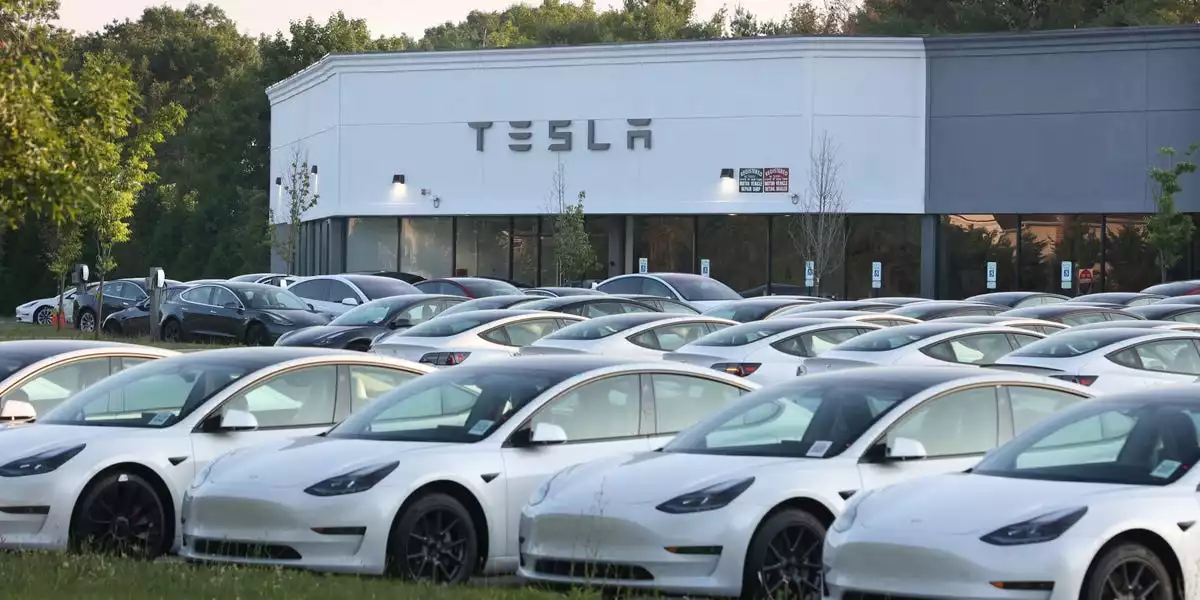

A Sudden Shift: The Disappearance of Federal Regulatory Credits and the EV Sector’s New Reality
The Trump administration’s abrupt neutralization of the U.S. federal regulatory-credit market—reducing Corporate Average Fuel Economy (CAFE) non-compliance penalties to zero and freezing new credit issuance—has sent shockwaves through the North American auto sector. For Tesla, Rivian, and Lucid, the evaporation of over $1.2 billion in near-term credit-derived revenues threatens not only their gross margins but the very calculus underpinning their business models. The move, swift and decisive, has upended one of the pure-play EV sector’s most reliable profit levers, forcing a strategic reckoning across the industry.
The New Economics of EV Manufacturing: From Paper Profits to Production Realities
For years, the sale of regulatory credits—essentially tradable certificates earned by exceeding emissions standards—has been a quiet but potent engine of profitability for leading EV manufacturers. Tesla’s 2023 credit revenue alone, at nearly $3 billion, outstripped the gross profit of many established industrial firms. With this revenue stream now effectively erased, the spotlight shifts mercilessly to the fundamentals: manufacturing cost curves, battery innovation, and the monetization of software.
- Tesla retains a relative advantage, with scale economies in battery-pack production and a maturing software stack. Yet even Tesla faces a margin compression test, as credits dwindle to a rounding error in its revenue mix. The company’s response will likely hinge on accelerating its push into full-self-driving subscriptions, energy storage, and the licensing of its charging standard—an attempt to replace lost “paper” profits with tangible, recurring cash flows.
- Rivian and Lucid, meanwhile, are more exposed. Both remain in negative gross-margin territory on vehicles alone. The sudden loss of credit revenue undermines their ability to self-fund factory ramp-ups, compelling urgent cost reductions—think cell-to-pack battery architectures, LFP chemistries, and simplified wiring harnesses—or, failing that, the pursuit of fresh (and likely dilutive) capital.
The consequences ripple outward. Battery joint ventures, such as Rivian’s planned Georgia cell plant, may see financing dry up, squeezing upstream suppliers and raising unit costs across the domestic battery ecosystem. As hardware margins are squeezed, the industry’s gaze turns to software and services—fleet telematics, driver-assistance subscriptions—as the next frontier for margin restoration.
Policy Whiplash and the Global Investment Climate: A New Risk Premium for U.S. EVs
The policy reversal is not occurring in a vacuum. While Europe tightens CO₂ targets and China extends new energy vehicle subsidies, the United States now signals a retreat from regulatory certainty. For global investors, this injects a fresh layer of volatility into U.S. EV assets, demanding a higher risk premium and raising the cost of capital—precisely when scale-up funding is most critical.
Legacy automakers, suddenly relieved of compliance penalties, may redirect capital to refresh high-margin internal combustion engine (ICE) trucks and SUVs, slowing the pace of fleet electrification. The ambiguity also complicates battery-sourcing commitments and freezes planning cycles for Tier-1 suppliers. For EV upstarts, the policy vacuum means more than just lost revenue: it threatens to stall the entire domestic supply chain, from cathode powder to finished vehicles.
Inflationary dynamics are also in play. Reduced EV build volumes could temper demand for lithium and nickel, easing battery-metal inflation. Yet with fewer vehicles rolling off the line, fixed labor and overhead costs are spread more thinly, pushing per-unit economics in the wrong direction.
Strategic Crossroads: How Industry Players Are Rewriting Their Playbooks
The collapse of the federal credit market forces every stakeholder to reconsider their next move:
- Tesla must accelerate software and energy diversification, tapping into alternative incentive pools where possible.
- Rivian faces a “fleet-first” pivot, with its Amazon delivery van contract now a lifeline. Without credits, a multi-billion-dollar capital raise may be unavoidable, and strategic alliances with truck OEMs or energy majors become more attractive.
- Lucid is likely to intensify technology licensing, especially to foreign OEMs, while grappling with the dilemma of cutting prices to drive volume versus preserving its luxury cachet.
- Legacy automakers enjoy a short-term windfall, but risk strategic myopia if penalties are reinstated by a future administration—potentially even retroactively. Meanwhile, credit-stripped EV upstarts become more attractive acquisition targets, offering incumbents a shortcut to electrification at discounted valuations.
The path forward is anything but linear. Scenarios range from a regulatory snapback post-election, to a patchwork of state-level mandates, to a prolonged era of deregulation favoring cost-optimized ICE and plug-in hybrids. For decision-makers, the checklist is formidable: stress-test cash flows, diversify incentive exposure, lock in critical materials under flexible contracts, and build real-time policy intelligence to avoid stranded investments.
The dismantling of the federal regulatory-credit market is not a mere policy blip—it is a structural shock that re-prices risk, capital, and competitive advantage across the EV value chain. Those who combine cost discipline, diversified incentives, and agile policy hedging will not only survive this turbulence but may emerge with a decisive edge in the next chapter of automotive transformation.


 By
By

 By
By

 By
By
 By
By


 By
By


 By
By







