


Wild Crows, Viral Hats, and the Unruly Future of Automation
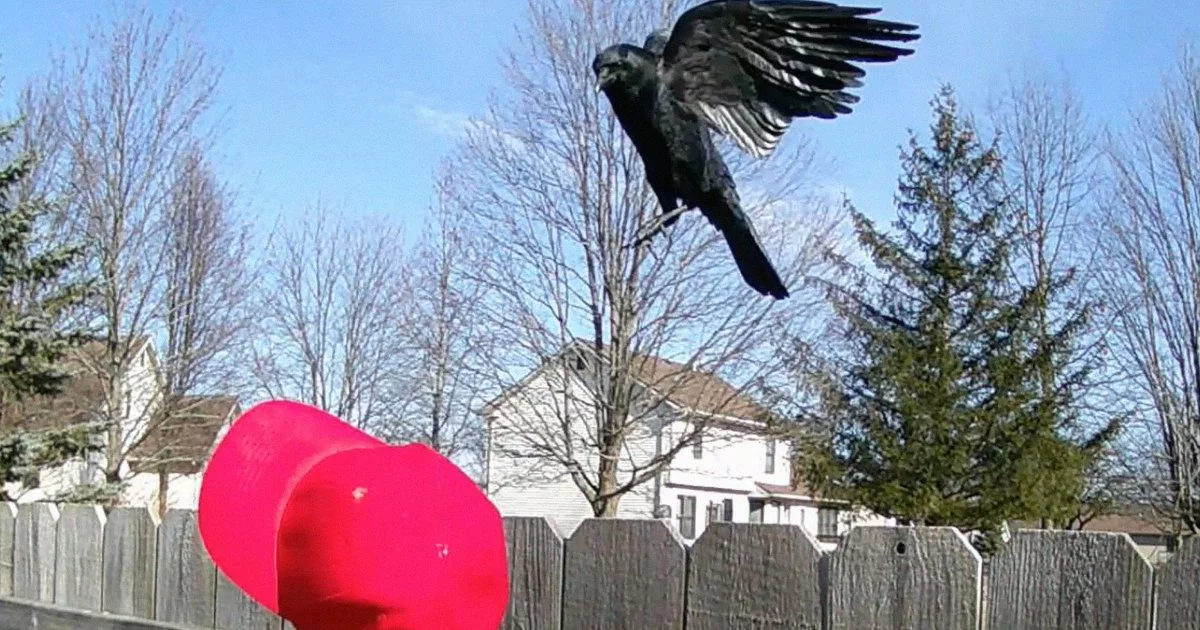
A viral social-media experiment—one that saw wild crows trained to remove “Make America Great Again” hats—has captured the internet’s imagination, blending the frontiers of animal cognition with the volatile currency of political symbolism. On its surface, the story is whimsical, almost cinematic: a private citizen, a flock of clever birds, and a red hat that has become a lightning rod for American identity. But beneath the spectacle, the episode reveals tectonic shifts in how innovation, ideology, and automation are colliding in the digital age.
Nature-Hacked Automation and the Rise of Edge-Case Innovation
The four-month crow-training odyssey is more than an eccentric hobbyist’s lark. It is a living demonstration of reinforcement learning—reward, feedback, optimization—executed not in silicon, but in feathers and instinct. The crows, incentivized by food, learned to identify and remove a politically charged object, performing a task that, in robotics, would require significant capital and engineering. This “bio-hacked” automation is emblematic of a broader movement: enterprises are increasingly exploring nature-inspired solutions as agile, cost-effective complements to traditional robotics. Bees monitor crops, dogs deliver packages, and now, crows police political iconography.
Such experiments often emerge not from institutional R&D labs, but from distributed, grassroots networks—individuals and open-source communities operating outside the boundaries of formal governance. The implications are profound. Disruptive prototypes can now materialize faster and more unpredictably than ever, challenging both intellectual property regimes and the ability of brands to control their public image. For major corporations, the risk is clear: the next viral disruption may originate from a backyard, not a boardroom.
Political Symbolism and the Economics of Virality
The MAGA hat, once a simple piece of campaign merchandise, has evolved into a potent symbol—one whose value is as much emotional as it is economic. For some, it signifies loyalty and pride; for others, toxicity and division. This bifurcation has real financial consequences. Publicly traded companies now face what analysts call “political-equity discounts” or, conversely, “alignment premiums,” as investors and consumers scrutinize every association for ideological resonance. A single image, amplified by social media, can swing Net Promoter Scores, trigger activist campaigns, or even alter sponsorship deals.
The crow initiative is a case study in “interactive protest tech”—a genre of activism that is experiential, algorithmically optimized, and designed for maximum shareability. Unlike traditional demonstrations, these acts are kinetic, automated, and often originate from individual creators rather than mass movements. For marketing and risk officers, this is uncharted territory: the threat landscape now includes not just negative press, but viral disruptions engineered for the attention economy.
Platform Governance, Monetization, and the Ethics of Cognitive Engineering
The experiment’s virality was fueled by low-cost digital distribution. Platforms like Threads have become crucibles for “Attention-as-a-Service,” where novelty and spectacle drive engagement, monetization, and influence. The creator’s success in translating a backyard experiment into digital clout is a blueprint for the emergent microeconomy of tipping, sponsorship, and data harvesting. Yet, this attention arbitrage presents a dilemma for tech platforms: how to balance the benefits of viral content with the risks of reputational damage and potential legal exposure.
There are also emerging questions of liability. While the crows’ actions have not caused physical harm, the autonomous removal of personal property—whether by animal or machine—edges toward legal gray zones. As future analogs proliferate (think drones, bots, or other trained animals), platforms may find themselves navigating new liabilities as real-world impacts are documented and litigated.
Ethically, the episode blurs lines that regulators are only beginning to address. Training wild animals for political ends raises questions akin to the use of AI deepfakes for persuasion. Even non-invasive conditioning may be scrutinized under the emerging frameworks of “cognitive exploitation,” as lawmakers and ethicists grapple with the rights and welfare of sentient species. Enterprises exploring bio-automation must also weigh the sustainability narrative against the risk of ecological disruption—a tension likely to be codified as ESG reporting expands to include biodiversity metrics.
Strategic Horizons: From Backyard Robotics to Symbolic Risk
The trained-crow phenomenon is a harbinger of things to come. As bio-inspired “backyard robotics” proliferate, niche markets will emerge for living organisms trained or genetically edited for targeted tasks—from waste collection to pollination—creating new opportunities and regulatory challenges. At the same time, as polarization intensifies, everyday products will increasingly serve as ideological proxies, compelling brands to choose between neutrality and explicit alignment.
For decision-makers, the lessons are clear:
- Monitor the fringe: R&D and corporate-venture teams must expand their innovation radars to include maker communities and animal-behavior forums.
- Integrate sentiment analysis: Brands should track the emotional and political resonance of imagery, understanding that a single symbol can shift consumer sentiment overnight.
- Draft proactive governance: Legal frameworks must anticipate the deployment—and potential fallout—of autonomous agents, whether biological or mechanical.
What began as a viral oddity is, in fact, a microcosm of the new strategic landscape. The intersection of low-cost cognitive engineering, politicized branding, and digital attention economics is reshaping the rules of engagement for technology companies, brands, and investors alike. Those who dismiss such signals risk missing the early tremors of seismic change.

 By
By
 By
By
 By
By
 By
By

 By
By








