

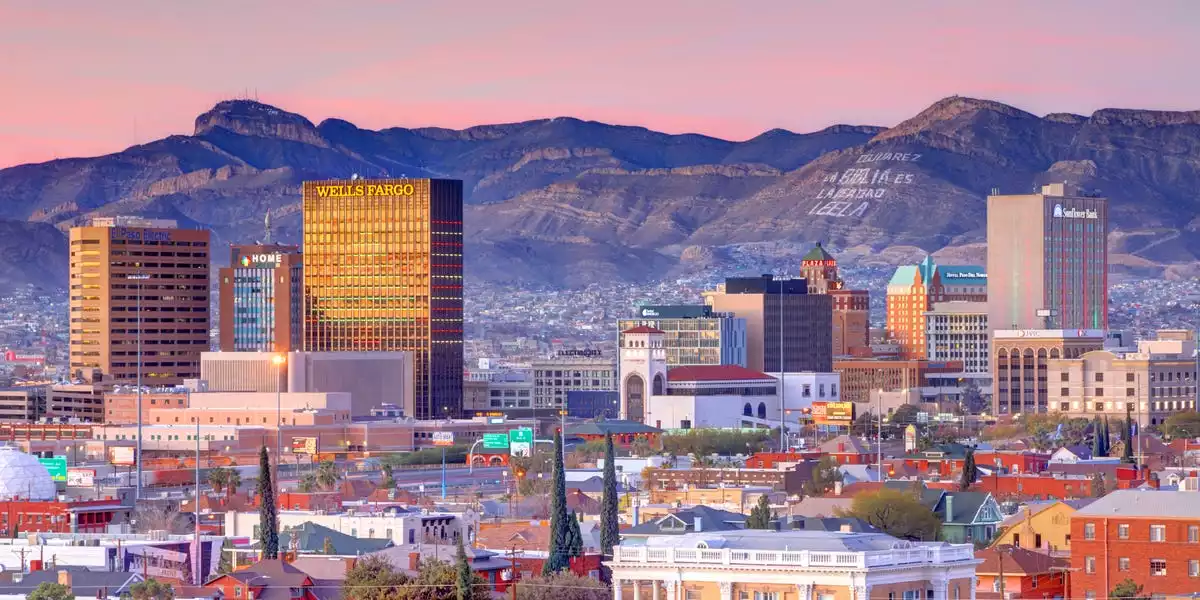

A new urban hierarchy emerges as affordability and livability reshape “big city” appeal
US News & World Report’s latest “Best Big Cities to Live In” ranking—covering 859 U.S. cities with populations above 500,000—offers a revealing snapshot of how Americans are recalibrating the value of urban life. The standout signal is not simply that three Texas metros (El Paso, Austin, Fort Worth) place in the top five, but that the scoring criteria—quality of life, value, desirability, job market, and net migration—increasingly reward cities that can deliver a credible “full-stack” urban experience without the financial strain long associated with major metros.
That shift is visible in the broader leaderboard as well. Oklahoma City taking the top spot, alongside the presence of markets such as San Francisco, Sacramento, Atlanta, and Portland, underscores a national pattern: the competition is no longer a coastal monopoly. Instead, the “best big city” conversation is becoming a contest over cost-to-opportunity efficiency, where housing, commutes, and everyday amenities weigh as heavily as wages and brand-name employers.
For business leaders, investors, and policymakers, the ranking functions less as a lifestyle listicle and more as a real-time proxy for talent flows—a map of where skilled workers believe their paychecks and quality of life go furthest.
Texas’ top-five surge: three metros, three distinct economic narratives
Texas’ dominance in the top tier is notable because the three metros are not interchangeable. Each represents a different model of urban competitiveness—together illustrating why the state continues to attract both people and capital.
- El Paso stands out for pure affordability paired with urban functionality. With a median home value of $197,000 and average rent of $964, it offers what many large metros can no longer credibly promise: big-city amenities at below-national-average cost. For first-time buyers, mid-career relocators, and employers seeking to reduce labor-cost pressure without abandoning metro-scale infrastructure, that pricing is not a footnote—it is the thesis.
- Austin remains the archetype of the modern innovation hub, with a tech-forward economy and a creative ecosystem that continues to draw talent and venture activity. Yet its numbers—median home price of $581,000 and rent of $1,612—also capture the tension inside high-growth success stories: the very dynamism that attracts workers can erode affordability and push the city toward the same constraints that have challenged legacy coastal markets.
- Fort Worth occupies a strategic middle ground, blending cultural identity and economic expansion with comparatively moderate housing costs (median home value of $321,600, rent of $1,360). Its appeal is increasingly tied to livability plus scalability—a metro that can absorb growth while maintaining a distinct civic brand and a cost structure that remains accessible to a broad workforce.
Taken together, these cities illustrate a key point for corporate site selection: “Texas” is not a single bet. It is a portfolio of metro strategies—affordability-led (El Paso), innovation-led (Austin), and balance-led (Fort Worth)—each with different risk profiles and workforce implications.
Migration, housing, and the new calculus of talent retention
The ranking’s emphasis on net migration reflects a deeper structural change in how Americans choose where to live. The post-pandemic labor market did not eliminate geography; it re-priced it. Remote and hybrid work expanded the set of viable home bases, while inflation and housing scarcity sharpened the trade-offs between prestige and practicality.
Three forces stand out:
- Housing as a labor-market variable: In many industries, compensation alone no longer solves recruitment. If housing costs consume too much of a paycheck, employers face higher churn, longer time-to-hire, and pressure to raise wages. Cities like El Paso benefit from a lower “burn rate” for households, which can translate into more stable labor pools.
- “Affordability arbitrage” within growth corridors: As Austin’s costs rise, nearby and adjacent markets can capture spillover demand—both residential and commercial. Fort Worth’s positioning suggests how growth can become distributed across a region, rather than concentrated in a single superstar city.
- Amenities and commutes as competitive infrastructure: The modern talent equation increasingly includes time cost (commute length), access to green space, and day-to-day convenience. These factors, once considered secondary, now influence relocation decisions as directly as job titles.
This is not merely a consumer preference story. It is a business productivity story. Shorter commutes and attainable housing can improve retention and reduce the hidden costs of workforce instability—especially in sectors where teams must collaborate in person part of the week.
What the rankings imply for executives, investors, and city leaders
The immediate takeaway from Texas’ performance is momentum—but the more valuable insight is what it takes to sustain it. High rankings can accelerate growth, and growth can strain the very systems that made a city attractive.
For decision-makers, several implications rise to the surface:
- Corporate strategy: Companies evaluating expansion or relocation are increasingly likely to adopt multi-node footprints, pairing a high-cost flagship hub with lower-cost metros that can host operations, engineering pods, or rotational teams. Texas metros—especially when viewed as a network—fit that model.
- Real estate and capital allocation: Investors tracking migration and affordability signals may see continued rationale for deploying capital into Sun Belt growth corridors, particularly in mixed-income housing, adaptive reuse, and community retail that follows household formation.
- Workforce development as a moat: Cities that convert migration into durable prosperity will be those that scale upskilling pipelines aligned to local industry—whether that’s Austin’s tech ecosystem, Fort Worth’s diversified services base, or El Paso’s logistics and advanced manufacturing potential tied to cross-border commerce.
- Resilience and constraints: Rapid growth brings exposure. Water availability, climate risk, and infrastructure capacity can become binding constraints if not addressed early. The metros that remain “best to live in” over the next decade will be those that treat resilience as economic policy, not environmental afterthought.
US News & World Report’s ranking ultimately captures a pragmatic national mood: Americans still want the opportunity density and cultural energy of big cities, but they are less willing to pay a coastal premium for it. Texas’ top-five showing signals that the center of gravity in U.S. urban desirability is shifting toward metros that can deliver jobs, identity, and affordability in the same frame—and that is a competitive advantage no balance sheet should ignore.

 By
By
 By
By
 By
By

 By
By

 By
By
 By
By







