

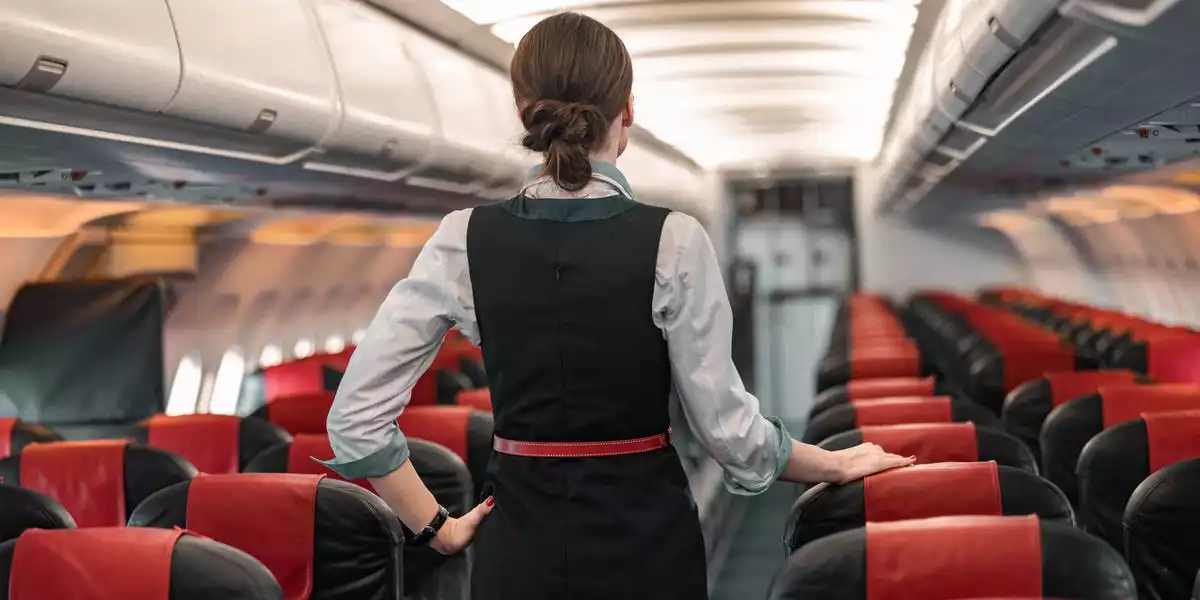

Everyday passenger habits that quietly strain the aviation system
A veteran flight attendant’s “simple” travel advice—shaped by 250+ flights in a year—reads less like etiquette coaching and more like an on-the-ground diagnostic of where modern air travel still frays. The four recurring passenger missteps she flags—arriving too late, drinking too much, skipping seat selection, and neglecting hygiene—map cleanly onto the industry’s most persistent pressure points: throughput management, safety compliance, ancillary revenue design, and trust in cabin cleanliness.
What makes these observations commercially relevant is their compounding effect. A single late arrival can trigger gate-agent interventions, rebooking queues, and baggage offloads. A single intoxicated passenger can escalate from a customer-service issue into a safety event. A single seating surprise can become a loyalty problem. And a single “unclean” perception can undermine confidence in a brand that sells, above all, reliability.
For airlines and airports, these are not isolated annoyances—they are repeatable, predictable failure modes in the passenger journey, from curbside to cabin.
Airport lead time is now a throughput and forecasting problem, not a personal planning issue
The attendant’s baseline guidance—arrive at least 2 hours early for domestic flights and 3 hours for international—is familiar. The business significance lies in why this advice remains necessary: passenger arrival patterns are still poorly synchronized with the system’s capacity constraints.
Late arrivals don’t just miss flights; they distort operational flow:
- Security checkpoint congestion intensifies when travelers “batch” into peak windows, forcing airports to overstaff or absorb longer queues.
- Gate operations become more volatile as agents juggle standby lists, late bags, and last-minute seat changes.
- Rebooking and customer-service load spikes, raising labor costs and increasing the likelihood of negative customer outcomes.
The attendant’s suggestion to stay near the gate during delays also points to a persistent communications gap. Many travelers still behave as if a delay is a free pass to wander, only to be caught off-guard by a sudden boarding call or aircraft swap. That isn’t purely user error; it reflects the limits of today’s “real-time” airline messaging, which often struggles with last-minute operational changes, inconsistent push notification delivery, and fragmented airport-versus-airline information systems.
Strategically, this is where AI-driven journey orchestration becomes more than a buzzword. Airports and carriers that can better predict demand surges—then nudge passengers with accurate, timely guidance—stand to reduce friction without adding headcount.
Alcohol-related offloads expose a costly safety–revenue trade-off
Overindulgence at airport bars may sound like a personal choice, but it carries direct operational and regulatory consequences. When a passenger is deemed “unfit to fly,” the downstream costs can include:
- Boarding delays and gate holds
- Baggage offload procedures
- Crew and security involvement
- Potential regulatory scrutiny and incident reporting
- Diversion risk if intoxication escalates in-flight
This is where aviation’s commercial incentives collide. Airports and concession operators benefit from food-and-beverage revenue, while airlines bear the safety and disruption risk once the passenger reaches the gate. The attendant’s warning highlights an industry coordination problem: hospitality is monetized upstream; safety costs are paid downstream.
Forward-looking operators are exploring “embedded safety analytics” approaches—ideally non-intrusive and privacy-conscious—such as improved incident flagging, better staff coordination between concessions and gate teams, and more consistent enforcement of service cutoffs. The goal is not surveillance theater; it’s reducing predictable disruptions that degrade on-time performance and increase frontline conflict.
Seat selection has become a loyalty lever—and a flashpoint in ancillary pricing
The advice to choose seats early is practical, but it also reveals how seat allocation has evolved into a central feature of airline economics. When passengers skip seat selection, they often end up with middle seats, separated companions, or last-row constraints—outcomes that feel punitive even when they are simply the result of inventory mechanics.
From a business and technology perspective, seat selection is now a high-impact intersection of:
- Ancillary revenue strategy (preferred seats, extra legroom, bundled upgrades)
- Customer satisfaction and retention (especially for families and groups)
- Algorithmic pricing and personalization (dynamic offers based on demand and profile signals)
Airlines have strong incentives to monetize preferred seating, but the attendant’s point underscores a reputational risk: if passengers perceive the system as coercive—pay or be uncomfortable—brand trust erodes. The next phase is likely more modular, transparent ancillary bundles, potentially pairing seating with flexibility benefits or service guarantees, and using personalization to reduce the “gotcha” factor at check-in.
Cabin cleanliness is now a measurable brand promise, not a vague reassurance
The final misstep—overlooking personal hygiene and relying on inconsistent airline cleaning—lands in a post-pandemic reality where cleanliness is both a health concern and a trust signal. The attendant’s personal disinfecting routine is telling: it implies that “turnaround cleaning” standards can vary by carrier, route, and time pressure.
That variability creates two problems:
- Perceived risk: even if actual risk is controlled, uncertainty drives anxiety and dissatisfaction.
- Brand inconsistency: a premium promise collapses if the physical environment feels neglected.
This is where technology can harden soft promises into verifiable standards. Tools such as IoT-enabled sanitation verification, autonomous UVC cleaning systems, and antimicrobial surface treatments offer a path toward consistency—especially if paired with transparent, third-party-aligned cleanliness certifications. Airlines that can credibly demonstrate higher cleanliness benchmarks may find they can defend pricing power and loyalty in a market where many core services have been unbundled.
Taken together, these four “passenger mistakes” function as a compact blueprint for where airlines and airports can still win: better prediction, clearer communication, smarter monetization, and more measurable trust—the operational fundamentals that separate a merely functional trip from a reliably well-run one.

 By
By
 By
By
 By
By


 By
By
 By
By
 By
By







