

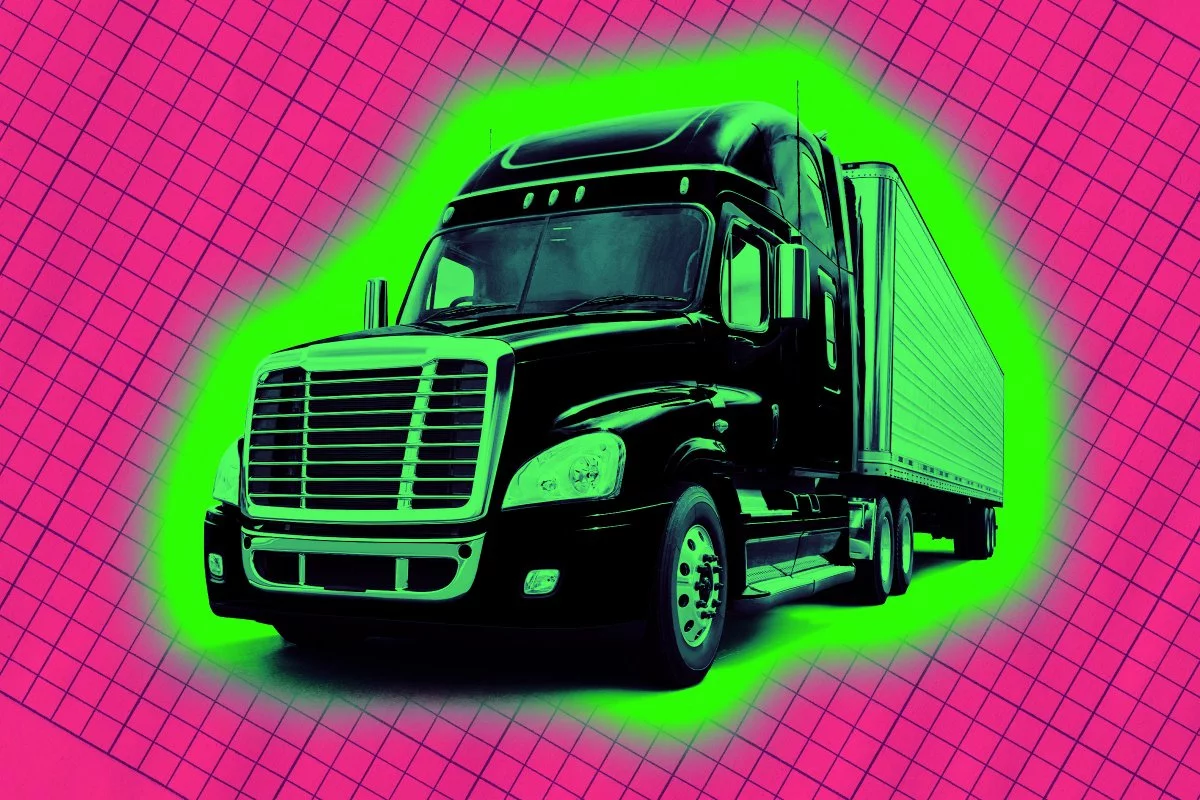

A veteran driver reveals the hidden backbone of America’s nuclear cleanup logistics
The recognition of Tommy Cash, a 43-year veteran trucker with 3.5 million safe miles and honors as one of the Truckload Carriers Association’s Professional Drivers of the Year, does more than celebrate individual excellence. It illuminates a critical but rarely discussed segment of U.S. industrial infrastructure: the over-the-road transportation of radioactive and radiological waste under federal contract.
Cash’s career—moving tens of thousands of 55-gallon drums and millions of gallons of radiological sludge—underscores a reality that often gets lost in the national debate over nuclear energy and cleanup. While policymakers remain deadlocked over permanent nuclear waste storage and long-delayed repository solutions, the country continues to rely on a distributed network of interim handling, remediation sites, and secure shipments. In that environment, the truck cab becomes a moving node of national critical infrastructure—where safety culture, procedural discipline, and technical compliance converge.
This is not simply “hazmat trucking.” It is a specialized operational domain where the margin for error is engineered to be vanishingly small, and where the human operator remains central even as technology advances.
Engineering trust on wheels: containment, monitoring, and the next wave of safety tech
Transporting radiological materials is fundamentally a systems engineering challenge: packaging standards, vehicle integrity, route planning, and incident readiness must interlock seamlessly. The industry’s baseline is already stringent—yet the trajectory points toward deeper instrumentation and continuous verification.
Key technological pillars shaping this niche supply chain include:
- Specialized packaging and containment
– Continued refinement of Type A/Type B packaging emphasizes impact resistance, shielding performance, and leak prevention.
– Materials science improvements—seals, liners, and composite shielding—are increasingly relevant as payload profiles diversify (drums, sludge, contaminated equipment, and mixed waste).
- Real-time sensing and telematics
– Next-generation radiological and environmental sensors can provide continuous monitoring of package conditions and surrounding exposure levels.
– Integrated telematics can extend beyond location tracking to include temperature, vibration, shock events, and potentially driver biometrics, tightening response windows when anomalies occur.
- Predictive maintenance and AI-enabled reliability
– High-consequence cargo elevates the value of predictive maintenance, where AI models analyze vehicle health data to anticipate failures before they occur.
– For carriers, this is not merely uptime optimization; it is risk minimization in a context where roadside breakdowns can trigger cascading security and public confidence concerns.
- Automation at the edges, not the center—yet
– The most immediate automation gains are likely in yards and docks, where robotics can reduce manual handling and limit worker exposure during loading/unloading.
– On highways, advanced driver-assistance systems (ADAS) may expand safety margins in controlled corridors, but the operational and regulatory environment still favors a highly trained human decision-maker in the loop.
Taken together, these technologies point toward a future where compliance is less episodic and paper-based—and more continuous, data-rich, and auditable.
The business of high-hazard freight: premiums, contracts, and a tightening talent market
Behind the public-facing narrative of safety lies a set of economic realities that shape how radioactive waste logistics is priced, staffed, and scaled. This is a market defined by high fixed costs, specialized labor, and a risk profile that insurers and regulators treat differently than conventional freight.
Several forces stand out:
- Cost structures that behave unlike standard trucking
– Specialized drivers command premium compensation, reflecting training intensity, responsibility, and the narrowness of the qualified labor pool.
– Insurance and liability costs can be multiples of typical freight coverage, influencing bid pricing and contract terms—costs that often flow back to public-sector budgets in long-tail cleanup programs.
- Public-private contracting dynamics
– Federal and federally adjacent work frequently hinges on contract structures such as fixed-fee or cost-plus models, each with different incentives for innovation, efficiency, and risk transfer.
– Because annual shipment volumes can be relatively modest compared with mainstream freight, the sector has fewer opportunities to dilute overhead—making scale efficiencies harder to achieve without policy and infrastructure changes such as regional consolidation.
- A looming workforce continuity problem
– The industry faces the same demographic pressures as trucking broadly, but with higher stakes: an aging cohort of specialized drivers and limited replacement pipelines.
– The next generation of operators will need fluency not only in safety protocols, but also in digital workflows—telematics dashboards, electronic chain-of-custody, and AI-assisted diagnostics—turning “driver” into a hybrid of operator, compliance professional, and field technologist.
Cash’s profile is therefore not just a human-interest milestone; it is a signal about scarce expertise in a mission-critical supply chain.
Policy gridlock turns transport into a long-term institution—raising the bar for security and governance
The strategic tension at the heart of this story is straightforward: the United States has world-class capabilities for moving radiological waste safely, yet remains constrained in its ability to finish the waste lifecycle through permanent disposal. With Yucca Mountain stalled and interim storage pathways politically and logistically complex, transport becomes more than a bridge between endpoints—it becomes an enduring institution.
That reality elevates three governance priorities:
- National security and critical infrastructure protection
– Route planning, timing controls, and coordination across DOE, DOT, NRC, and DHS reflect the intersection of logistics with homeland security.
– As fleets become more connected, cybersecurity moves from a back-office concern to an operational imperative, particularly where telematics and compliance systems could be targeted.
- Digitized chain-of-custody and auditability
– The sector is primed for secure, tamper-evident recordkeeping—potentially through distributed ledger approaches—to strengthen public trust and streamline regulatory audits.
– The strategic payoff is “continuous assurance”: fewer blind spots, faster verification, and clearer accountability.
- A future shaped by the energy transition
– If nuclear power expands as part of decarbonization strategies, the volume and complexity of shipments—spent fuel, components, remediation byproducts—are likely to rise.
– Lessons from radiological logistics also spill into adjacent high-risk domains, including lithium-ion battery transport, hazardous chemicals, and other tightly regulated energy supply chains.
Tommy Cash’s career captures a paradox at the center of U.S. nuclear waste management: the nation can execute the hardest operational tasks with discipline and consistency, yet still lacks a settled endpoint for the material itself. Until that policy gap closes, the most consequential innovations may be the ones that make this moving infrastructure more transparent, more cyber-resilient, and more capable of sustaining the rare human expertise that keeps high-hazard logistics uneventful—by design.


 By
By
 By
By
 By
By
 By
By


 By
By







