
Reweaving Heritage and Innovation: Apple’s Tokyo Flagship and the Power of Cultural Signaling
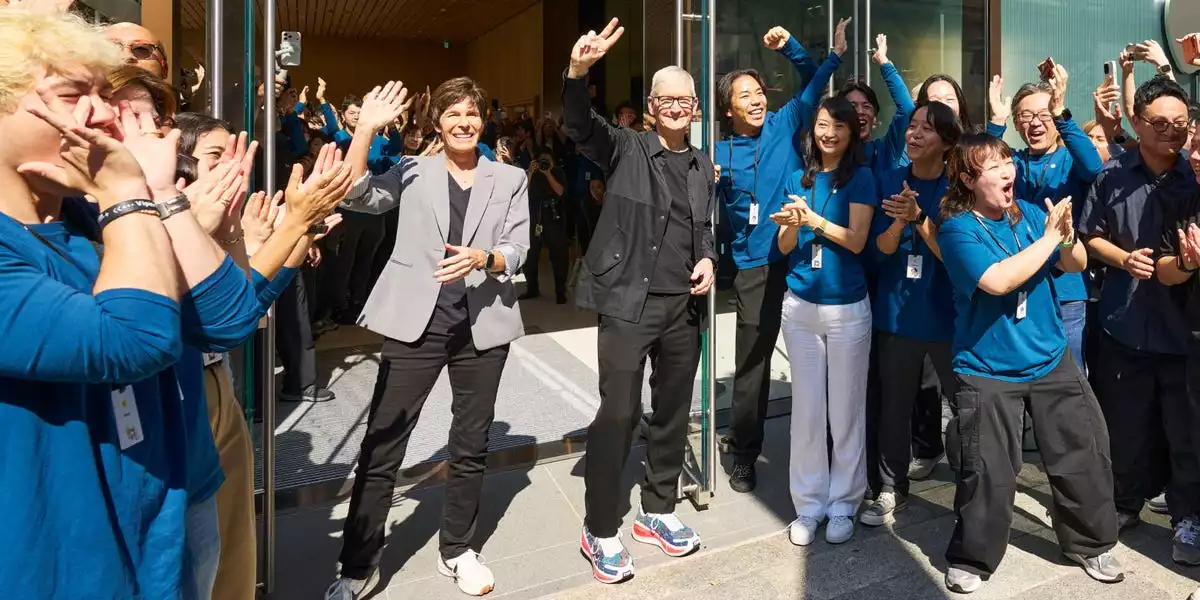
The reopening of Apple’s Tokyo flagship was more than a retail event—it was a meticulously choreographed tableau, where every detail was freighted with meaning. Tim Cook, Apple’s CEO, strode into the gleaming Ginza space wearing a pair of Nike Vomero Plus sneakers, but these were no ordinary kicks. Re-stitched in indigo-dyed sashiko denim by a collective of 15 Japanese artisans, the footwear became an instant social media sensation, their intricate patterns and visible handwork standing in stark contrast to the store’s minimalist modernism.
This sartorial choice was far from incidental. In a market that ranks among Apple’s top three for revenue, Cook’s embrace of Japanese craft culture was a subtle, yet unmistakable, act of brand diplomacy. The sashiko sneakers—one-off, unconfirmed as a formal Nike collaboration—served as a bridge between the worlds of luxury personalization, cultural storytelling, and tech-adjacent lifestyle branding. For Apple and Nike, whose historic partnership has already reshaped the intersection of fitness and technology, the moment signaled a renewed appetite for narrative-driven consumer experiences.
Craftsmanship as Competitive Differentiator: The Art of Localized Storytelling
Apple’s retail philosophy has long been defined by its “town square” ethos—spaces designed not just for commerce, but for community and cultural engagement. By spotlighting sashiko, an 18th-century Japanese mending technique, within the context of a flagship reopening, Apple embedded local heritage into its global identity. This act of cultural signaling does more than pay homage; it deepens emotional resonance with Japanese consumers, differentiating Apple’s brick-and-mortar presence at a time when post-pandemic foot traffic remains a challenge across the industry.
The choice of sashiko is particularly resonant. It embodies values of sustainability, repair, and longevity—principles increasingly prized by both consumers and investors. For Apple, which has faced scrutiny over device repairability and environmental impact, aligning with a tradition rooted in textile reuse subtly reinforces its own ESG commitments. The upcycling narrative, echoed in Nike’s ongoing explorations of circular design, appeals to a rising cohort of luxury buyers who expect their purchases to reflect both aesthetic and ethical considerations.
The New Alchemy: Personalization, Digital Twins, and Sensor-Driven Ecosystems
Cook’s sashiko sneakers are emblematic of a broader shift toward hyper-personalized, narrative-rich products that blur the boundaries between hardware, software, and lifestyle. The convergence of generative AI, additive manufacturing, and secure digital platforms is lowering the barriers to mass customization—enabling brands like Apple to deliver bespoke experiences at scale.
- Personalization at Scale: The made-for-Cook sneakers hint at a future where consumers can co-create tech accessories, leveraging Apple’s secure health and ID platforms as personalization engines.
- Digital-Physical Twins: Limited-edition physical products increasingly drive demand for digital authentication—whether through NFTs or emerging open standards. Apple’s rumored mixed-reality ambitions, coupled with its secure enclave architecture, position it to lead in frictionless provenance verification, an area Nike is already probing through its .SWOOSH initiative.
- Sensor Fusion: The re-engineered footwear also points toward the integration of biometric and performance analytics. Next-generation Nike+ pods could feed data directly into Apple Health or athlete-grade analytics platforms, creating new hybrid revenue streams that blend tangible goods with subscription services.
Retail Renaissance: Experiential Design and Strategic Supply-Chain Signaling
Japan’s luxury-oriented consumer base and elevated average selling prices make it a critical geography for Apple. Cook’s public endorsement of domestic artisans serves multiple strategic aims:
- Supply-Chain Diversification: By celebrating Japanese craftsmanship, Apple signals openness to deepening partnerships within Japan’s precision-manufacturing ecosystem—an important hedge as the company seeks to de-risk overreliance on mainland China.
- Experiential Retail: Expect Apple and its peers to incorporate rotating craft installations, exclusive micro-collections, and AR-enabled storytelling into their physical stores. These tactics not only enhance dwell time and social amplification but also convert cultural appreciation into pricing power.
- ESG and Circularity: Embedding upcycling narratives into flagship launches strengthens Apple’s and Nike’s decarbonization credentials, targeting investors who increasingly link valuation to environmental progress.
Toward a Synthesis of Culture, Technology, and Commerce
The Tokyo flagship’s reopening, punctuated by Cook’s sashiko sneakers, offers a glimpse into the future of consumer technology—a landscape where cultural capital is as vital as engineering prowess. The convergence of artisanal scarcity, sensor-driven ecosystems, and experiential retail is reshaping how brands create loyalty, command premium pricing, and build resilient supply chains. For executives, the lesson is clear: those who weave authentic cultural narratives into their technology strategies will not only capture outsized value but also define the next era of global brand leadership.

 By
By
 By
By
 By
By
 By
By


 By
By