
Seismic Revelations Beneath the “Doomsday Glacier”
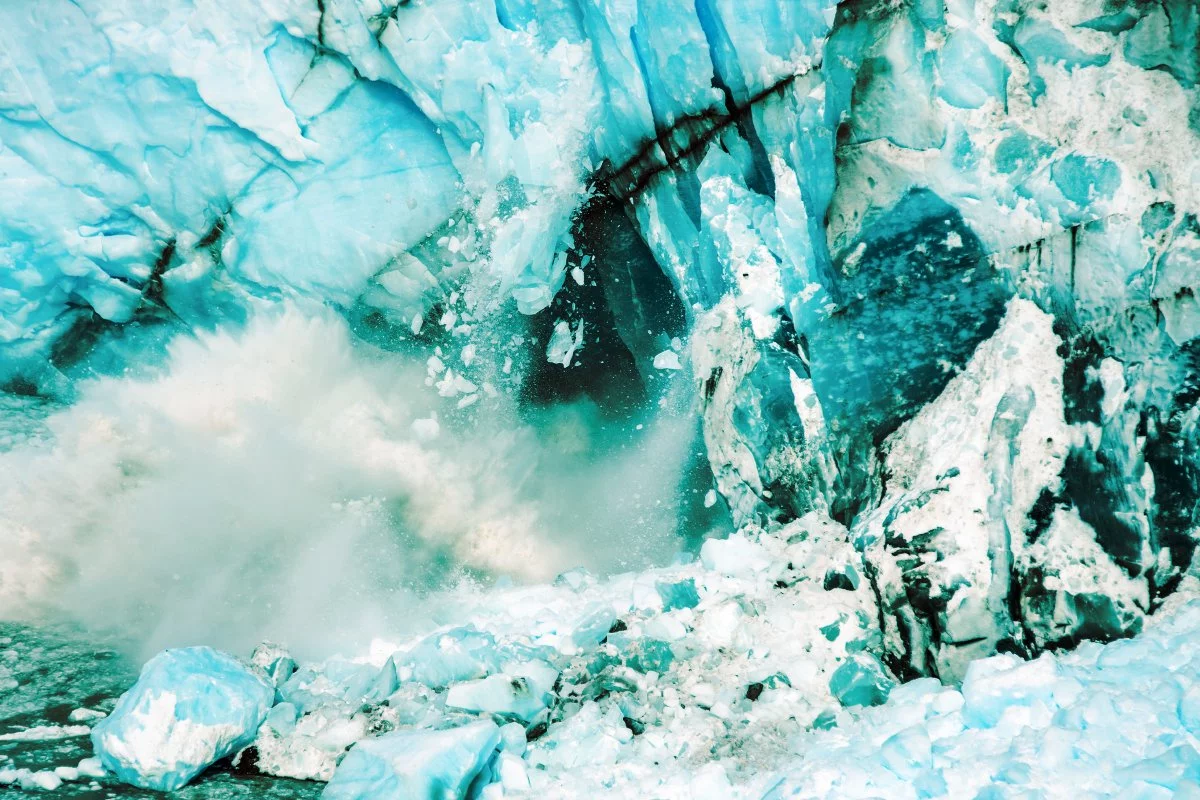
In the frigid silence of Antarctica, the Thwaites Glacier—ominously nicknamed the “Doomsday Glacier”—has long stood as a sentinel of planetary stability. Yet, recent findings published in *Geophysical Research Letters* have shattered any illusions of glacial inertia. Through a deft marriage of machine learning and sparse seismic data, Dr. Thanh-Son Phạm and his team have unearthed 362 previously hidden earthquakes beneath Thwaites between 2010 and 2023. The majority of these seismic events cluster directly under the glacier, with magnitude-5 tremors coinciding with dramatic iceberg calving.
This seismic activity, far more pronounced than climatological models had anticipated, suggests a glacier under acute structural stress. The implication is profound: Thwaites may be primed for destabilization not over centuries, but within decades. Should the glacier’s buttressing effect on the West Antarctic Ice Sheet fail, the world faces the specter of two to ten feet of long-term sea-level rise—a scenario with existential consequences for coastal populations and global economic systems.
AI-Driven Geophysics: From Data Scarcity to Predictive Power
The technical leap enabling these discoveries is as remarkable as the findings themselves. Phạm’s use of unsupervised machine learning to parse faint seismic signals exemplifies how artificial intelligence can amplify insight in even the most data-starved environments. Traditionally, the Antarctic seismic network’s limitations have rendered low-magnitude events invisible, lost in the vast static of polar noise. Now, advanced pattern recognition tools can extract actionable intelligence from minimal inputs—a paradigm shift with implications far beyond glaciology.
- Algorithmic amplification: The ability to discern microseismicity in Antarctica’s sparse sensor landscape opens new frontiers for risk monitoring in similarly challenging domains—subsurface carbon sequestration, deep-sea mining, and active fault zones all stand to benefit.
- Sensor infrastructure gap: The current Antarctic network is rudimentary at best. A next-generation deployment—low-power IoT nodes, mesh satellite relays, edge AI—could transform glaciology from a lagging science into a real-time digital twin, offering continuous, high-fidelity monitoring of ice-sheet dynamics.
- Integrated Earth observation: The fusion of seismic analytics with synthetic aperture radar and lidar elevation data promises predictive models of calving and collapse, empowering stakeholders from port authorities to insurers with scenario-driven foresight.
Economic Shockwaves: Rethinking Coastal and Financial Resilience
The destabilization of Thwaites is not merely a scientific curiosity—it is a live wire running through the global economy. Approximately 10 percent of global GDP and 15 percent of the world’s population reside within ten meters of current sea level. Even a modest two-foot rise could vaporize an estimated $1 trillion in coastal real estate across the G7; a ten-foot surge would redraw the economic map, threatening the viability of entire nations and major commercial hubs.
- Insurance and finance: The prospect of abrupt, non-linear sea-level rise is already inflating reinsurance premiums and rendering some geographies “uninsurable.” Central banks are now modeling ice-sheet collapse as a distinct climate risk, with the potential to trigger sudden asset repricing and liquidity shocks.
- Supply chain vulnerability: Major petrochemical, semiconductor, and container-port clusters—Houston, Singapore, Shanghai, Rotterdam—are all in the crosshairs of projected inundation, threatening medium-term production continuity and global supply chain stability.
- Infrastructure adaptation: The market for sea-wall retrofits, managed retreat, and resilient construction is poised for explosive growth, with early movers in advanced materials and amphibious design set to capture a share of what could become a $100 billion annual industry by 2030.
Strategic Imperatives for a Tipping-Point Era
For business leaders, the message is clear: the Antarctic cryosphere is no longer a distant abstraction. The new seismic evidence from Thwaites transforms ice-sheet collapse from a multi-generational hypothesis into a material risk with immediate strategic implications.
- Cryosphere early warning: Multinationals with coastal assets must partner with geospatial analytics firms to integrate real-time glacier risk signals into their operational dashboards.
- Balance sheet stress-testing: Firms should model step-change sea-level scenarios—ranging from half a meter to three meters by 2080—and develop contingent capital and relocation strategies accordingly.
- Physical risk hedging: Diversification into inland logistics, elevated infrastructure, and phased data center relocation will be critical to safeguarding core operations.
- Policy and governance: The Antarctic Treaty System is set for renewed scrutiny as scientific and geopolitical interests converge. Companies should monitor treaty negotiations and technology export controls that may shape future access to critical environmental data.
As the Thwaites Glacier rumbles beneath the Antarctic ice, the tremors are felt not only in the scientific community, but across boardrooms and trading floors worldwide. Those who heed the signals—translating seismic data into strategic action—will be best positioned to weather the coming tides of change.

 By
By
 By
By


 By
By
 By
By
 By
By
 By
By