

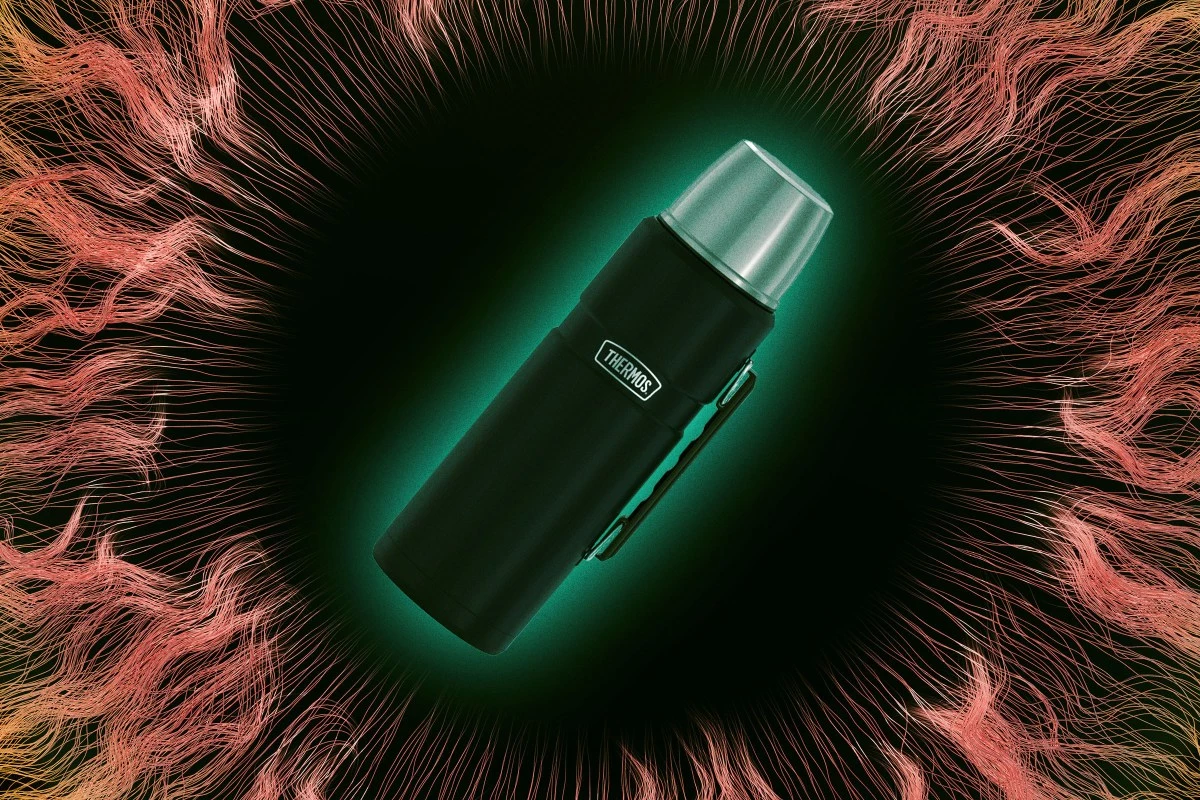

A mass recall that reframes “everyday” product risk in insulated containers
Thermos LLC’s decision to recall more than eight million insulated bottles and food jars sold from March 2008 through July 2024 lands as one of the most consequential consumer-product safety actions the insulated-container category has seen in years. The reported hazard is not cosmetic or incremental: a stopper design defect can allow dangerous internal pressure build-up, culminating in the stopper ejecting as a high-velocity projectile.
The company has recorded 27 stopper-ejection incidents, including injuries described as severe—three cases of permanent vision loss and multiple lacerations requiring medical attention. Distribution through major channels—Target, Walmart, and Amazon, among others—adds scale and urgency, because the affected products are embedded in daily routines: school lunches, commutes, gym bags, travel, and workplace meal prep.
This recall also arrives amid heightened public sensitivity to safety in the broader drinkware market, following recent controversy involving lead contamination in competing insulated bottles. While the mechanisms differ—chemical exposure versus mechanical failure—the combined effect is a sharper spotlight on how manufacturers validate safety in products that consumers often treat as inherently low-risk.
The engineering lesson: thermal performance without pressure management is a blind spot
Insulated bottles and food jars are, by design, highly efficient at maintaining temperature. That performance advantage can become a liability when the container is used with perishable, fermentable, or unevenly heated contents. In a sealed, oxygen-limited environment, food chemistry and physics can interact in ways that are predictable—but only if they are explicitly modeled during design and testing.
Key dynamics at play include:
- Fermentation and gas generation: Perishable contents can ferment over time, producing gas that increases internal pressure.
- Uneven heating and expansion: Hot contents or reheating can cause localized expansion, especially if the vessel is tightly sealed and the temperature gradient is steep.
- Seal integrity as a force multiplier: The better the seal, the more effectively pressure is retained—until it releases abruptly.
The recall narrative underscores a critical design distinction: some competing closures incorporate pressure-relief mechanisms, while the recalled Thermos stoppers reportedly lack an integrated venting feature. In product engineering terms, that absence can convert a foreseeable misuse scenario—leaving food too long, sealing hot contents, or storing fermentable liquids—into a high-severity failure mode.
For the industry, the deeper takeaway is about safety-by-design trade-offs. Removing a vent or relief feature may reduce component complexity and manufacturing cost, but it can also eliminate a “last line of defense” that prevents rare events from becoming catastrophic. In mature consumer categories, the most expensive failures often originate not from exotic materials science, but from small, seemingly rational simplifications that were not stress-tested against real-world behavior.
Business impact: recall economics, retailer scrutiny, and brand trust under pressure
Recalling products at this scale is not merely a logistics exercise; it is a multi-front financial and reputational event. The direct costs—reverse logistics, replacements, customer support, and disposal—can be substantial on their own. Layer in medical claims, potential litigation, and the long tail of brand rehabilitation, and the exposure can expand quickly.
Several business implications stand out:
- Liability and litigation risk: Documented severe injuries, including permanent vision loss, can elevate damages and intensify legal scrutiny. Even with product-liability insurance, high-severity claims can affect premiums, reserves, and settlement strategy.
- Retailer and platform response: Big-box retailers and e-commerce platforms may tighten vendor requirements, including stronger indemnities, more rigorous testing documentation, and faster incident-reporting obligations.
- Reputational capital erosion: Thermos has historically traded on reliability and durability. A safety incident tied to a core functional element—the stopper—risks undermining the brand promise in a way that marketing alone cannot quickly repair.
There is also a category-wide effect. When a household name faces a safety crisis, consumers often generalize risk to the entire product class. That can create openings for competitors—especially smaller brands—if they can credibly differentiate on closure safety, pressure relief, and third-party certification rather than aesthetics or insulation performance alone.
Where the category goes next: pressure-relief as a standard and “smart lid” innovation
The regulatory and standards environment is trending toward closer oversight of “ordinary” consumer goods, particularly where injury severity is high. The Thermos recall may accelerate a shift in what regulators and retailers consider baseline safety for sealed insulated vessels. A plausible outcome is that pressure-relief capability becomes an expected norm, whether mandated explicitly or enforced indirectly through retailer requirements and certification regimes.
At the same time, the incident highlights an innovation corridor that blends mechanical reliability with digital monitoring. The next wave of differentiation could include:
- Mechanical-first safety upgrades: One-way valves, calibrated vents, and closures designed to fail safely (controlled release rather than projectile ejection).
- More rigorous pre-market validation: Expanded Failure Mode and Effects Analysis (FMEA) that accounts for fermentation, time-at-temperature, and consumer storage habits—not just lab-ideal use.
- Smart-lid pathways: Embedded pressure sensing (e.g., MEMS), temperature logging, and app- or QR-based guidance that turns static instructions into dynamic safety prompts.
For investors and boards, this is also an ESG and governance moment. Product safety is increasingly treated as a measurable component of “S” risk—consumer health and harm prevention—and repeated failures can invite questions about oversight, incentives, and whether cost-down decisions are being balanced with robust hazard analysis.
Thermos’s recall is ultimately a reminder that in consumer technology—especially products that sit at the intersection of thermal engineering and food chemistry—trust is built not only on performance, but on how gracefully a product behaves when real life deviates from the manual.
 By
By
 By
By
 By
By
 By
By
 By
By


 By
By







