
A hidden constraint on the AI boom: the water–power reality of large language models
A new report from the United Nations University Institute for Water, Environment and Health reframes the sustainability debate around artificial intelligence by spotlighting what many corporate disclosures still underweight: the physical resource intensity of the data centers that run large language models (LLMs). The headline numbers are difficult to ignore. By 2030, AI-oriented facilities could consume water comparable to the annual needs of 1.3 billion people today and draw roughly 945 terawatt-hours (TWh) of electricity—a level that would exceed the combined national consumption of Pakistan, Bangladesh, and Nigeria.
This matters because the public narrative around “green AI” has often been dominated by carbon accounting and the one-time spectacle of model training. The report argues that this framing is increasingly misaligned with operational reality. As LLMs move from novelty to infrastructure—embedded in productivity suites, customer service, software development, search, and industrial workflows—the environmental load becomes less about a single training run and more about continuous, high-volume usage.
The implication is not simply that AI has a footprint; it is that AI’s footprint is becoming systemic, shaped by local water availability, grid composition, cooling technology, and demand patterns that scale with adoption. In other words, sustainability risk is migrating from a reputational issue to a capacity and continuity issue—one that can constrain growth.
Why inference, not training, is becoming the dominant sustainability battleground
The report’s most strategically relevant point is its emphasis that inference (everyday model usage) accounts for an estimated 80–90% of AI’s energy footprint, dwarfing the one-time cost of training. That single shift changes how executives, regulators, and investors should interpret AI sustainability claims.
For technology leaders, inference dominance elevates engineering choices that reduce runtime compute, not just training efficiency. It also changes procurement logic: the “cost per query” becomes a proxy not only for unit economics, but for water and energy exposure.
Key technological implications emerging from this inference-centric profile include:
- Model efficiency as a first-order operational lever
Techniques such as pruning, quantization, and distillation are no longer niche optimizations; they become core to managing power draw and thermal output at scale. Smaller, well-targeted models—especially for narrow enterprise tasks—can materially reduce resource intensity without sacrificing utility.
- Cooling becomes a strategic technology stack, not a facilities afterthought
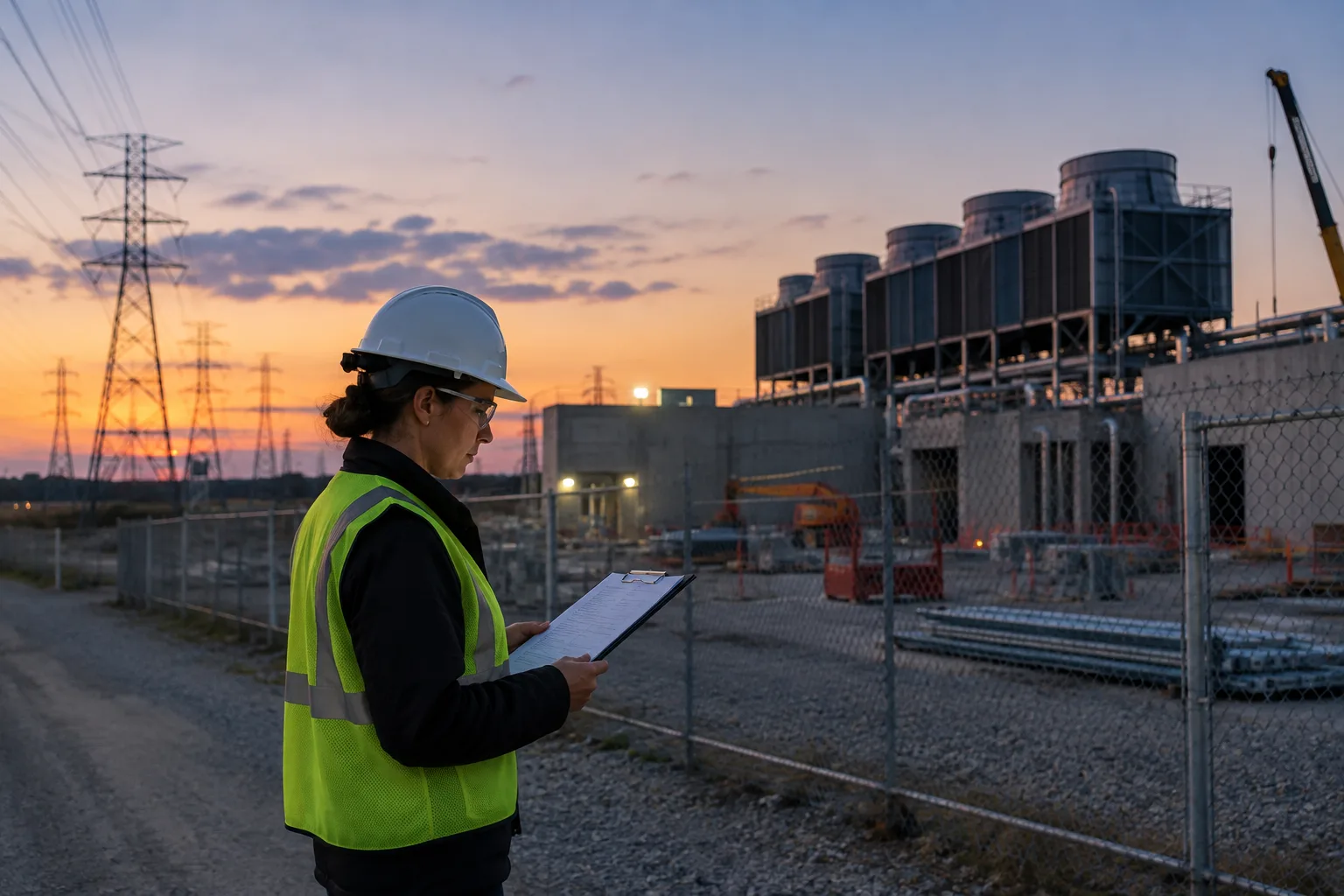
Traditional approaches—evaporative cooling and water-chiller systems—can be increasingly constrained in water-stressed regions. This accelerates interest in liquid immersion cooling and dielectric cooling, as well as designs that reduce reliance on potable water.
- The rebound effect complicates “efficiency solves it” narratives
The report echoes a Jevons-style paradox: as AI becomes more efficient and cheaper to run, usage can rise faster than efficiency gains, pushing total consumption higher. In practical terms, “watts per query” improvements may be overwhelmed by queries per user, per workflow, per enterprise.
This is a pivotal reframing for AI product strategy. If inference is the main driver, then the sustainability conversation must extend into product design and demand management, not just data-center retrofits.
The new economics of compute: water as a priced input and a siting constraint
The report also points to a recalibration underway in data-center economics. For years, the industry’s dominant constraints were access to fiber, land, tax incentives, and reliable electricity. Now, water availability and water governance are moving into the same tier of strategic importance—particularly as climate volatility intensifies drought cycles and tightens allocation regimes.
Several economic and market dynamics follow:
- Total Cost of Ownership (TCO) will increasingly include water risk
Hyperscalers and colocation providers can no longer treat water as a low-cost, low-visibility utility. In drought-prone regions, water pricing, permitting, and community scrutiny can materially affect operating costs and expansion timelines.
- Renewable energy procurement may carry “hidden” water liabilities
The report warns against a narrow focus on low-carbon energy that ignores water and land impacts. Certain “green” pathways can shift burdens rather than reduce them—meaning power purchase agreements (PPAs) may face pressure to include water-footprint disclosure alongside carbon attributes.
- Capital allocation may favor regions with dual abundance: clean power and sustainable water
Investment could tilt toward geographies that offer both low-carbon electricity and resilient water supplies. This may intensify regional disparities, concentrating AI infrastructure where resources and permitting pathways align, while raising barriers for smaller operators that cannot finance sophisticated resource strategies.
For investors, this suggests a new diligence checklist: beyond megawatts and latency, the durability of AI infrastructure will depend on water rights, watershed resilience, cooling architecture, and local regulatory posture.
Governance, ESG, and competitive advantage in the water–energy–digital nexus
Perhaps the most consequential thread is the report’s call for a multidimensional sustainability framework—one that moves beyond carbon to include water, land, and lifecycle impacts. This is not merely a reporting upgrade; it is a governance shift that could reshape competitive positioning.
Expect the following pressures to build:
- Integrated ESG metrics that treat water and land footprints as material, comparable to emissions
- Policy momentum toward “digital water disclosures,” usage caps, or performance standards tied to compute intensity
- Critical infrastructure classification for AI data centers, bringing tighter zoning, compliance, and security oversight
- Stakeholder scrutiny where communities question whether local water should subsidize global compute demand
Strategically, the companies best positioned will be those that treat sustainability as an engineering and market-design problem, not a communications exercise. That means building holistic digital footprint metrics (carbon + water + land), diversifying cooling and compute architectures (including waterless or low-water cooling), and exploring demand-shaping mechanisms—such as water-weighted pricing, quotas, or tiered service levels—that align consumption with real-world constraints.
The report’s underlying message is clear: AI is becoming a foundational layer of the economy, and foundational layers must reconcile with physical limits. The next phase of AI competition will not be decided solely by model quality and GPU supply, but by who can scale intelligence while remaining credible—and operationally secure—within the world’s tightening water and energy boundaries.

 By
By
 By
By

 By
By

 By
By
 By
By
 By
By