


The Silent Revolution: How Ubiquitous Connectivity Is Reshaping Urban Transit Etiquette
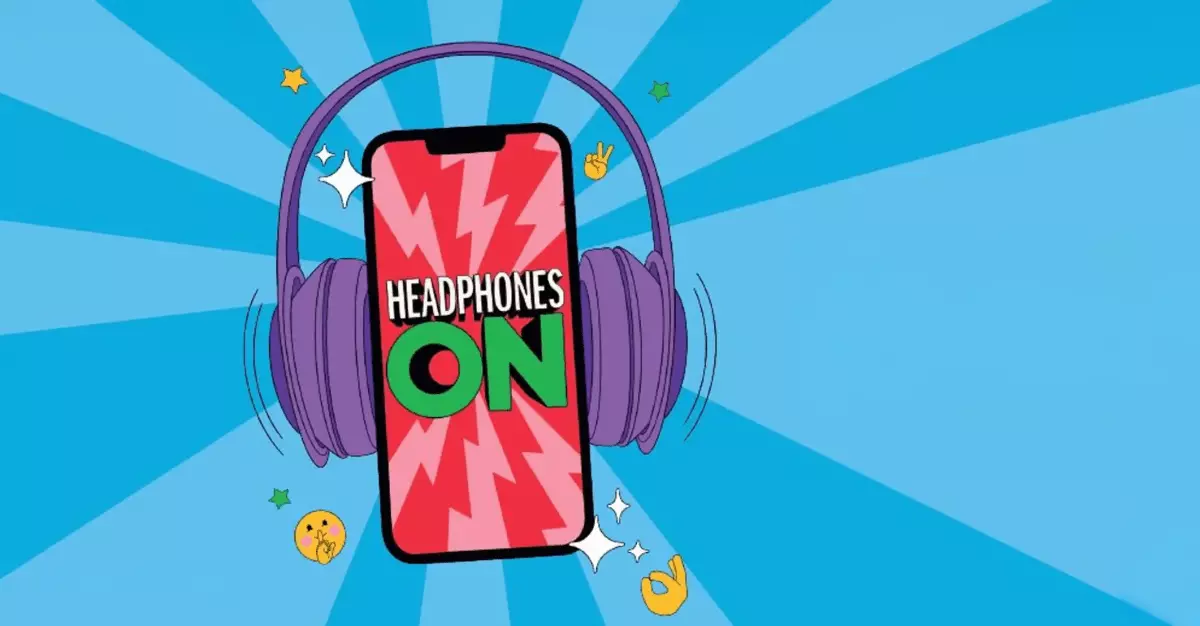
In the subterranean arteries of London, a subtle but profound transformation is underway. Transport for London’s new “Headphones On” campaign, with its understated posters urging passengers to keep their audio private, is more than a matter of manners—it is a signal flare at the crossroads of technology, urban economics, and the evolving choreography of public life. As 4G and 5G networks unfurl through the Underground’s labyrinthine tunnels, the city’s transit system is becoming not just a conduit for bodies, but a platform for data, commerce, and new forms of social negotiation.
Network Densification: Engineering Connectivity in the Depths
The technical feat behind London’s wireless renaissance is remarkable. Under a long-term agreement with Boldyn Networks, the Underground is being outfitted with a neutral-host infrastructure—a shared backbone that allows all four major UK mobile operators to deliver seamless 4G and 5G coverage without redundant hardware. This model, pressure-tested in one of the world’s most challenging environments, is being watched closely by global peers from New York to Singapore.
Key innovations include:
- Trackside leaky feeders and high-power small cells, which snake through tunnels and stations, overcoming electromagnetic interference and logistical constraints.
- Cloud-native core integration, enabling dynamic allocation of bandwidth and rapid scaling as demand surges.
The stakes are high: data consumption on London buses has soared by over 250% since 2019, and a similar spike is anticipated as the Underground comes online. Quality-of-experience (QoE) management is no longer a technical afterthought—it is a frontline operating concern, with direct implications for rider satisfaction and system economics.
Etiquette as Infrastructure: The Economics of Quiet
The “Headphones On” campaign is not merely a matter of courtesy. It is a calculated intervention at the intersection of behavioral science and revenue protection. TfL’s own research found that 70% of riders have been disturbed by loud audio—a nuisance that, in aggregate, can erode the appeal of mass transit and threaten farebox recovery at a moment when ridership remains stubbornly below pre-pandemic peaks.
The economics are intricate:
- Revenue diversification: TfL’s 20-year partnership with Boldyn includes a revenue-share on wholesale network fees. Rider experience is now directly linked to this annuity stream.
- Advertising and engagement: Always-on connectivity enables programmatic digital-out-of-home (pDOOH) advertising, with CPMs tied to audience dwell-time—a metric sensitive to comfort and ambiance.
- Ridership recovery: With a projected £1.5 billion budget gap looming, minimizing “nuisance factors” is not just about civility; it is about fiscal survival.
Noise, in this context, becomes a negative externality—a cost imposed on the many by the few. Low-cost nudges like posters and PA prompts internalize this cost without the heavy hand of enforcement, aligning individual behavior with collective well-being.
The New Social Contract: Privacy, Security, and the Connected Commute
As trains morph into rolling offices and cinemas, the boundaries between public and private blur. The etiquette of headphone use is a micro-policy with macro implications, touching on everything from data privacy to regulatory compliance. For corporate travelers, the risk of inadvertently disclosing confidential information in a newly connected carriage is non-trivial. Headset norms become not just a courtesy, but a compliance measure—one that aligns with GDPR, FCA, and MiFID II obligations.
This convergence of connectivity and etiquette is already spawning new opportunities:
- Mobile network operators may position the Underground as a premium upsell environment, offering zero-rated streaming or commuter bundles.
- Device manufacturers could partner with transit agencies to market noise-cancelling earbuds as “civic tech,” embedding themselves in the daily rituals of urban life.
- Enterprise mobility leaders are updating remote-work policies, mandating headset use as both a security control and a gesture of public respect.
Looking Ahead: From Posters to Platform Governance
The modest “Headphones On” posters are harbingers of a broader shift. As cities embed 5G into streetscapes and public venues, the management of social behavior—once the domain of etiquette columns and public service announcements—becomes a core competency for network planners and transit authorities alike. Sensor-driven ambient enforcement, ESG-linked noise metrics, and the codification of digital etiquette in public-private contracts are all on the horizon.
For decision-makers, the lesson is clear: connectivity rollouts must be paired with explicit passenger-experience guardrails. Behavioral nudges, once peripheral, are now essential tools for safeguarding both QoE and the bottom line. In this new era, the quiet hum of headphones is more than just a soundscape—it is the background music to a city learning to live, work, and thrive in perpetual connection.

 By
By
 By
By
 By
By
 By
By
 By
By










