

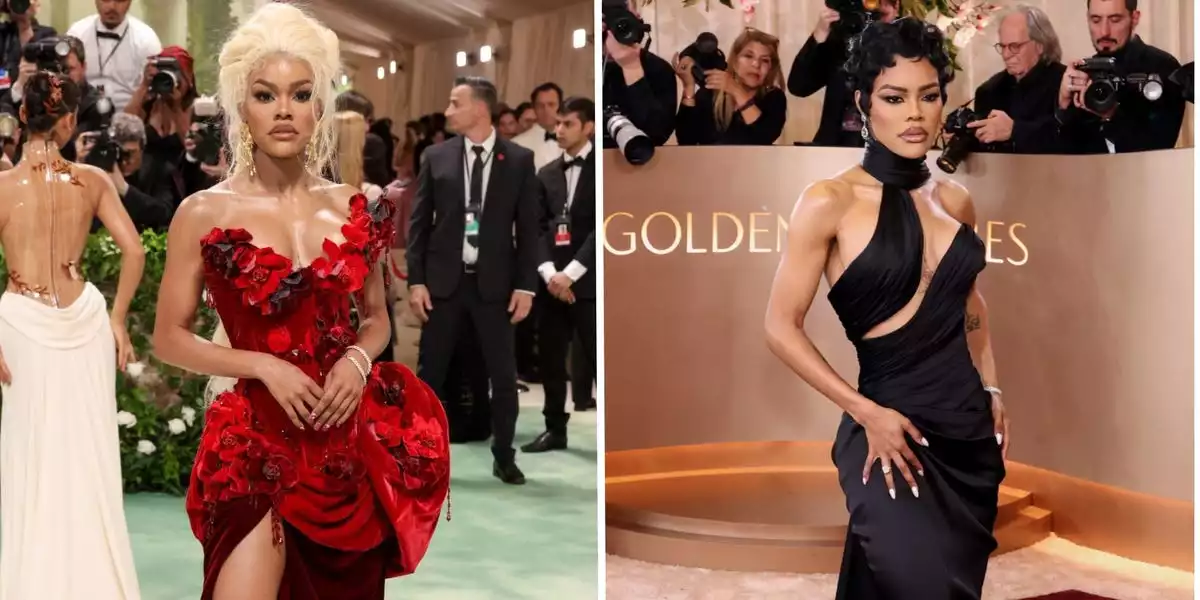

The Rise of the Multi-Hyphenate: Teyana Taylor and the New Economics of Celebrity
Teyana Taylor’s meteoric ascent—from Golden Globe winner to Oscar nominee, all while redefining red-carpet aesthetics—serves as a vivid lens on the accelerating convergence of entertainment, fashion, and technology. Her trajectory is not merely a personal triumph; it is a harbinger of structural shifts reshaping how cultural capital is created, monetized, and distributed in the digital era.
At the heart of this transformation is the emergence of the “personal IP stack”—a model where artists are less brand ambassadors and more full-stack platforms, orchestrating music, film, and fashion into a mutually reinforcing web of influence and revenue. Taylor’s career exemplifies this paradigm, wielding her creative output as a form of economic leverage, and in doing so, signaling the future direction of both luxury and media industries.
Fashion’s Digital Renaissance: From Runway to Metaverse
Luxury fashion, once the exclusive province of atelier craftsmanship and legacy iconography, now finds itself in a state of creative ferment. The industry’s pivot toward culturally resonant, boundary-pushing figures like Taylor is not merely a marketing tactic; it is a strategic imperative. Gen-Z and Gen-Alpha consumers, whose spending power is projected to eclipse $360 billion by 2030, demand authenticity, digital fluency, and sustainability in equal measure.
Taylor’s sartorial choices—often crafted from avant-garde materials such as biodegradable sequins or bio-fabricated silk—act as both cultural flashpoints and supply-chain catalysts. Her embrace of next-generation textiles accelerates supplier investment, compressing commercialization cycles and amplifying the signal for sustainable innovation. The result is a feedback loop: red-carpet moments become not just viral content, but enduring digital assets, circulating across social media, streaming events, and even virtual worlds.
- Digital Twins & Virtual Red Carpets: Each look is meticulously scanned into 3D engines, surfacing in metaverse platforms where fans can purchase limited-edition digital wearables. Early pilots show conversion rates three to four times higher than traditional merchandise drops, underscoring the economic potential of virtual couture.
- AI-Assisted Couture: Designers leverage generative AI to simulate fit and drape, using data-rich physique scans to iterate rapidly and reduce sample waste by up to 30%. This fusion of artistry and algorithm is redefining the very notion of bespoke fashion.
The New Competitive Arena: Streaming, Luxury, and Tech Converge
As the boundaries between entertainment, fashion, and technology blur, a new competitive landscape emerges. Streaming giants like Netflix and Disney+ are intensifying their pursuit of original content, recognizing that aligning with Oscar-nominated, fashion-forward talent can mitigate the volatility of awards season and drive subscriber loyalty. For luxury conglomerates such as LVMH and Kering, the cross-genre appeal of an artist like Taylor offers a potent hedge against softening demand in traditional markets.
Meanwhile, tech titans are racing to integrate celebrity digital wardrobes into their hardware and services ecosystems. Apple’s Vision Pro and Meta’s Quest, for example, are betting that immersive commerce—where fans can virtually try on and purchase celebrity-inspired looks—will drive both hardware adoption and recurring revenue.
- Brand Halo Inflation: Awards-show visibility is no longer just about endorsement deals; it now encompasses licensing, capsule collections, and NFT-backed virtual garments—an emerging $5-8 billion market by 2028, according to ABI and Gartner.
- Supply Chain Signal Amplification: High-profile adoption of innovative materials by stars like Taylor prompts rapid supplier investment, shortening commercialization timelines and accelerating industry-wide change.
Strategic Imperatives for the Next Era of Luxury and Media
The implications for decision-makers are profound. To capture value in this rapidly evolving ecosystem, executives must reimagine both their operating models and their metrics of success:
- Invest in IP Aggregation Platforms: Consolidate rights management around multi-domain artists to monetize cross-vertical derivatives—physical fashion, streaming content, digital collectibles—under a unified ledger.
- Embed Predictive Analytics in Wardrobe Strategy: Leverage machine learning to forecast the virality of red-carpet designs, enabling precision in marketing spend and style risk management.
- Accelerate Digital Wearable Pipelines: Partner with 3D-garment engines to launch synchronized physical-digital drops, targeting margins of 70-80% on virtual SKUs.
- Reimagine Sponsorship KPIs: Move beyond impressions to “composable IP value,” capturing downstream licensing, secondary-market trading, and immersive fan engagement.
- Scenario-Plan for Regulatory Shifts: Anticipate the impact of sustainability and AI-ethics regulations, positioning high-visibility advocates as policy influencers.
The convergence of entertainment, fashion, and technology is not a fleeting trend but a structural realignment. Teyana Taylor’s awards-season prominence is less a headline than a case study in how multi-domain talent can catalyze new economic models—and for those attuned to the nuances of the “personal IP stack,” the opportunity is nothing short of transformative.

 By
By


 By
By
 By
By

 By
By
 By
By







