

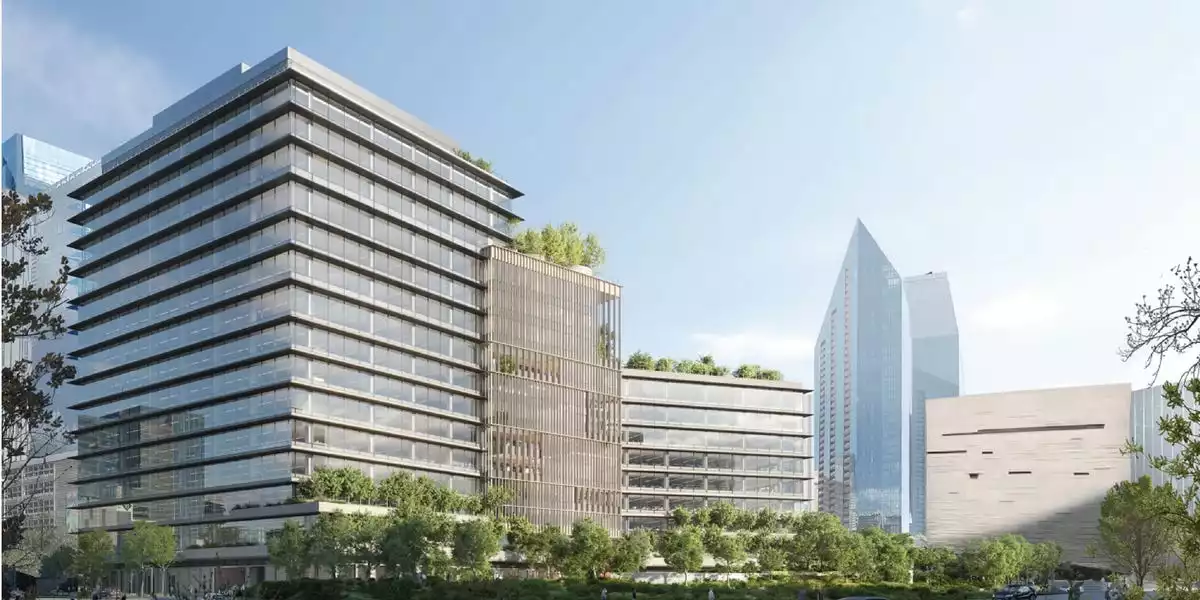

The Texan Transformation: Financial Power Shifts from Manhattan to the Metroplex
A tectonic shift is underway in American finance, one that is redrawing the map of power, talent, and innovation. The storied canyons of Wall Street are no longer the sole epicenter of U.S. financial might. Instead, the broad boulevards of Dallas–Fort Worth, the tech corridors of Austin, and the sprawling campuses of Plano and Westlake are rapidly emerging as the new crucibles of financial services. This movement—dubbed “Y’all Street”—is more than a migration; it is a re-platforming of the industry, catalyzed by technology, economics, and a new regulatory calculus.
Engineering Ambitions: Building the Digital Backbone in Texas
The narrative of Texas as a back-office haven is obsolete. Today, the state is home to decentralized engineering hubs where the core of financial technology is being reimagined. JPMorgan Chase’s Plano facility and Goldman Sachs’s forthcoming Dallas campus are not mere outposts—they are nerve centers, housing teams that drive advancements in cloud infrastructure, AI and machine learning, and cybersecurity. This marks a decisive break from the historic concentration of high-value code in New York.
Several factors underpin this transformation:
- Cloud Proximity: With AWS, Azure, and Google Cloud establishing major availability zones in Dallas and San Antonio, latency is slashed and co-development with hyperscalers becomes seamless—critical for real-time trading, digital asset custody, and the next generation of payment rails.
- Technical Talent Pipeline: The University of Texas System and Texas A&M churn out more engineers annually than the combined output of the Ivy League and Stanford, supplying the expertise for software, data science, and semiconductor innovation.
- Energy Economics: Texas’s deregulated electricity market and abundant renewable resources offer inexpensive, reliable power—a vital ingredient for AI training clusters and private clouds that demand both scale and security.
This technological foundation is not just a cost play; it is a strategic assertion that the future of finance will be written in code, and increasingly, that code will be written in Texas.
Economic and Strategic Vectors: Beyond Tax Arbitrage
The financial calculus driving this migration is compelling. Bulge-bracket banks and fintech leaders are realizing 25–40% savings on combined labor and real estate costs compared to Manhattan, a margin expansion that is especially attractive amid fee compression and looming Basel III capital requirements. Employees, too, benefit: lower housing costs and zero state income tax translate into roughly 7% more disposable income, a crucial edge in retaining mid-career technologists.
But the rationale extends beyond economics:
- Operational Resilience: Geographic diversification across Texas’s robust grids and transport corridors mitigates risks—climate, terror, pandemic—that are endemic to single-city concentration.
- Regulatory Optionality: By anchoring market infrastructure in a state that is both crypto-curious and skeptical of ESG mandates, institutions gain leverage in shaping, and hedging against, evolving federal and state oversight.
- Political Leverage: The visible migration of marquee players confers upon Texas an outsized voice in national financial policy debates, recalibrating the long-standing dominance of New York.
These moves are not isolated. Private equity firms are shadowing the banks, launching Texas-based funds focused on energy transition, logistics tech, and aerospace. Semiconductor giants like Samsung and Texas Instruments are expanding in the same metroplex, creating fertile ground for secure hardware innovation in payments and digital identity. Meanwhile, grid modernization projects attached to new financial campuses are accelerating ERCOT’s evolution toward distributed generation—a potential template for national reform.
Implications for Stakeholders: Navigating the New Financial Frontier
The rise of “Y’all Street” is forcing a strategic reckoning across the financial ecosystem:
- Financial Institutions: Location strategy is now a competitive differentiator. Expect a second wave of relocations—particularly middle- and back-office functions—from coastal metros over the next three years. Yet, balancing Texas’s cost advantages with coastal compensation norms will require deft cultural management to avoid fragmentation.
- Technology Providers: Demand for low-latency connectivity, zero-trust security, and AI operations platforms is surging around Dallas–Fort Worth and Austin. Cloud vendors, fintech API aggregators, and reg-tech startups will find a receptive market and a regulatory environment open to experimentation.
- Real Estate & Infrastructure Investors: Class-A office absorption in Dallas–Fort Worth may soon outpace supply, supporting above-trend rent growth even as national CRE markets soften. Logistics and high-speed rail initiatives, such as the Dallas–Houston corridor, are gaining credibility as daily workforce flows scale.
- Policy and Regulatory Leaders: The emergence of dual financial capitals will draw bipartisan federal attention, shaping future SEC, CFTC, and Fed regional staffing. Navigating the tension between Texas’s anti-ESG statutes and banks’ global ESG commitments will require nuanced compliance frameworks.
Strategic questions abound: How will a multipolar financial geography reshape competitive intelligence and regulator engagement? Which workloads should migrate to Texas to optimize talent and operational resilience? Are business-continuity plans recalibrated for ERCOT’s unique grid? And how can partnerships with Texas’s semiconductor and energy ecosystems create first-mover advantages in secure payments and sustainable finance?
Texas’s ascent is not a fleeting trend but a structural reordering of American finance—one that rewards those who recognize that the future of the industry is being architected as much in the cloud and on the grid as on the trading floor. For forward-thinking executives and innovators, “Y’all Street” is not just a destination, but a new platform for growth, resilience, and influence on the global stage.

 By
By
 By
By
 By
By
 By
By
 By
By


 By
By







