

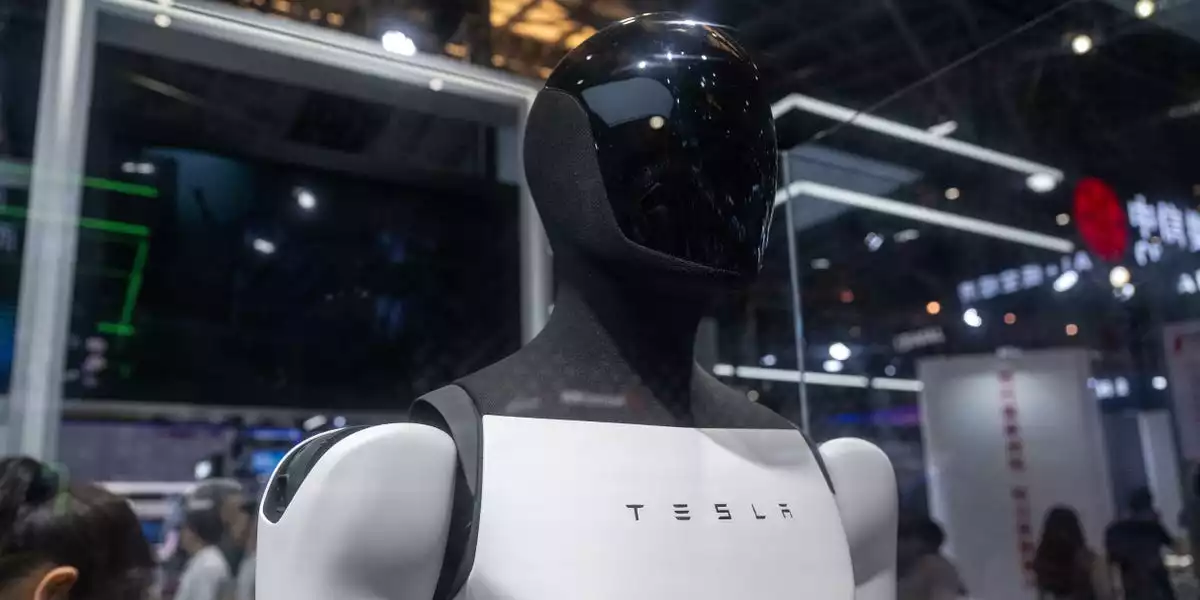

Tesla’s Humanoid Gambit: Reimagining Labor, Supply Chains, and the AI Frontier
Tesla’s latest overture to the future is not just another car, nor even a self-driving one. It is a wager on a new kind of worker: the general-purpose humanoid robot. With CEO Elon Musk positioning Optimus as the company’s primary long-term growth engine—forecasting it could account for a staggering 80 percent of Tesla’s future enterprise value—the stakes are nothing short of epochal. The company’s ambition is underscored by Optimus Gen 2’s 30 percent improvement in gait speed, the promise of factory pilots in 2025, and a target of one million units annually by 2030.
Yet, beneath the bravado lies a latticework of technical, economic, and geopolitical dependencies that will determine whether Optimus is the next iPhone or the next Segway.
—
The Anatomy of a Humanoid Revolution: Engineering, Data, and Energy
Actuation and Materials Science
- Rare-Earth Reliance: At the heart of Optimus are high-torque electric actuators, dependent on neodymium-iron-boron magnets—91 percent of which are refined in China. This single point of geopolitical vulnerability could upend Tesla’s cost structure overnight, should supply shocks or price spikes occur.
- R&D Arms Race: Tesla’s parallel research into alternative magnet chemistries mirrors efforts at Toyota and GM, hinting at a coming wave of magnet-light or magnet-free motor designs. The first to scale a viable alternative could reshape both EV and robotics industries.
Perception, Control, and Data Strategy
- From Teleoperation to Embodied Intelligence: Tesla is leveraging its Dojo supercomputer and self-supervised learning on vast video corpora, echoing the data-flywheel that underpinned its autonomous driving advances. This vertical integration could widen the moat against less data-rich rivals.
- Dexterity’s Demands: Unlike autonomous vehicles, humanoid robots face a much harsher error tolerance—a mis-grasp can halt an entire assembly line. The reinforcement loops required for reliable, general-purpose manipulation remain in their infancy.
Power and Thermal Management
- Battery Constraints: The humanoid form factor limits battery mass to roughly 20 percent of body weight, demanding energy densities exceeding 400 Wh/kg for an eight-hour shift—two chemistry generations beyond today’s lithium-ion cells. Success here would ripple into stationary storage and aviation, but the chemistry risk is formidable.
—
Economic Stakes: Valuation, Margins, and Strategic Capital
Revenue Potential and Cost Structure
- Aggressive Scaling: At a notional average selling price of $20,000, Tesla’s 2030 target translates to $20 billion in hardware revenue, with a software annuity potentially doubling that figure. Yet, early units will carry a bill of materials north of $60,000, and only rapid learning-curve efficiencies—on par with gigacasting in automotive—could bring costs in line.
- Margin Compression: Unlike vehicles, humanoid robots lack modular commonality, risking slower cost declines and tighter margins.
Capital Allocation and Investor Calculus
- Portfolio Tensions: Redirecting cash flow from EVs to robotics R&D pits Optimus against Tesla’s other capital-intensive bets: battery plants, the Semi truck, and the long-awaited robotaxi network. For investors, Optimus is an out-of-the-money call option—potentially transformative, but fraught with execution risk.
Strategic Implications
- Talent Magnetism: By casting Optimus as the “next iPhone,” Musk is luring elite roboticists who might otherwise gravitate toward Google DeepMind or OpenAI-backed Figure.
- Vertical Integration and Narrative Control: Rare-earth exposure may force Tesla into upstream mining or joint ventures, paralleling its lithium playbook. Meanwhile, as EV growth slows, the “AI + robotics” narrative offers Wall Street a new storyline, cushioning valuations as auto margins come under pressure.
—
Industry Ripples: Labor, Competition, and Policy
Labor Economics and Competitive Benchmarking
- Addressing Labor Shortages: OECD data forecasts a 30-million worker shortfall in manufacturing and logistics by 2030. A reliable general-purpose robot could address this systemic scarcity, aligning with policy incentives across the US, EU, and Japan.
- Competitive Landscape: Agility Robotics and Apptronik focus on narrow warehouse tasks, while Figure pursues general humanoids but lacks Tesla’s manufacturing scale. The race is reminiscent of early smartphone wars—hardware parity emerges quickly, but ecosystem and data scale decide the victors.
Regulatory and Supply Chain Dynamics
- Emerging Standards: OSHA and EU regulators are drafting safety clauses for collaborative humanoids. Early compliance leadership could set de-facto standards, as ISO 26262 did for automotive safety.
- Supply-Chain Rewiring: De-risking from China in both EV and robot components aligns with US industrial-policy tailwinds, positioning Optimus as a focal point for federal incentives.
—
The Road Ahead: Actionable Insights for Stakeholders
- Enterprise Buyers: Watch for 2025 factory pilots—if Tesla demonstrates sub-24-month ROI on low-skill tasks, phased humanoid deployment could begin by 2027. Insist on open APIs to prevent vendor lock-in.
- Supply Chain Players: Move early into non-rare-earth motor ecosystems; royalty models for novel magnet chemistries could see exponential demand as humanoid volumes scale.
- Policymakers: Tie tax incentives to domestic actuator and sensor production, and invest in workforce-transition programs to prepare for the rise of robot-supervision roles.
- Investors: Monitor Tesla’s margin trends and robotics milestones closely; the payoff from Optimus remains speculative until proven in real-world unit economics.
Tesla’s humanoid ambition is a high-wire act at the intersection of robotics, AI, and geopolitics. If realized, it could redefine labor and grant Tesla a second act that eclipses its automotive origins. But the journey from demonstrator to indispensable industrial laborer is a crucible—one that will test not just the company’s engineering prowess, but the resilience of global supply chains and the adaptability of entire industries.

 By
By
 By
By
 By
By

 By
By
 By
By
 By
By
 By
By







