

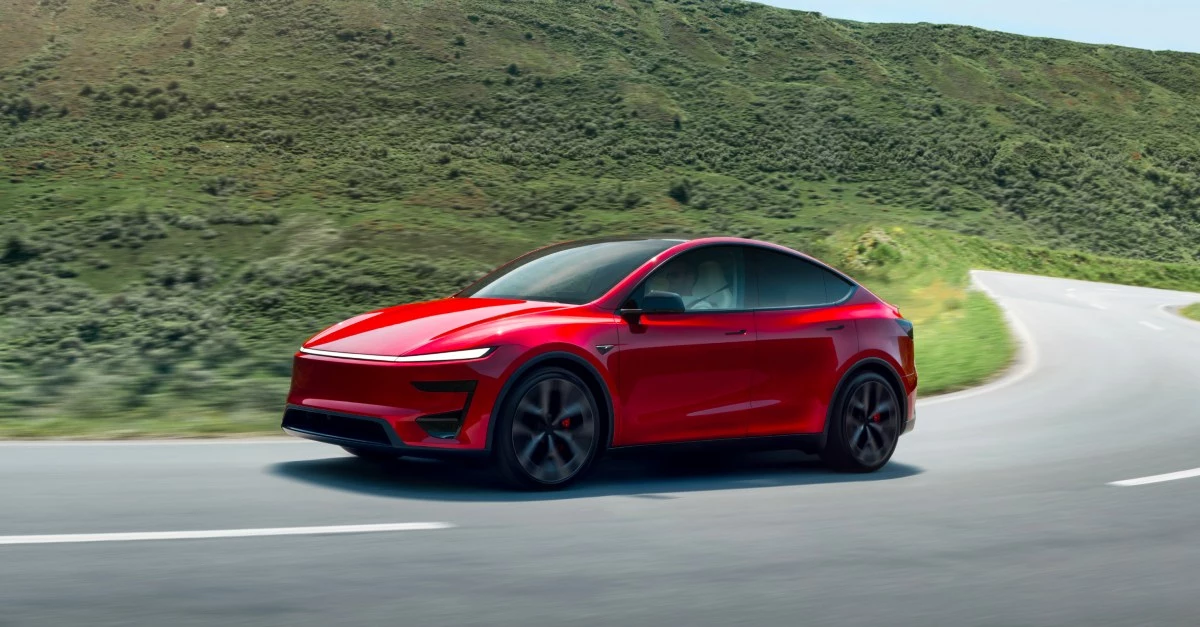

A New Performance Benchmark in Europe’s EV Arena
Tesla’s forthcoming Model Y Performance, slated for European release this September, arrives at a moment of acute inflection for the electric vehicle sector. With a 460-horsepower dual-motor setup, a brisk 0–100 km/h sprint in 3.5 seconds, and a WLTP range pushing 580 kilometers, the new variant is a masterclass in incremental innovation. Yet, beneath the headline figures, Tesla’s latest move reveals a deeper strategic calculus—one that speaks to the evolving dynamics of technology, competition, and profitability in the European EV market.
High-Density Batteries and the Art of Incremental Progress
At the heart of the new Model Y Performance is a high-density battery cell architecture, likely an advanced iteration of Tesla’s 4680 platform. With energy density approaching the 300 Wh/kg threshold, the cells represent a meaningful, if not revolutionary, step forward in volumetric efficiency. The promise of 243 kilometers of range added in just 15 minutes of fast charging—translating to an average 225 kW charge rate—keeps Tesla abreast of the fastest-charging platforms from Hyundai, Kia, Volvo, and Polestar. This is not a leap ahead, but a deliberate holding action: a signal that the company is prioritizing capital for high-stakes projects like the Cybertruck and its energy storage ambitions, rather than chasing marginal gains in charging supremacy.
Tesla’s engineering focus extends beyond the battery pack. The introduction of adaptive damping and configurable drive modes marks a subtle but significant pivot. No longer is the Model Y a monolithic, software-differentiated product; it now courts the enthusiast market with a more BMW M-like chassis stack, where ride, power delivery, and interface design converge. The enlarged 16-inch display hints at a future-proofed hardware suite, likely to underpin global refreshes of the Model 3 and Model Y, streamlining supply chains ahead of broader platform updates.
Navigating the Crosscurrents of Price, Competition, and Regulation
The Model Y Performance’s €62,000 price tag positions it delicately within the European landscape—about 10% above the average for C-segment electric SUVs, yet still 15–20% below the likes of Porsche and BMW. This is classic Tesla: leveraging residual brand equity to defend margins, while steering clear of a direct price war with ascendant Chinese entrants such as BYD.
BYD’s meteoric 225% year-on-year sales growth in Europe is powered by vertically integrated, cost-optimized Blade batteries and a relentless product cadence. European fleet buyers, increasingly governed by total-cost-of-ownership logic, are gravitating toward BYD’s pricing elasticity. Tesla’s response is telling: rather than engaging in a race to the bottom, it is doubling down on performance and brand, implicitly conceding that it cannot match Chinese cost structures without undermining the margins needed to fund its AI and robotics ventures.
Overlaying these competitive pressures is a complex regulatory and political environment. Elon Musk’s vocal alignment with U.S. partisan politics has dampened sentiment in ESG-conscious European markets, while EU regulators remain cautious about approving Tesla’s “Full Self-Driving” features. In this context, the Model Y Performance emerges as a bridge product—designed to harvest near-term cash flow while the company waits for regulatory conditions to evolve.
Strategic Repositioning Amidst Industry Realignment
Tesla’s latest gambit is as much about portfolio management as it is about engineering. By carving out a premium-performance micro-segment within the high-volume C-segment SUV space, Tesla is echoing the iPhone Pro playbook: elevating average selling price without the need for a full platform overhaul. This buys time as the company readies its next-generation $25,000 vehicle and robotaxi architecture.
The focus on higher-density cells also serves as a hedge against raw material inflation and aligns with the EU’s Critical Raw Materials Act, positioning Tesla for compliance credits and insulating it from China-centric supply chain risks. Meanwhile, by placing a performance halo atop its best-selling model, Tesla is recentering the brand narrative on engineering prowess, appealing to the influential European enthusiast press and early adopters.
For decision-makers across the automotive value chain, the implications are profound:
- Profit pools are migrating from sheer volume to feature-led margin stacking—performance, software, and over-the-air personalization.
- Regulatory catalysts are on the horizon, with Tesla likely to lobby for phased approval of Level-3 autonomy, using the Performance trim’s upgraded hardware as a compliant base.
- Industry price architecture is bifurcating: Chinese brands dominate the cost-leader quadrant, while Western incumbents emphasize brand, performance, and local manufacturing.
- Supply chain and partnership strategies must adapt, with high-spec components for Western OEMs and ultra-cost-optimized modules for Chinese entrants.
Tesla’s Model Y Performance is less a victory lap and more a calculated maneuver—reasserting brand primacy, preserving margin, and buying strategic time in a market rapidly redefined by Chinese cost disruption and regulatory complexity. Those who grasp the triangulation of technology pacing, economic hedging, and narrative management will be best positioned to thrive in the next era of electric mobility.

 By
By
 By
By

 By
By
 By
By
 By
By


 By
By

 By
By

 By
By







