
Nighttime on I-95: The Perils and Promise of Partial Autonomy
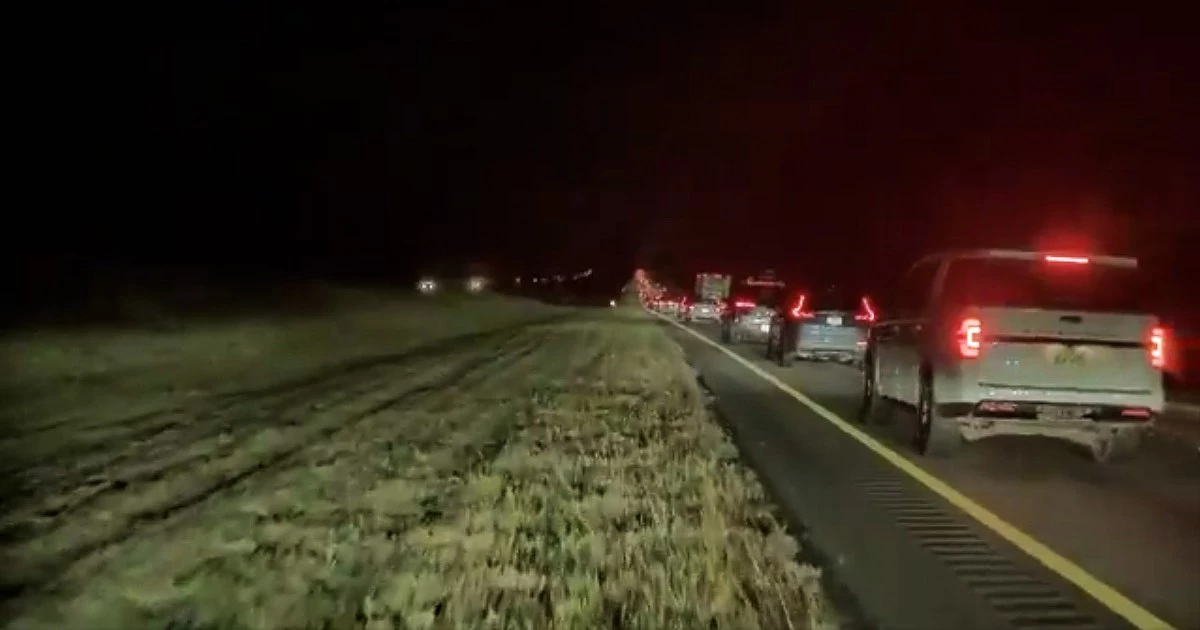
A recent viral video, capturing a Tesla owner’s harrowing late-night encounter on Interstate 95, has reignited a debate that sits at the heart of modern mobility: What does it truly mean for a car to “drive itself”? The footage, which the owner credits with “saving his life” thanks to Tesla’s Full Self-Driving (FSD) software, tells a more ambiguous story upon closer inspection. Independent analysis reveals a system that reacted late, braked with jarring abruptness, and swerved off its intended path—actions that arguably introduced as much risk as they resolved.
This episode is not an outlier but a prism, refracting the technical, behavioral, and regulatory tensions that define the current era of advanced driver-assistance systems (ADAS). The Tesla incident—widely shared, fiercely debated—serves as a microcosm for the sector’s most urgent questions.
Vision-Only Autonomy: Technical Edge or Achilles’ Heel?
At the core of the controversy is Tesla’s commitment to a vision-only approach. Unlike competitors such as GM’s Super Cruise or Mercedes’ Drive Pilot, which blend cameras with radar and lidar for robust sensor fusion, Tesla’s FSD relies almost exclusively on cameras and neural networks. The I-95 incident exposes the limitations of this strategy, particularly in low-contrast, nighttime scenarios where visual cues are faint and edge cases abound.
- System Behavior: The delayed braking and abrupt lane departure observed in the video are emblematic of the challenges faced by camera-centric perception stacks. These systems can struggle to parse subtle cues in adverse conditions, a vulnerability that sensor-fusion architectures are designed to mitigate.
- Human-Machine Interaction: The paradox of Level 2 automation is starkly illustrated here. As vehicles become more capable, drivers grow less vigilant, yet the technology still depends on human intervention in critical moments. This “responsibility inversion” is emerging as a primary safety bottleneck—one that neither software updates nor user enthusiasm can easily resolve.
- Data Feedback Loops: Tesla’s ability to rapidly ingest real-world telemetry and iterate its neural networks is a formidable advantage. Yet, the question remains: Can incremental over-the-air improvements keep pace with regulatory scrutiny and public safety expectations, especially as edge-case incidents accumulate?
The Behavioral Economics of Brand and Belief
Perhaps most striking is the fervor with which segments of the Tesla community interpret ambiguous outcomes as unambiguous triumphs. This phenomenon is not merely anecdotal; it is a study in cognitive dissonance and narrative capture.
- Confirmation Bias: Early adopters, having invested financially and reputationally in the promise of autonomy, are predisposed to view near-misses as validations rather than warnings.
- Social Proof Flywheel: Viral testimonials like the I-95 video become self-reinforcing, fueling Tesla’s unconventional marketing engine. User-generated evangelism substitutes for traditional advertising, creating a feedback loop where perception, not empirical performance, becomes the dominant narrative.
Regulatory, Competitive, and Economic Crosscurrents
The regulatory landscape remains fragmented, with U.S. federal and state agencies struggling to harmonize definitions, accountability, and safety benchmarks for autonomous systems. High-profile incidents such as this one accelerate calls for:
- Unified Disclosure Standards: Clearer rules around system capabilities and limitations.
- Driver Monitoring Mandates: Enhanced in-cabin monitoring—eye-tracking, behavioral analytics—may soon become a prerequisite for regulatory approval and insurance underwriting.
- Performance Benchmarks: The emergence of Euro NCAP-style “Assisted Driving Grading” could set new industry standards.
Meanwhile, the competitive ecosystem is diverging. Waymo and Cruise are doubling down on geo-fenced, fully autonomous (Level 4) deployments, while legacy automakers hedge with supervised, sensor-rich Level 2+ offerings. Tesla’s mass-market, vision-only bet is increasingly a strategic outlier—one that shapes semiconductor demand, LiDAR adoption, and capital flows across the supply chain.
For stakeholders, the economic stakes are profound:
- Equity Valuation: Tesla’s market capitalization is buoyed by the promise of autonomy. Regulatory setbacks or a spike in FSD-linked incidents could trigger a sharp reappraisal.
- Litigation and Productivity: The productivity gains promised by autonomy are counterbalanced by the specter of litigation and recall risk—factors that must be weighed in any total cost of ownership analysis.
- Brand Trust: Perceived safety lapses in vehicles can spill over into adjacent business lines, from energy storage to insurance, amplifying reputational risk.
Charting the Path Forward: Strategic Imperatives
For industry leaders, the I-95 episode crystallizes a set of imperatives:
- Stage-Gate Deployment: Transparent safety metrics and phased rollouts can pre-empt regulatory backlash and build public trust.
- Sensor Strategy Hedging: Maintaining flexibility in hardware roadmaps—rather than betting exclusively on vision—can mitigate perception risks in challenging environments.
- Narrative Management: Clear, honest communication about the distinction between driver assistance and true autonomy is essential, especially as AI branding intensifies.
- Data Collaboration: Industry-wide data-sharing on incidents could accelerate collective learning and forestall heavy-handed regulation.
The road to safe, scalable autonomy is neither straight nor smooth. It demands not just technical ingenuity, but also behavioral insight, regulatory acumen, and a relentless commitment to transparency. As the sector navigates these intersecting challenges, the winners will be those who can balance engineering ambition with ecosystem trust—turning moments of crisis into catalysts for lasting progress.

 By
By

 By
By
 By
By
 By
By
 By
By
 By
By