
Norway’s EV Laboratory: Where Policy, Infrastructure, and Brand Collide
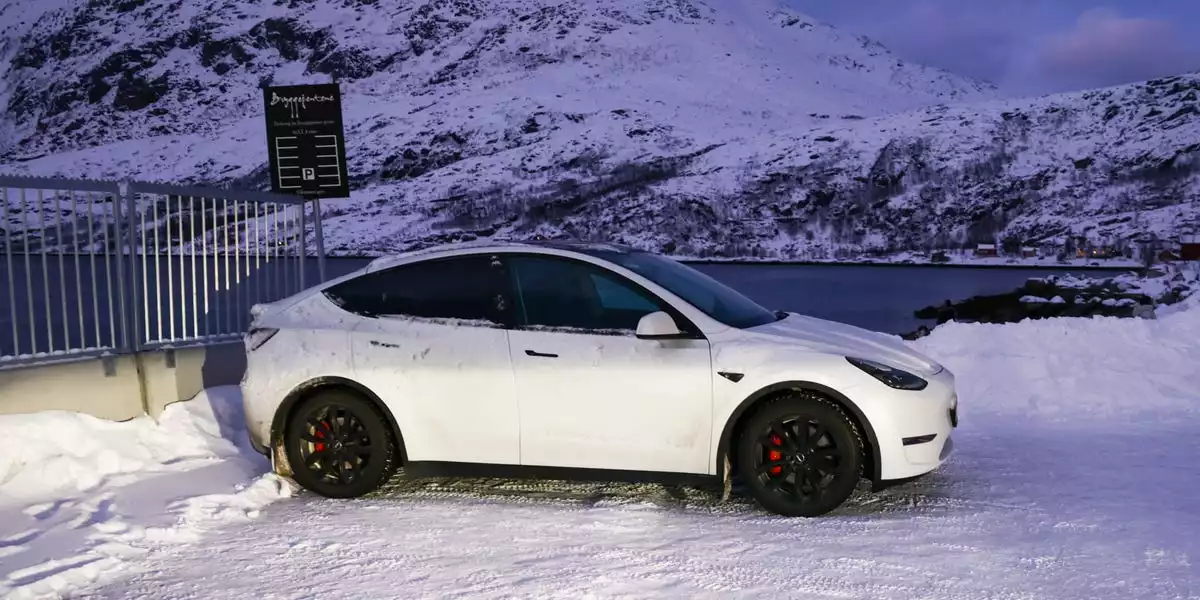
In the cool, fjord-laced expanse of Norway, the electric vehicle revolution has reached a rarefied plateau. Tesla, that perennial bellwether of the EV age, has not merely survived but thrived, with August deliveries up 22% year-over-year—an outlier in a region where 97% of new-car registrations now wear an electric badge. Norway’s singularity is not accidental. It is the result of years of deliberate policy—EV-only import rules, dense charging networks, and a total cost-of-ownership calculus that finally tips in favor of electrons over hydrocarbons. Here, Tesla’s network effects—ubiquitous Superchargers, a familiar software ecosystem—have transformed the brand from disruptor to default, even as its model lineup grows long in the tooth.
Yet, this Norwegian idyll is not the European norm. Across the continent, Tesla’s July registrations plunged 40% from the prior year, with France and Sweden registering precipitous drops of 47% and 84%, respectively. The divergence is stark, and it is instructive: Norway is not a harbinger, but a controlled experiment—a glimpse of what happens when infrastructure, incentives, and market maturity align, and what is lost when they do not.
The Cross-Currents of Policy, Technology, and Competition
Tesla’s European fortunes now ride the shifting tides of macroeconomics and geopolitics. The era of pandemic-fueled subsidies is waning. Rising interest rates and tighter leasing terms are squeezing affordability, particularly for Tesla’s higher-priced models. In markets still in the “early majority” phase of EV adoption, the lack of fresh body styles—especially compact crossovers and affordable hatchbacks—has ceded ground to nimble competitors. Chinese automakers, led by BYD, have seized the moment. BYD’s Norwegian sales have surged nearly 150%, powered by a modular product strategy that mirrors the rapid iteration cycles of consumer tech.
The technological arms race is equally fierce. BYD’s blade battery and cell-to-pack architecture offer compelling cost and safety advantages, especially for fleet buyers sensitive to total cost of ownership. Tesla, meanwhile, remains dependent on ramping up its 2170 and 4680 cell production—an operational challenge that injects margin risk into its European outlook. Over-the-air software updates remain a Tesla hallmark, but regulatory scrutiny in the EU is intensifying, particularly around subscription bundles and driver-monitoring systems. Compliance costs threaten to erode the software-led margin upside that once seemed unassailable.
- Divergent regulatory regimes: Norway’s direct-to-consumer sales model and loose dealer restrictions allow Tesla to retain margin, while elsewhere, entrenched dealer lobbies and hybrid agency models inflate go-to-market costs.
- Tariff uncertainty: The European Commission’s anti-subsidy probe into Chinese EVs could reshape the competitive landscape overnight, raising costs not just for Chinese entrants but for Tesla itself, whose Berlin Gigafactory relies on imported Chinese battery components.
- Brand volatility: Negative sentiment tied to Elon Musk’s public persona is now a measurable variable in fleet procurement, with ESG-conscious buyers citing reputational risk as grounds for diversification.
Strategic Pivots: Pricing, Localization, and the Race for Residual Value
Tesla’s Norwegian performance tempts the company to hold pricing firm, but the broader European softness exerts pressure to reignite demand through price cuts—a delicate trade-off, as every 5% reduction in Model Y price erodes operating margins by roughly 150 basis points. The anticipated arrival of a lower-priced “Model 2” may prove pivotal, especially in incentive-sensitive EU segments where Chinese brands are gaining traction.
Supply-chain localization is becoming non-negotiable. With carbon-border adjustments on the horizon, the economic logic of localizing cathode and anode production grows stronger. Tesla’s Berlin plant could yet become a regional battery hub, but capital allocation must be balanced against the demands of AI compute infrastructure and North American expansion. Meanwhile, the maturation of EV residual-value algorithms is reshaping the leasing landscape. Brands with volatile pricing histories—Tesla among them—face tighter residual benchmarks, raising monthly payments and potentially dampening volume forecasts.
- Second-life and recycling: Norway’s high EV penetration accelerates battery retirements, making closed-loop recycling a strategic battleground. Dominance here confers control over critical upstream materials, with Tesla and BYD both positioning for advantage.
- Charging interoperability: As charging networks become commoditized, joint ventures between legacy automakers and energy majors threaten to dilute Tesla’s once-exclusive Supercharger moat.
The Next Inflection Point for Europe’s EV Future
The European EV market is fragmenting along axes of policy, technology, and brand. Norway’s outperformance is a testament to what is possible when government, infrastructure, and consumer readiness converge. Elsewhere, the narrative is one of intensified competition, subsidy decay, and the growing importance of reputational analytics. For executives and strategists, the imperative is clear: accelerate modular, region-specific EV strategies; hedge against tariff and residual-value risk; and prepare for a market where brand equity is as volatile as the technologies that underpin it.
Whether Tesla can compress its product-refresh cycle and localize supply chains without sacrificing margin will define not only its European trajectory, but the competitive economics of global electrification. In this moment, the continent’s EV future hangs in the balance—caught between the lessons of Norway and the realities of a rapidly evolving marketplace.

 By
By

 By
By

 By
By
 By
By
 By
By
 By
By



 By
By