
Solar Roof’s quiet exit: when design-led clean tech meets the hard math of deployment
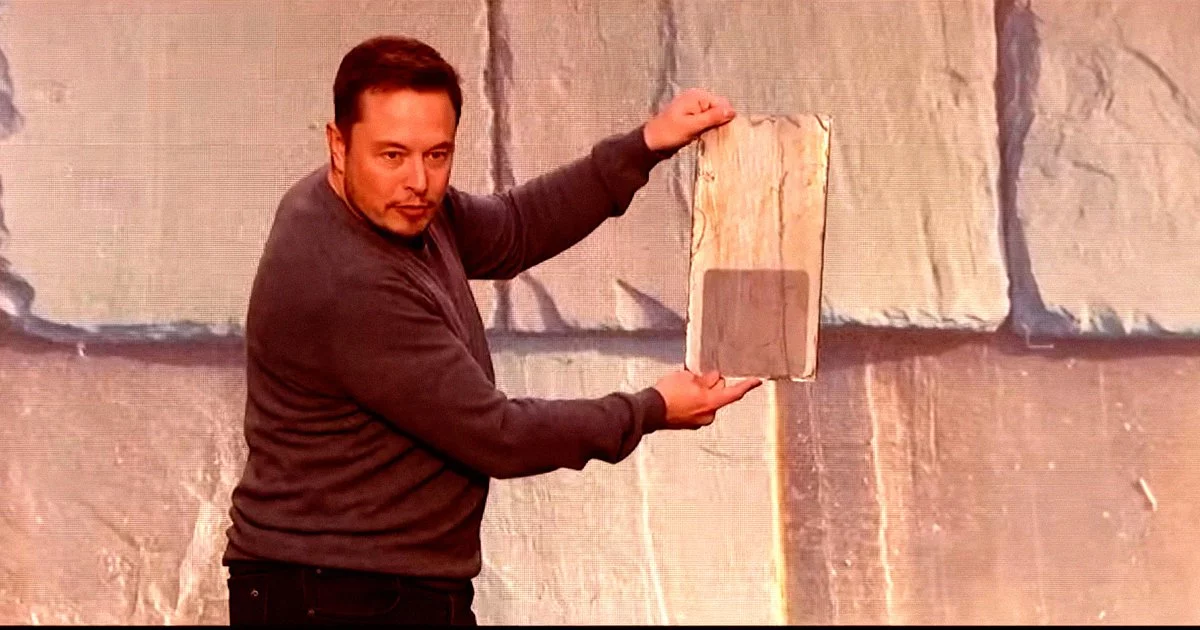
Tesla’s decision to discontinue its Solar Roof tile product reads less like a single product cancellation and more like a case study in the limits of “beautiful” decarbonization when it collides with real-world construction economics. Launched in 2016 with the promise of a visually integrated solar roof at an advertised $22 per square foot, Solar Roof positioned itself as a premium alternative to conventional rooftop panels—an attempt to make distributed solar feel like an architectural upgrade rather than an add-on.
Execution, however, proved unforgiving. The product’s core value proposition—customized tiles, specialized mounting, and a tightly controlled installation process—also created the very constraints that prevented scale. Over seven years, the installed base reportedly reached only around 3,000 units, with deployment peaking at several dozen installations per week, far from the 1,000-roof cadence once discussed as an ambition. The result was a familiar pattern in hardware-heavy climate tech: a compelling prototype narrative followed by manufacturing and field-installation realities that inflate costs, slow throughput, and magnify customer dissatisfaction.
Several forces appear to have compounded the challenge:
- High “soft costs” (permitting, labor, financing, project management) that can dominate residential solar economics, particularly in mature markets
- Installer network constraints, where training, quality control, and scheduling become bottlenecks rather than accelerators
- Customization complexity, which undermines repeatability—the key ingredient for cost-down curves in physical infrastructure
- Legal and warranty exposure, where customer disputes and settlements can become an enduring drag on margins and management attention
For Tesla, Solar Roof increasingly looked like a prestige product that demanded mass-market operational excellence—without offering a clear path to mass-market unit economics.
Capital allocation signals: Tesla doubles down on scalable solar, not bespoke rooftops
While Solar Roof tiles are being phased out, Tesla’s continued sale of conventional solar panels suggests the company is not exiting solar outright. Instead, it is narrowing its focus to segments where the cost structure is better understood and the delivery model is more repeatable. Traditional panels benefit from mature supply chains, standardized installation practices, and clearer pricing benchmarks—advantages that bespoke roof-integrated tiles struggled to match.
The more consequential signal is the reported push behind Project Crystal Sun, described as a $10 billion solar factory targeted for completion by 2028. If realized, it would represent a strategic re-centering on manufacturing scale—the domain where Tesla has historically been most comfortable: high-volume production systems, vertical integration, and cost optimization through throughput.
This shift aligns with a broader investor logic that has sharpened since 2022: in a higher interest-rate environment, capital markets tend to reward projects with:
- Predictable unit economics and measurable learning curves
- Lower execution risk than field-customized construction workflows
- Scalable production capacity that can serve multiple downstream channels
- Clearer margin pathways than premium, niche offerings
In that light, discontinuing Solar Roof tiles can be interpreted as a reallocation of attention away from a labor-intensive, litigation-prone product and toward platforms where Tesla can plausibly compete on cost, volume, and operational discipline.
The AI power imperative: why gas turbines are re-entering the tech narrative
The most provocative element of the broader story is not merely Tesla’s retreat from a rooftop solar product—it is the reported tilt in Elon Musk’s ecosystem toward gas turbines to power energy-intensive compute operations embedded in AI and SpaceX-adjacent infrastructure. For the modern AI stack, electricity is not just a utility expense; it is a strategic input. Training and operating large-scale AI systems demands high-density, dispatchable, high-quality power—and it demands it continuously.
Gas turbines offer attributes that intermittent renewables alone cannot guarantee without extensive firming:
- Dispatchability: power on demand, independent of weather
- High power density: suitable for large compute clusters
- Operational control: predictable performance and fewer grid constraints in some locations
- Potential cost advantages: depending on local gas prices, grid tariffs, and infrastructure access
The reported acquisition of a turbine manufacturer adds another layer: vertical integration of energy inputs. For compute-heavy businesses, owning generation assets can reduce exposure to volatile power markets, interconnection delays, and capacity constraints—especially as data center demand rises faster than grid upgrades in many regions.
This is not unique to Musk’s enterprises. Across the technology sector, the emerging pattern is hybridization: renewables procurement paired with firming resources such as gas, storage, or other dispatchable capacity. The differentiator here is the apparent preference for direct asset ownership rather than relying primarily on long-term power purchase agreements (PPAs).
Brand, ESG, and competitive posture: a recalibration with real stakeholder consequences
Tesla’s reported removal of “sustainable” language from its mission statement, alongside the operational embrace of gas-fired power for compute, signals a reframing: from sustainability-first symbolism to energy pragmatism under the pressure of AI-era scale. That does not necessarily imply a wholesale abandonment of decarbonization—Tesla remains deeply tied to EVs, storage, and solar channels—but it does suggest a hierarchy shift in which reliability, speed, and capital efficiency are rising to the top.
For stakeholders, the implications are tangible:
- ESG-focused investors may scrutinize the coherence between Tesla’s historical clean-tech identity and its evolving energy posture
- Competitors may read the Solar Roof discontinuation as a warning about the difficulty of monetizing premium distributed solar hardware
- Executives and boards across industries may see a template emerging: hybrid energy portfolios designed around operational certainty, not just carbon narratives
- Policy and regulatory strategists will note that incentive volatility and permitting friction can quickly change which energy bets look “bankable”
Tesla’s Solar Roof story ultimately underscores a broader market truth: the energy transition is not only a technology race—it is an execution race. And as AI expands the premium placed on firm power, the companies that win may be those that treat electricity not as a procurement line item, but as a core strategic system—engineered for scale, resilience, and control.

 By
By


 By
By

 By
By
 By
By
 By
By