

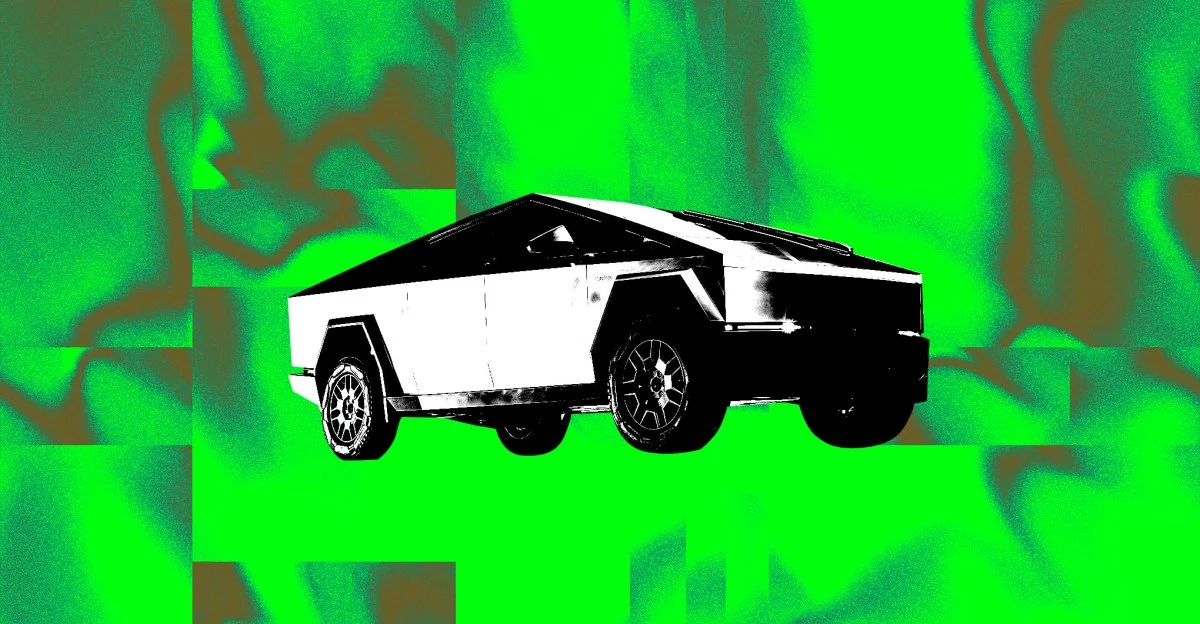

The High-Wire Act of Tesla’s Cybertruck: Innovation Meets Market Gravity
Tesla’s third-quarter 2025 results offer a fascinating snapshot of the electric vehicle (EV) market at a moment of inflection—where surges in demand, propelled by expiring policy incentives, collide with the cold realities of product-market fit. The company’s ability to drive volume remains formidable, yet the Cybertruck’s pronounced stumble signals a deeper challenge: how to reconcile boundary-pushing design with the evolving expectations of a mainstream, utility-driven customer base.
Policy Tailwinds and the Mirage of Demand Elasticity
The numbers are unambiguous. U.S. EV sales soared 40.7% quarter-over-quarter as consumers raced to secure the $7,500 federal tax credit before its September sunset. Tesla’s stalwarts—the Model 3 and Model Y—reaped the benefits, but the Cybertruck, once heralded as a paradigm-shifting icon, faltered spectacularly. Deliveries plummeted 63% year-over-year, amounting to a mere 16,000 units for 2025, a shadow of Elon Musk’s once-vaunted 250,000 target.
This performance is even starker when set against the backdrop of competitors. Rivian’s R1T and Ford’s F-150 Lightning posted double-digit growth, while GM’s electric pickups surged ahead, some models notching triple-digit gains. The Cybertruck’s struggles are not merely cyclical—they are structural, rooted in a product that, for all its audacity, finds itself out of step with the market’s center of gravity.
The expiration of the federal credit acted as a powerful, if temporary, accelerant, masking the true elasticity of demand. As the industry heads into the fourth quarter, the looming “demand cliff” will test the organic appeal of every EV, but none more so than the Cybertruck, which now faces the dual headwinds of higher financing costs and diminished policy support.
The Anatomy of a Product Miss: Design, Economics, and Perception
The Cybertruck’s predicament is a case study in the perils of innovation without anchoring in utility. The electric pickup segment has bifurcated into two distinct buyer archetypes: the commercial user, seeking reliability and total cost of ownership, and the lifestyle enthusiast, drawn to novelty and brand cachet. Rivian and Ford have deftly navigated this divide, offering vehicles with familiar silhouettes and practical features. In contrast, the Cybertruck’s stainless-steel exoskeleton, flush door handles, and wedge-shaped profile have limited its appeal to a narrow band of early adopters.
Several factors compound the challenge:
- Cost Structure: Without the tax credit, the Cybertruck’s bill of materials and MSRP outstrip mainstream alternatives, undermining its case for fleet adoption.
- Ergonomics and Safety: A high-profile wrongful-death lawsuit, alleging door-handle failures during a fire, crystallizes broader concerns about unconventional design choices. For commercial buyers, such uncertainty is a non-starter.
- Inventory and Channel Risks: Reports of unsold Cybertrucks being absorbed by SpaceX and xAI fleets suggest a stopgap strategy to mask retail softness—one that cannot be sustained indefinitely.
Meanwhile, the competitive landscape is shifting. Ford’s forthcoming Lightning, built on a modular skateboard platform, promises significant cost reductions. Rivian’s rumored R2 platform aims for the mass market with a mid-$45,000 price point. GM’s Ultium battery integration is beginning to stabilize costs, setting the stage for broader mainstream adoption.
Strategic Crossroads: Options for Recalibration
For Tesla’s executive suite, the Cybertruck’s underperformance is more than a product hiccup—it is a strategic inflection point. Several levers are now in play:
- Product Adaptation: Swift, targeted revisions—mechanical latches, optional painted panels, and fleet-focused interiors—could broaden the Cybertruck’s appeal without a ground-up redesign. Alternatively, repositioning it as a limited-production halo vehicle would free up capacity for the anticipated $25,000 “Gen 3” platform.
- Policy Engagement: Proactive lobbying for transitional incentives, such as carbon intensity bonuses, could help cushion the impact of the federal credit’s expiration and align with broader climate objectives.
- Capital Discipline: Deferring Cybertruck-specific capital expenditures until clear demand signals emerge, and reallocating resources toward AI compute infrastructure, would support Tesla’s higher-margin Full Self-Driving ambitions.
- Competitive Signaling: Leveraging pricing power in the Model Y segment could pressure legacy OEMs, forcing difficult trade-offs between market share and profitability.
Navigating the Next Act in Electric Mobility
The Cybertruck’s trajectory will serve as a bellwether for Tesla’s ability to balance radical innovation with the demands of a maturing, utility-driven EV market. The coming quarters will reveal whether Tesla can pivot with agility—through modular product tweaks, policy engagement, and disciplined capital allocation—or whether the Cybertruck will be remembered as a cautionary tale of ambition outpacing market reality. For senior decision-makers, the imperative is clear: strategic flexibility, not just visionary design, will define the next era of electric mobility.

 By
By
 By
By
 By
By
 By
By
 By
By


 By
By







