

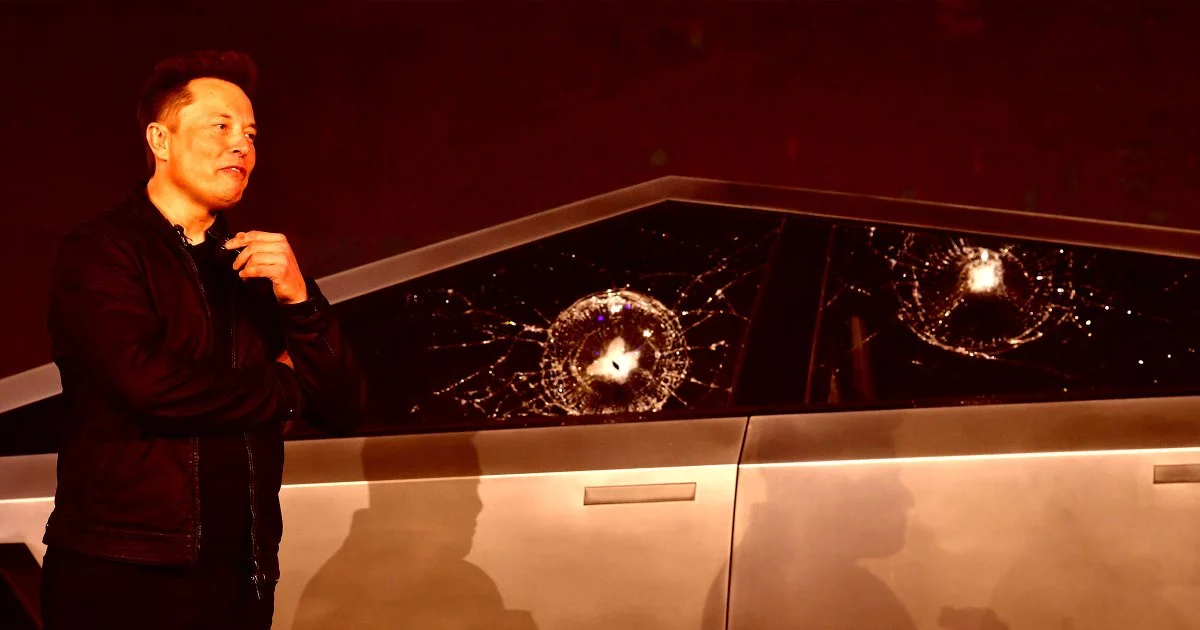

Leadership Exodus and the Cybertruck’s Unforgiving Spotlight
Tesla’s recent loss of Siddhant Awasthi, the architect who shepherded the Cybertruck from audacious prototype to polarizing reality, marks more than a mere personnel shuffle. His departure, shadowed by the exit of Model Y chief Emmanuel Lamacchia, signals a deepening fissure within Tesla’s upper ranks—a fissure that now threatens to widen just as the company faces its most formidable operational and strategic headwinds in years.
The Cybertruck, once the lodestar of Tesla’s electric ambitions, now stands as a case study in the perils of innovation unmoored from manufacturing pragmatism. Since its late-2023 debut, the vehicle has endured ten recalls and delivered a fraction—roughly 63,000 units—of its original 250,000 to 500,000 annual sales target. The stainless-steel exoskeleton, a marvel in renderings, has proven a nemesis on the assembly line, complicating stamping, welding, and repairability while driving up scrap rates and exposing a chasm between design bravado and automotive discipline.
As Tesla’s automotive core slows, the company’s pivot toward artificial intelligence and robotics—epitomized by the Dojo supercomputer and the Optimus humanoid project—has become more pronounced. Yet, this strategic reorientation has introduced its own tensions, diluting engineering focus and fueling a talent drain that now risks undermining both near-term vehicle launches and long-term credibility.
The Economics of Disruption: Margin Squeeze and Market Realities
Tesla’s ability to command a premium for the Cybertruck is eroding under the weight of unmet expectations and intensifying competition. With a starting price near $60,000, the Cybertruck finds itself outflanked by Ford’s F-150 Lightning, especially after aggressive price cuts. The vehicle’s avant-garde styling and unorthodox build, while captivating to a subset of early adopters, lack the workhorse credentials prized by fleet buyers—a segment that legacy automakers are now courting with disciplined, incremental innovation.
The broader electric vehicle market, meanwhile, is approaching an inflection point. Global EV penetration is plateauing outside China, stymied by subsidy roll-offs and persistent charging infrastructure gaps. Even as commodity prices for lithium and nickel trend downward, offering a fleeting respite on input costs, Tesla’s product-specific overruns—particularly with the Cybertruck—have neutralized these advantages. The result: margin compression, declining automotive revenue, and a fourth consecutive quarterly profit dip.
Tesla’s response has been a blend of demand management and financial theater. Purchases of thousands of Cybertrucks by SpaceX and xAI—entities within Elon Musk’s orbit—have temporarily bolstered order books but raised eyebrows among governance hawks. Shareholders, for their part, have doubled down on Musk’s vision, approving a multibillion-dollar, performance-based compensation package even as execution risks mount.
Strategic Crossroads: Organizational Culture and Investor Patience
At the heart of Tesla’s current predicament lies a culture at a crossroads. The ascent of Awasthi from intern to vice president once embodied Tesla’s reputation as a crucible for talent mobility and entrepreneurial drive. His exit, however, casts doubt on the company’s ability to retain and attract seasoned operators—especially those with the manufacturing expertise needed to navigate the complexities of scaling novel vehicle architectures.
The tension between Tesla’s hardware roots and its AI-first ambitions is now palpable. Resources are increasingly siphoned toward software-defined initiatives, leaving gaps in traditional automotive quality and supply-chain resilience. This internal friction is mirrored externally, as competitors such as BYD and Hyundai-Kia demonstrate a capacity for disciplined scaling and operational rigor that Tesla, at least for now, struggles to match.
For investors, the stakes are clear. Tesla’s stock continues to trade at a premium reserved for high-growth technology platforms, not cyclical automakers. Yet, the company’s recent performance has introduced a valuation tension that cannot be papered over by narrative alone. The coming months will demand not just visionary promises but concrete evidence of execution—particularly around the next-generation, sub-$30,000 EV platform and the commercial viability of Dojo and Optimus.
The Road Ahead: Signals for Stakeholders and Industry Onlookers
The next 12–18 months will serve as a crucible for Tesla’s dual identity as both automaker and AI vanguard. Stakeholders should monitor several critical signals:
- Cybertruck Gross Margins: Any improvement here would indicate that manufacturing challenges are being tamed.
- Next-Gen Platform Milestones: Progress on a mass-market EV is essential for volume leadership.
- Dojo Commercialization: External customer wins would validate the AI pivot and diversify revenue streams.
- Regulatory Scrutiny: Watch for SEC or DOJ interest in intercompany transactions and recall responses.
- Competitive Launches: Rivian’s R2 and Ford’s next-gen Lightning will test Tesla’s hold on the electric pickup narrative.
As executive search activity intensifies and capital allocation debates sharpen, Tesla’s ability to bridge the gap between vision and execution will define not only its own trajectory but the broader contours of the electric and autonomous vehicle landscape. For observers and investors alike, the company’s next moves will be watched with a mix of anticipation and skepticism—a testament to both its enduring promise and its mounting challenges.
 By
By
 By
By
 By
By
 By
By

 By
By









