


The New Battleground: How China’s EV Revolution Is Rewriting the Rules of Global Competition
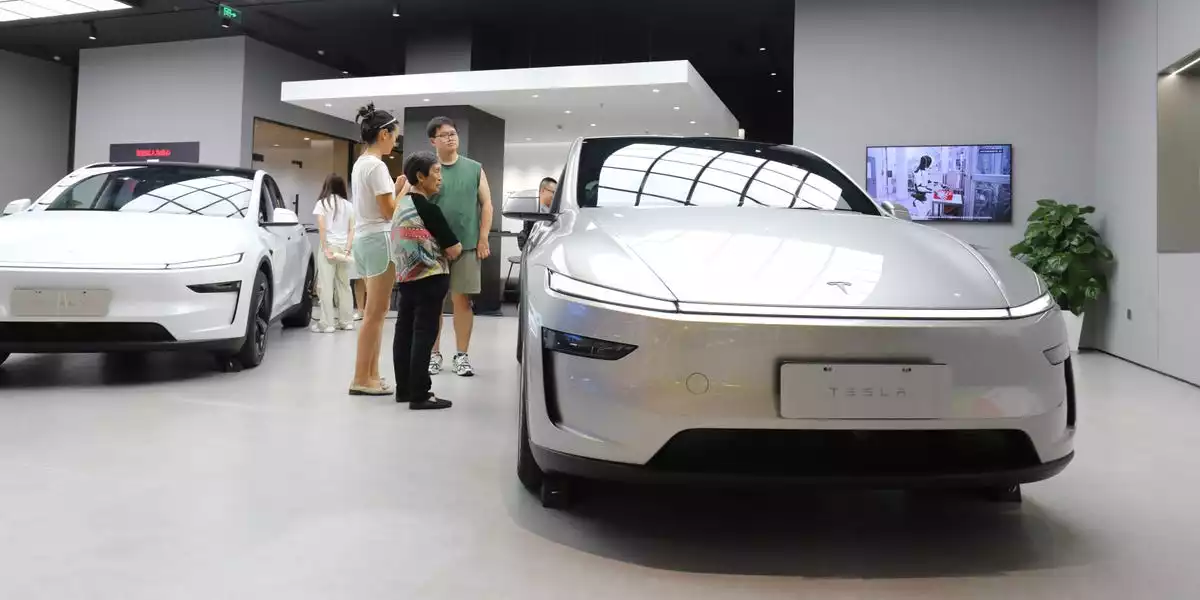
Tesla’s once-unassailable position in China, the world’s largest electric vehicle market, is under siege. August’s delivery figures—down 4% year-over-year to 83,200 units—tell only part of the story. The real drama is unfolding in the showrooms and on the streets, where a phalanx of homegrown contenders—Xpeng, Nio, Xiaomi, Geely—are not just matching Tesla’s Model Y, but outflanking it with a blitz of feature-rich, aggressively priced SUVs. Xiaomi’s YU7, with 240,000 pre-orders in a single day, is emblematic of the moment: a product launch that feels less like a debut and more like a declaration of independence.
The Anatomy of Disruption: Technology, Ecosystems, and the Price/Performance Equation
At the heart of this upheaval is a radical inversion of the price/performance equation. Chinese automakers are wielding a new arsenal of technologies:
- Cell-to-pack (CTP) LFP batteries and centralized zonal EE architectures drive down costs by 10–15% compared to Tesla’s legacy Fremont-derived Model Y.
- Domestic silicon carbide supply chains further erode the bill of materials, giving local brands a structural margin advantage.
- OTA-heavy operating systems—from Xiaomi’s HyperOS to Nio’s Banyan 2.0—shift the locus of value from hardware to software, enabling perpetual feature monetization and keeping sticker prices startlingly low.
But the disruption is not merely technical. Xiaomi, in particular, is leveraging its vast base of smartphone users to create a seamless “human-car-home” ecosystem. This is not just an automotive play, but an audacious bid to fold mobility into the entire Chinese consumer IoT stack. Tesla’s relatively siloed app ecosystem suddenly looks parochial by comparison.
Meanwhile, the cadence of innovation is relentless. In the past ten months, domestic brands have launched three major SUVs, while Tesla’s next clean-sheet platform—the much-rumored “Model 2”—remains at least two years away. In a market where perception is reality, this hands local firms a decisive edge in the race for mindshare.
Strategic Fault Lines: Scale, Brand, and the Coming Shakeout
The competitive landscape is fracturing along several axes:
- Scale versus scope: Tesla’s global economies remain formidable, but in China, it now contends with over 100 NEV nameplates—a proliferation reminiscent of the post-2010 solar panel glut. Overcapacity is emerging, with giants like BYD and SAIC already redirecting excess output to Latin America and Europe, portending global margin compression.
- Brand positioning asymmetry: While Western consumers increasingly conflate Tesla’s brand with Elon Musk’s political persona, Chinese buyers are more pragmatic—yet patriotic buying patterns favor homegrown brands promising “national tech.”
- Policy volatility: Beijing’s NEV credit regime and VAT exemptions have been extended, but the looming withdrawal of subsidies after 2024 will stress smaller players and catalyze a wave of consolidation. Well-capitalized incumbents—Geely, BYD, SAIC—are poised to exploit this window, while Tesla must decide whether to catalyze or simply outlast the shake-out.
The Global Ripple Effect: Macroeconomic, Geopolitical, and Strategic Implications
The stakes extend far beyond China’s borders. The domestic property slump and youth unemployment are curbing discretionary spending, intensifying the zero-sum dynamics of the market. Meanwhile, Washington’s Inflation Reduction Act and potential EU anti-subsidy probes threaten to complicate Chinese OEM export ambitions, inadvertently preserving Tesla’s pricing umbrella outside China—if it can insulate its supply chain from tariff headwinds.
Sovereign wealth and private equity are increasingly betting on “electrification at cost parity,” privileging vertically integrated models that de-risk commodity exposure. The Chinese playbook—bundling hardware near cost and monetizing data, ADAS subscriptions, and cloud services—is poised to migrate to Europe and North America, forcing Western automakers to rethink lifetime-value models and treat vehicles as mobile edge compute nodes.
For decision-makers, the lessons are clear:
- Expect sustained price wars and industry attrition; ecosystem revenue streams are now existential.
- Western OEMs must urgently diversify battery sourcing and licensing strategies to hedge geopolitical risk.
- Cross-industry convergence—where telecoms, utilities, and consumer electronics fuse mobility, energy, and IoT—is no longer theoretical.
China’s EV market has shifted from a capacity race to an innovation-at-cost contest, compressing Tesla’s first-mover advantage and accelerating the global pivot toward software-centric, ecosystem-anchored mobility. The next competitive epoch belongs to those who can integrate battery supply security, platform economics, and geopolitical agility into a single, coherent operating model—a lesson not lost on the most forward-thinking players in the field.

 By
By

 By
By

 By
By

 By
By
 By
By







