


A family enterprise story that maps directly onto modern financial inclusion
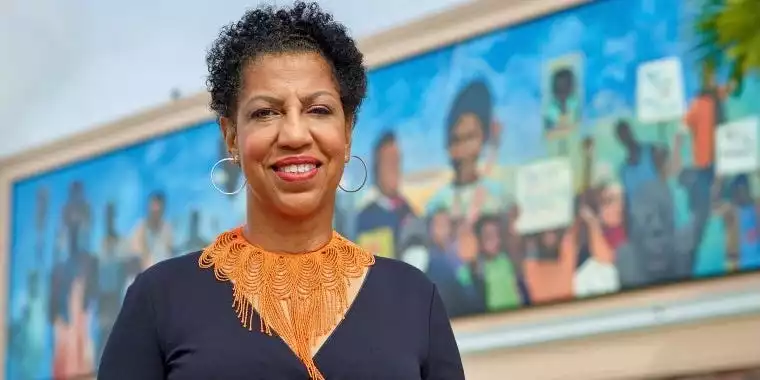
Teri Williams, president and COO of OneUnited Bank, frames her leadership philosophy through a lineage that predates today’s “financial inclusion” vocabulary yet embodies its core mechanics. Her great-grandmother—known as “Ma Honey”—built stability in the segregated South through small businesses and rental properties, effectively creating a household balance sheet designed for resilience. In contemporary terms, it was a diversified micro-portfolio: operating income from entrepreneurship paired with cash-flowing real estate, both reinvested to expand opportunity.
That origin story matters because it highlights a recurring truth in community finance: wealth-building is often less about a single windfall and more about repeatable systems—saving habits, asset ownership, and reinvestment discipline—especially in communities historically excluded from mainstream credit and capital markets.
Williams’s personal arc adds a second layer. As a scholarship student at Brown University, she describes an early discomfort with her roots—an emotional detail that underscores how social mobility can create identity tension even as it expands economic options. For business and technology leaders, this is not merely biographical color; it is a reminder that financial products and educational pathways are inseparable from trust, culture, and lived experience. Banks that understand this tend to outperform in underserved segments because they design services around real behaviors, not idealized assumptions.
Key takeaways embedded in the narrative:
- Community banking as an anchor institution: not just a lender, but a stabilizing platform for households and small businesses.
- Generational wealth as a strategy, not a slogan: rental income and small-business profits funding education and upward mobility.
- Trust as infrastructure: a durable competitive asset that cannot be replicated by UX alone.
Consolidation under OneUnited: scale as both shield and amplifier
Williams and her husband, Kevin, helped consolidate several Black-community banks in the mid-1990s under the OneUnited banner—an early signal of a structural reality that has only intensified: community banks face mounting pressure to achieve scale in compliance, risk management, and technology investment.
In the decades since, regulatory complexity, cybersecurity demands, and digital customer expectations have raised the minimum viable operating model for banks. Consolidation, in this context, functions as:
- a defense strategy against rising fixed costs (regulatory, audit, security, core systems), and
- an amplifier for mission delivery—allowing a community-focused institution to serve broader geographies and invest in education platforms.
OneUnited now serves customers in all 50 states, which is notable for a bank rooted in a community mission. It suggests a hybrid identity: community banking values delivered through national reach, increasingly enabled by digital distribution rather than branch density. For the sector, this is a blueprint for how minority depository institutions and mission-driven banks can remain relevant: scale the platform, preserve the purpose.
Strategically, this also positions OneUnited within two overlapping growth narratives:
- underbanked market expansion (tens of millions of Americans remain underbanked), and
- ESG and impact-aligned capital flows, where measurable outcomes can attract depositors, partners, and institutional interest.
Financial literacy meets fintech reality: the new gap is not access, it’s comprehension
Williams’s reflections on financial literacy—illustrated by her daughter’s confusion over credit-card balances—capture a persistent problem in consumer finance: many people are “banked” but not necessarily financially fluent. The gap is no longer simply access to an account; it is understanding how money behaves over time—interest accrual, revolving credit, utilization, and risk.
This challenge is becoming more complex as younger cohorts increasingly bypass traditional pathways (savings accounts, mutual funds) in favor of:
- individual equities, often accessed through low-friction brokerage apps, and
- cryptocurrencies and digital assets, where volatility, custody, and regulatory ambiguity add layers of risk.
The implication for banks—especially community banks—is direct: financial literacy must evolve from basic budgeting into decision-grade education that addresses modern instruments and behaviors. That includes:
- how to interpret APR and compounding in real terms,
- how credit utilization affects FICO outcomes,
- how to evaluate risk versus speculation, and
- how digital assets differ from insured deposits and regulated securities.
This is where technology becomes central. The next generation of financial literacy is likely to be delivered through:
- AI-driven tutoring and adaptive learning, tailored to a customer’s knowledge gaps and behavior patterns, and
- embedded education inside products—contextual prompts at the moment of decision, not generic workshops alone.
For institutions like OneUnited, the opportunity is to convert education into a durable moat: teach customers to use financial tools well, and they stay longer, borrow more responsibly, and build assets more consistently.
Banking’s next interface: bridging deposits, investing, and crypto without diluting trust
The shift Williams observes—toward stocks and crypto—signals a broader market reality: consumers increasingly expect a unified financial life, even when the underlying rails are fragmented. Traditional banks, fintech apps, and decentralized finance (DeFi) protocols are competing for the same customer attention, but with very different trust models.
For community-focused banks, the strategic question is not whether crypto or tokenized assets are “good” or “bad,” but how to respond without compromising safety, compliance, and mission. The most plausible path forward is selective integration—bringing modern asset visibility and onramps into a regulated environment while maintaining clear risk boundaries.
Practical strategic moves that align with this trajectory include:
- Unified dashboards that show checking, savings, and investment exposure in one place, improving transparency and engagement.
- Partnerships for regulated digital-asset custody and onramps, reducing operational risk while meeting customer demand.
- AI-assisted risk profiling that reframes “risk-taking” as calibrated participation—position sizing, diversification, time horizon discipline.
- Impact metrics tied to performance—credit-builder accounts, first-time homebuyer loans, literacy program completion—making mission measurable and investable.
Williams’s story ultimately lands on a hard-edged business insight: the future of community banking will be decided at the intersection of trust and technology. Institutions that can preserve cultural credibility while modernizing their product stack—without outsourcing the customer relationship to fintech intermediaries—will shape not only competitive advantage, but the practical pathways through which the next generation builds wealth.

 By
By
 By
By

 By
By
 By
By


 By
By







