

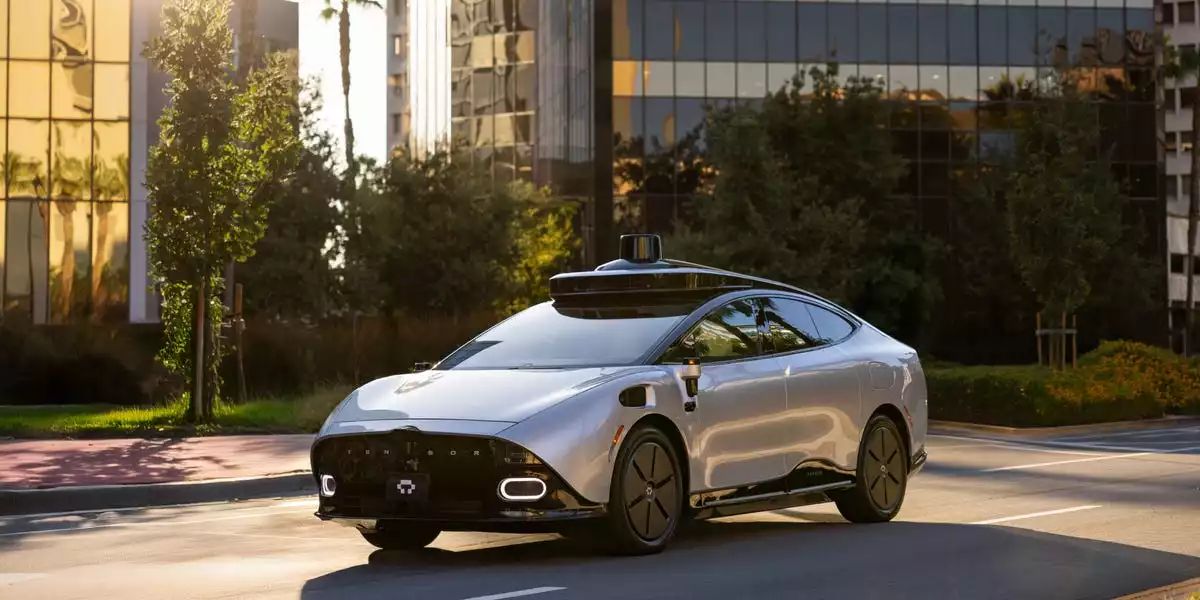

A New Contender Redraws the Autonomous Vehicle Map
In the ever-shifting landscape of autonomous vehicles, the arrival of Tensor’s “Robocar” lands less like a pebble and more like a seismic tremor. Silicon Valley has seen its share of bold pronouncements, but Tensor’s debut—a purpose-built SAE Level 4 passenger vehicle, engineered from the ground up to erase the vestiges of human control—signals a radical departure from the incrementalism that has long defined the sector. The company’s decision to retract all manual controls in autonomous mode, coupled with a public assumption of full legal liability, throws down a gauntlet to legacy automakers and AV startups alike.
The Robocar’s launch strategy—Dubai in 2026, followed by Europe and the U.S.—is as calculated as its engineering. Dubai’s regulatory unity and infrastructural ambition make it a natural laboratory for high-stakes innovation, while the promise of a privacy-forward, air-gapped vehicle stands in stark contrast to the data-hungry ethos of the industry’s current titans.
Engineering Maximalism: Sensors, Compute, and the Human-in-the-Loop
Tensor’s technical blueprint is a study in maximalism. The Robocar bristles with 37 cameras, 5 lidars, multiple radars, and even microphones, all orchestrated by an 8-petaOPS on-board supercomputer. This sensor suite dwarfs those of Cruise, Waymo, or Mobileye, hinting at a deliberate trade: higher bill of materials for a faster path to robust safety validation. The hardware is not just a feat of integration—it’s a statement of intent, a bet that the cost curve for automotive-grade photonics and silicon will soon bend favorably.
- Sensor Density: By vastly outnumbering competitors in sensing modalities, Tensor positions itself to capture edge cases and rare events that have historically stymied AV progress.
- Compute Power: The 8,000 TOPS (trillion operations per second) supercomputer pushes the limits of what can be cooled, powered, and sourced for automotive use, likely tying Tensor’s fate to the next generation of 5 nm and 3 nm automotive ASICs from industry leaders.
- Teleoperation: In a tacit acknowledgment of autonomy’s statistical brittleness, Tensor integrates human teleoperators for edge-case intervention. This “human-in-the-loop” approach provides a regulatory audit trail and operational safety net, but it also presumes the ubiquity of low-latency 5G infrastructure—more plausible in Dubai’s tech-forward districts than in the patchwork connectivity of the U.S.
Liability, Regulation, and the Economics of Trust
Perhaps the most disruptive element of Tensor’s strategy is its assumption of full product liability. This is not the hedged, conditional liability once floated by OEMs like Volvo, but a wholesale realignment of risk from driver to manufacturer. Should regulators accept this model, the ripple effects will be profound:
- Insurance Paradigm Shift: Traditional auto insurance, built on the premise of driver fault, could see its relevance wane. In its place, new forms of “product performance insurance” may emerge, written directly for OEMs and suppliers.
- Supplier and Semiconductor Stakes: The demand for automotive-grade sensors and silicon will surge, rewarding those able to deliver at scale and quality as chip shortages recede.
- Regulatory Dominoes: Tensor’s Dubai-to-EU-to-U.S. launch sequence offers a live test case for harmonized AV standards, potentially catalyzing federal preemption of America’s fragmented state-level AV laws—an echo of the regulatory unification seen in rail and aviation.
The Road Ahead: Privacy, Urban Mobility, and Market Dynamics
Tensor’s privacy-first stance—keeping vehicles air-gapped from the cloud unless owners opt-in—runs counter to the prevailing wisdom that data is the new oil. Yet, as market appetite for in-cabin connectivity and feature upgrades inevitably grows, the company will face mounting pressure to introduce secure, over-the-air updates. This tension between privacy and digital monetization will shape Tensor’s go-to-market calculus and, by extension, the broader industry’s approach to consumer trust.
If Robocar-class vehicles achieve price parity with premium sedans as lidar and silicon costs fall, the implications for urban mobility are profound. The “robotaxi first” thesis may yield to a world where privately owned autonomous vehicles reshape traffic patterns, prompting city planners to rethink congestion pricing and curb-space allocation. The very fabric of urban life—how we move, insure, and regulate—stands poised for reweaving.
As the next 24 months unfold, the industry will watch closely. Tensor’s Robocar could ignite a paradigm shift, compelling incumbents, regulators, and insurers to redraw the lines of risk and reward. Or it may serve as a high-profile crucible, testing the limits of Level 4 autonomy in the glare of global scrutiny. Either way, the stakes have never been higher, and the future of mobility has rarely looked so intriguingly uncertain.


 By
By

 By
By
 By
By

 By
By
 By
By







