


The Supreme Court’s Tariff Reckoning: Power, Precedent, and the $1 Trillion Question
The U.S. Supreme Court’s decision to fast-track review of the Trump-era tariffs, imposed via the International Emergency Economic Powers Act (IEEPA), has thrust the arcane machinery of trade policy into the national spotlight. At stake is not only the fate of hundreds of billions in customs duties, but also the constitutional choreography between Congress and the executive branch—a dance that has, for decades, shaped the contours of American economic statecraft.
Legal observers and market participants alike are bracing for a verdict that could ripple through fiscal policy, supply chains, and the very architecture of global commerce. As the justices weigh whether the White House overstepped its bounds, the implications for business leaders, policymakers, and technologists are both immediate and profound.
—
Executive Power on Trial: Redefining the Limits of Economic Statecraft
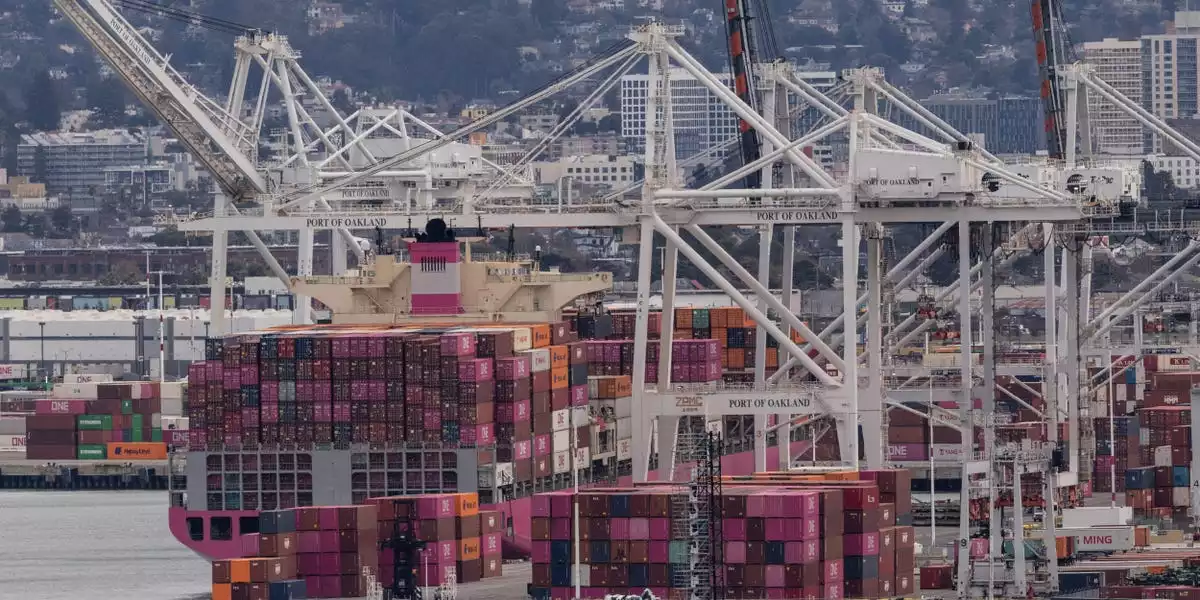
This case is, at its core, a referendum on the modern presidency’s reach into the levers of international trade. The Trump administration’s invocation of IEEPA to levy sweeping tariffs—ostensibly for national security—has reignited debate over the separation of powers. Lower courts have already declared the tariffs unlawful, but an injunction has kept them in force, leaving importers in limbo and the federal government exposed to potential refunds approaching $1 trillion.
Should the Supreme Court curtail the president’s authority, the pendulum would swing back toward Congress, restoring Article I’s primacy in tariff-setting. For CEOs, general counsels, and boardrooms, this signals a new era in which legislative gridlock or partisanship could inject volatility into trade policy. The executive’s ability to act swiftly in economic crises may be blunted, but the trade-off is greater predictability—provided Congress can muster consensus.
The jurisprudential split is expected to defy easy ideological categorization. The Court’s decision will not only set precedent for tariff actions, but also for the broader use of emergency powers in economic affairs, with potential knock-on effects for digital trade, cross-border data flows, and AI algorithm exports.
—
Economic Shockwaves: Liquidity, Inflation, and Sectoral Strategy
The specter of a $1 trillion refund—roughly 3.5% of U.S. GDP—looms large. Such a liquidity injection would rival the Federal Reserve’s most aggressive pandemic-era interventions. In the near term, this could ease credit conditions and buoy consumption, but the longer-term fiscal ramifications are less sanguine. A widened deficit would likely necessitate increased Treasury issuance, nudging up term premiums and potentially complicating the Fed’s inflation fight.
For industry, the calculus is nuanced:
- Technology hardware, consumer electronics, and automotive firms—the heaviest tariff payers—stand to gain the most. Improved working capital could fund R&D, on-shoring, or shareholder returns.
- Pricing dynamics will be scrutinized. Companies that have embedded tariffs into their cost structures must decide whether to pass savings to consumers or retain margin, all under the watchful eye of antitrust regulators.
- Digital trade stakeholders should note that a judicial rebuke of executive overreach may indirectly bolster regulatory certainty for cross-border data and AI services.
Operationally, the logistics of unwinding years of tariff collections are daunting. Customs and Border Protection (CBP) will be forced to modernize rapidly, likely accelerating procurement of advanced trade automation, blockchain audit trails, and AI-powered classification tools. Compliance fintechs and ERP vendors are poised to capitalize, offering refund-reconciliation modules to mid-market importers previously ill-equipped for such complexity.
—
Strategic Imperatives: Scenario Planning and the Next Wave of Trade Tech
For decision-makers, the Supreme Court’s intervention is a clarion call to embrace optionality. The prudent executive will:
- Model dual P&L scenarios for fiscal years 2025–26, stress-testing treasury operations for both cash outflows (if tariffs are upheld) and windfall inflows (if refunds are ordered).
- Engage proactively in legislative debates, particularly as Congress may seek to reassert its authority over critical supply chains—semiconductors, clean tech, and minerals—should executive powers be curtailed.
- Revisit capital allocation strategies in anticipation of non-organic funding. Boards must articulate clear plans for any windfalls, balancing strategic acquisitions, automation investments, and shareholder returns.
- Diversify global operations to hedge against future tariff shocks, regardless of whether they originate from the White House or Capitol Hill. Friend-shoring to Mexico, Vietnam, India, and Eastern Europe remains prudent.
- Invest in talent and technology—especially in trade compliance, data science, and customs law. Upskilling or partnering with niche advisory firms will be critical as compliance demands intensify.
As Fabled Sky Research has noted in its recent briefings, the convergence of legal uncertainty, fiscal magnitude, and technological acceleration presents both risk and opportunity. The Supreme Court’s ruling will not merely decide the fate of past tariffs; it will redraw the boundaries of economic governance and catalyze a new era of innovation in trade compliance infrastructure. Those who act with agility and foresight will transform judicial ambiguity into strategic advantage—reshaping not just their balance sheets, but the future of American enterprise.

 By
By
 By
By
 By
By
 By
By
 By
By


 By
By







