

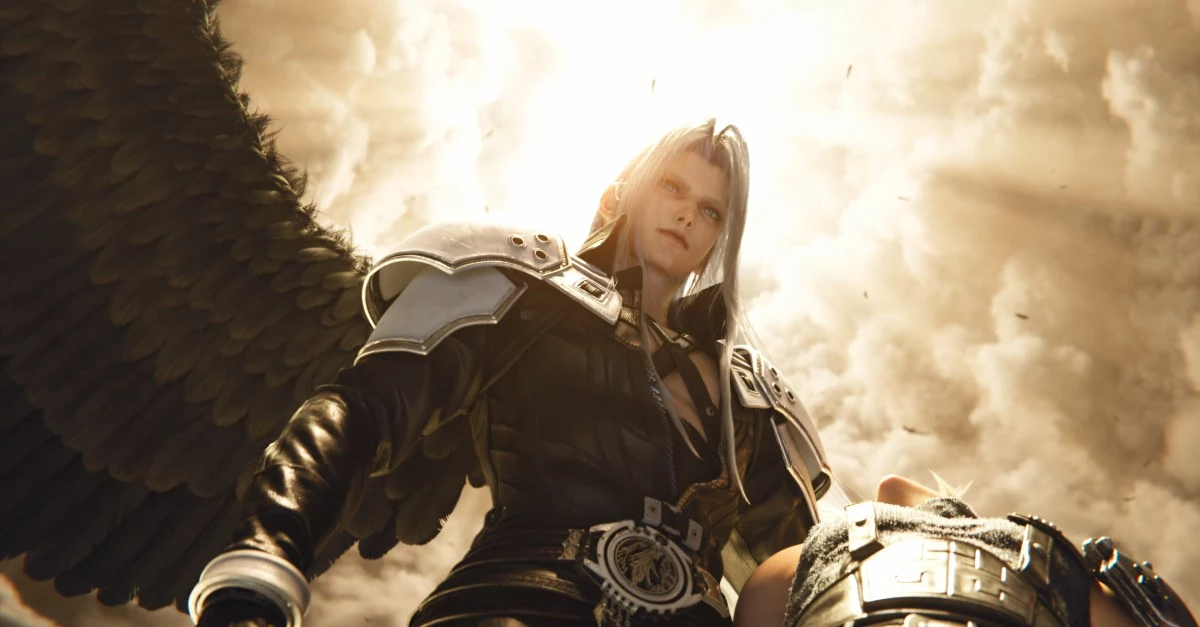

A showcase season that now functions like an earnings call for the games industry
Geoff Keighley’s Summer Game Fest Live—bolstered by a “Day of the Devs” segment—landed less like a single event and more like a coordinated market signal. Running alongside PlayStation State of Play, the Xbox Games Showcase, the PC Gaming Show, and other digital spotlights, the week underscored how the modern games calendar has become a continuous, platform-spanning media cycle. For publishers and studios, these showcases are no longer just hype engines; they are capital-market communications, shaping expectations around pipeline health, release timing, and technology bets.
The headline announcements carried a familiar duality: blockbuster certainty and selective experimentation. On one end sat franchise gravity—Final Fantasy VII Revelation as the concluding chapter of the Remake trilogy, and Control Resonant positioned as both sequel and soft reboot. On the other end were signals of creative and commercial probing: Stranger Than Heaven, with RGG Studio’s January launch and a digital Tupac element that immediately raises questions about virtual likeness rights and audience reception; and Palworld, arriving in July with hybrid mechanics that continue to attract industry attention.
Notably, the event’s subtext may matter as much as its trailers: multiple studios appear to be engineering release calendars out to 2027, implicitly acknowledging the gravitational pull of Rockstar’s Grand Theft Auto VI, slated for November. In a crowded attention economy, the industry is treating one title’s launch window as a macro event—less “competition” than “weather system.”
—
Real-time cinematics, virtual humans, and the new production arms race
A clear technological throughline emerged: the continued escalation of cinematic fidelity through real-time rendering. Titles like FFVII Revelation and Control Resonant reflect sustained investment in photorealistic pipelines—where lighting, facial animation, and camera language increasingly borrow from film grammar while retaining interactive responsiveness. For business leaders, this is not merely aesthetic ambition; it is a cost structure decision. Higher fidelity typically implies:
- Longer asset production cycles and heavier QA burdens
- Expanded reliance on performance capture, facial rigs, and specialized animation talent
- Greater pressure to amortize budgets via multi-year IP roadmaps, DLC, or live-service extensions
The most provocative technology-adjacent signal may be the use of virtual human techniques in *Stranger Than Heaven*, particularly the inclusion of a digital Tupac element. Whether achieved via real-time motion capture, archival reference, or hybrid synthesis, it points to a maturing toolkit for digitally embodied performers—with implications that extend beyond games into marketing, concerts, and transmedia. It also surfaces governance questions that the industry is still standardizing:
- Rights management for likeness, voice, and estate approvals
- Disclosure norms around synthetic or reconstructed performances
- Brand risk when realism collides with cultural sensitivity
Meanwhile, hybrid gameplay design—exemplified by Palworld’s creature collection, open-world traversal, and co-op blend—highlights a different kind of technical maturity: engine flexibility and modular feature prototyping. The winners in this cycle may be studios that can iterate quickly without ballooning headcount, using standardized toolchains and scalable content pipelines rather than bespoke systems for every mechanic.
—
Release-calendar engineering in the shadow of GTA VI and a crowded showcase economy
The most strategic business story embedded in the announcements is calendar choreography. The reported drift of flagship projects toward 2027 is a reminder that the AAA market is increasingly shaped by a small number of mega-releases that can dominate consumer time, streaming visibility, and ad inventory. If GTA VI lands as expected in November, it will likely influence:
- Marketing CPM inflation across gaming and adjacent entertainment categories
- Platform featuring priorities and storefront placement dynamics
- Consumer spending allocation during a critical holiday period
For smaller and mid-tier studios, this can be both threat and opportunity. Vacated windows can create room to capture mindshare—particularly if teams avoid direct collision with the largest franchises and instead target the “quiet weeks” where discovery is cheaper. But the same crowded showcase season that creates visibility also increases the cost of competing for attention. When multiple digital events run in parallel, marketing becomes a frequency game: repeated beats, influencer coordination, demo availability, and community activation. Studios without deep publishing support may find that the real competition is not another game—it is the algorithmic feed.
This is where the mix of announcements—sequels like N++ multiplayer, remakes such as Resident Evil: Code Veronica, expansions like God of War Laufey, and live-service evolution including Fortnite’s upcoming season—reads like portfolio hedging. Proven IP reduces uncertainty, while expansions and seasons smooth revenue timing. Original IP teases (for example, Gen Atlas) still appear, but often as carefully rationed bets designed to seed the next cycle without destabilizing the current one.
—
Monetization, subscriptions, and cross-platform reality as the default operating model
Across the slate, one operational assumption feels increasingly settled: cross-platform integration is becoming the norm, and exclusivity is less central to the marketing narrative than it was a decade ago. As subscription ecosystems like Game Pass and PlayStation Plus continue to shape discovery and retention, developers are pushed toward models that optimize for recurring engagement—even for premium titles.
In a macro environment marked by consumer belt-tightening and higher interest rates, publishers are incentivized to favor revenue profiles that look steadier than one-time launches. That helps explain the emphasis on:
- Live-service cadence (seasons, events, battle passes)
- Episodic or expandable structures that extend lifetime value
- Content strategies that can be updated post-launch without full sequel cycles
The strategic challenge is balancing monetization with brand goodwill. Players have become more price-sensitive and more skeptical of aggressive monetization patterns, which makes “consumer-first” design less a slogan than a retention requirement. The studios best positioned for the next phase will be those that treat technology, scheduling, and monetization as one integrated system: scalable production pipelines, adaptive release planning, and business models that reward long-term trust—because in a year where one blockbuster can reshape the calendar, resilience is built less on spectacle than on operational discipline.

 By
By
 By
By
 By
By
 By
By


 By
By







