

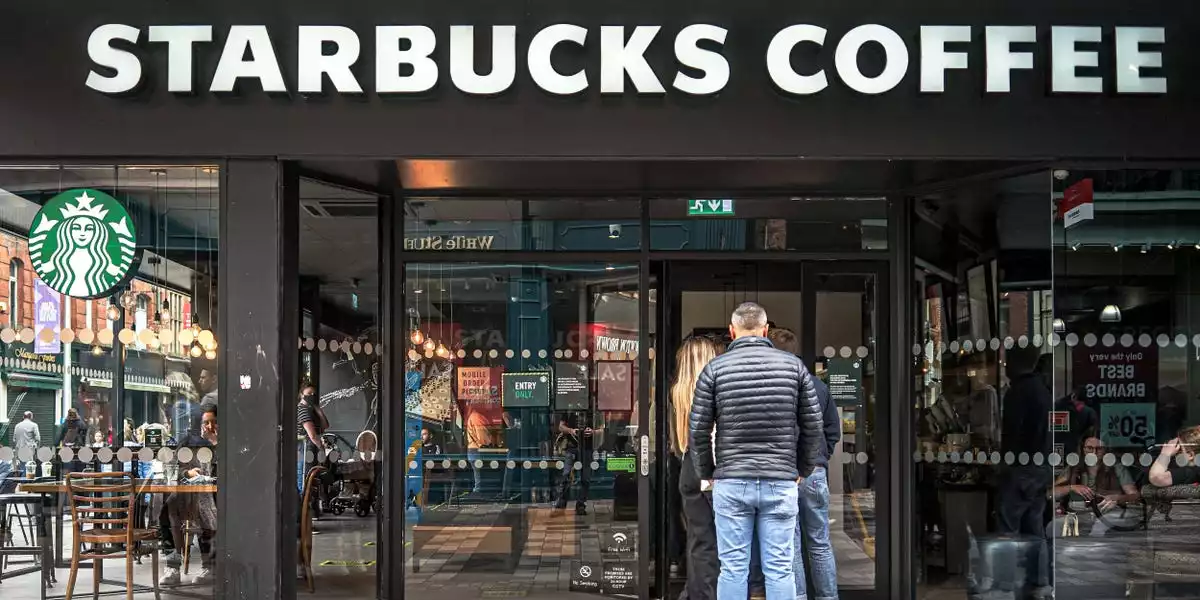

A Calculated Recalibration: Starbucks’ Portfolio Pruning in a Shifting Retail Landscape
Starbucks’ recent announcement to shutter just over 100 stores across the U.S. and Canada—a mere 1 percent of its North American presence—has rippled through the business world with a resonance that belies its modest scale. While the company has yet to specify the precise geographies or formats affected, early signals point to a cross-section of urban flagships, suburban inlines, and mall-based cafés in states as varied as California, Massachusetts, Oregon, and Washington. This move, couched in the language of community stewardship, is in fact a meticulously orchestrated response to a confluence of market forces remaking the very DNA of modern retail.
The New Physics of Coffee Retail: Hybrid Work, Cold Beverages, and Digital-First Demand
The pandemic’s aftershocks have fundamentally altered the gravitational pull of foot traffic. Hybrid work has hollowed out the morning commuter rush in downtown cores—once the lifeblood of Starbucks’ urban outposts in cities like Seattle and Washington, D.C. The “third place” visits that once defined the brand’s ethos now drift later into the day, and increasingly, into residential neighborhoods.
Meanwhile, the beverage mix itself is evolving: cold drinks now account for more than 75 percent of U.S. sales. This shift, while lucrative, strains legacy bar layouts and lengthens drink build times, exposing the limitations of smaller, older cafés ill-suited for the new order. Starbucks’ answer is twofold:
- Accelerated Portfolio Management: Historically, the company pruned 50–150 underperforming stores annually. This cycle, however, is distinct—part of an aggressive pivot toward drive-thru, pick-up, and digitally native formats.
- Capital Reallocation: By exiting less-productive units, Starbucks frees up capital for labor, next-gen equipment (notably, the Siren System line slashing beverage dwell time by half), and expansion into higher-yield suburban corridors.
Digital ordering now comprises more than 30 percent of U.S. transactions, yet many of the soon-to-be-shuttered stores lack the infrastructure to stage mobile pick-ups efficiently. Drive-thru units, by contrast, generate tickets roughly 80 percent higher in value, and the company’s investment in automation—Clover Vertica and Mastrena II espresso platforms—signals a future where smaller footprints can deliver quality at reduced labor intensity.
Economic and Social Undercurrents: Labor, Real Estate, and the Data Flywheel
Starbucks’ closures are not simply about underperformance—they are a nuanced response to a thicket of economic and social pressures:
- Labor Economics: Unionization momentum and rising wage floors are compressing margins. Selective closures allow Starbucks to dilute exposure to activist hotspots without igniting a broad anti-union backlash.
- Real Estate Volatility: Rent-to-sales ratios have breached historic guardrails in high-street locations, as post-pandemic rent escalations outpace sales recovery. Landlords in secondary malls and central business districts now face vacancy risk, and Starbucks’ exit can trigger co-tenancy clauses, destabilizing adjacent retailers.
- Safety and Brand Risk: Though not overtly cited, operational safety and rising insurance premiums remain material concerns in certain urban districts.
Less obvious, but equally consequential, is the impact on Starbucks’ data apparatus. Each closure removes a node from the company’s proprietary demand model—fewer sensors, fewer point-of-sale feeds, fewer app geo-pings. To compensate, expect intensified partnerships with third-party mobility and telematics platforms, as Starbucks seeks to maintain the integrity of its data flywheel.
Strategic Ripples: What Starbucks’ Move Signals for the Broader Retail Ecosystem
The implications of Starbucks’ portfolio pruning extend well beyond coffee. For corporate strategists, the message is clear: brick-and-mortar footprints must now be relentlessly data-validated and format-appropriate. Underperforming urban units may never return to pre-2020 volumes, and the bar for survival is rising.
- Retail Technology Vendors: There is a surging demand for automated cold-beverage stations, predictive ordering software, and line-balancing analytics as chains compress beverage prep cycles.
- Commercial Real Estate Investors: The landscape is bifurcating—trophy urban corners may see rents reset downward, while suburban drive-thru pads command a premium. Flexibility in ground-lease structuring is now a key differentiator.
- Labor and Supply Chain: Targeted closures can dampen local union density but may galvanize broader organizing efforts. Supply-chain operators must recalibrate distribution models to accommodate a suburban-heavy network.
Starbucks’ 1 percent network reduction is not a retreat, but a strategic “gardening” exercise—one that reallocates resources toward formats aligned with digital loyalty, cold-beverage dominance, and the suburbanization of mobility. For retail leaders, the lesson is unmistakable: in an era of perpetual disruption, physical footprints must earn their keep or be swiftly pruned, lest they become liabilities in a landscape defined by data, agility, and relentless consumer evolution.

 By
By
 By
By
 By
By
 By
By



 By
By







