

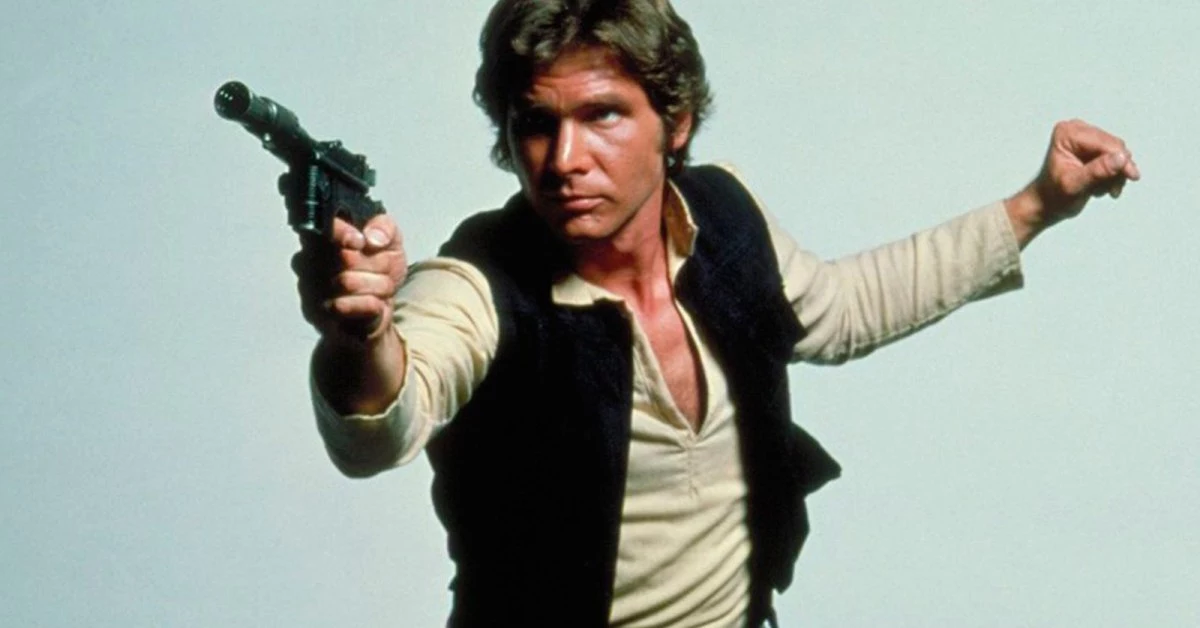

Star Wars Day as a case study in franchise economics without a blockbuster tailwind
May 4 has evolved from a fan-driven cultural moment into a highly engineered retail event, and this year’s Star Wars Day promotions underscore how Disney and its commerce partners are monetizing intellectual property (IP) during a content lull. With no immediate theatrical catalyst and no Disney+ release generating Mandalorian-level momentum, the center of gravity shifts to what the franchise already owns in abundance: a deep back-catalog of games, evergreen collectibles, and lifestyle licensing.
The strategy is visible in the breadth and aggressiveness of discounts—particularly on software and high-volume merchandise. A price point like Star Wars Jedi: Survivor dropping to roughly $10.75 on PC is not merely a consumer-friendly deal; it’s a signal of how publishers and platforms now treat mature titles as high-elasticity assets. Once a game’s premium window closes, the objective becomes maximizing lifetime value through periodic demand spikes tied to predictable tentpoles like May 4.
For Disney, the commercial logic is straightforward: when new narrative supply slows, the IP’s economic engine leans harder on distribution, licensing, and retail orchestration. For retailers, the day functions as a traffic magnet—one that can be paired with loyalty mechanics and cross-category bundling to increase basket size.
—
Discounting as inventory strategy—and as a behavioral lever in digital commerce
The most striking feature of this year’s Star Wars Day landscape is the depth of discounting across both digital and physical channels, revealing two overlapping realities: inventory pressure in tangible goods and margin-flexibility in digital storefronts.
Key dynamics shaping the promotion cycle include:
- Digital marginal cost and price volatility: Software can be discounted aggressively because distribution costs are minimal and storefront competition is intense. Deep cuts on PC and console titles reflect a market where consumers are trained to wait for sales cycles—and where platforms compete for attention as much as revenue.
- Back-catalog extraction: Discounting older or recently peaked titles is a disciplined way to harvest incremental revenue from assets that have already amortized much of their development and marketing spend.
- Physical inventory optimization: Promotions on collectibles—especially Lego Star Wars sets with cuts up to ~25%—also read as a channel-management decision. Retailers and distributors reduce holding risk on slower-moving SKUs, even if it means tolerating narrower margins for a short window.
- Loyalty and gamified spend thresholds: Lego’s tiered Insider gifts illustrate a broader playbook: rather than relying solely on price cuts, brands use loyalty programs to create perceived exclusivity and encourage incremental spend. It’s a retail analogue to subscription retention tactics—rewarding engagement, not just transactions.
This is not discounting as desperation; it is discounting as calendarized demand engineering. Star Wars Day provides a reliable narrative wrapper that makes promotions feel celebratory rather than purely price-driven, protecting brand tone even as prices reset.
—
From collectibles to connected homes: Star Wars as a consumer technology layer
Perhaps the most strategically revealing aspect of the promotions is how thoroughly Star Wars now spans consumer electronics and smart-home ecosystems. Bundles like an Echo Dot paired with a Grogu stand are more than novelty merchandising—they are an attempt to embed entertainment IP into the devices consumers interact with daily.
This convergence matters for business and technology leaders because it points to a future where franchises compete not only in theaters or streaming charts, but in ambient computing environments:
- IP as a hardware differentiator: Character-themed accessories and limited bundles can nudge consumers toward a device ecosystem, especially in categories where core hardware features have plateaued.
- Personalization as product value: Modular products such as Nanoleaf LED panel kits align with a demographic that treats home environments as programmable identity spaces—ideal terrain for fandom-driven customization.
- A pathway to deeper integrations: Today’s tie-ins are largely aesthetic, but the commercial opportunity grows if platforms enable richer interoperability—lighting scenes synchronized to gameplay, voice assistant routines themed to content releases, or APIs that connect smart-home behaviors to streaming moments.
In practical terms, Star Wars Day promotions show how IP can function as a soft interface layer—a way to make technology feel more personal, more expressive, and more emotionally resonant. That emotional resonance is monetizable, particularly when it increases daily touchpoints with a brand.
—
What the May 4 retail surge signals for Disney, retailers, and the next phase of IP strategy
The macro backdrop—persistent consumer caution and sensitivity to discretionary spending—helps explain why promotions are calibrated to reduce friction. Discounts act as a bridge between fandom and affordability, keeping engagement warm until the next major content wave arrives. At the same time, the omnichannel nature of the event highlights a structural constraint: brick-and-mortar retailers must increasingly match online parity pricing while carrying higher operating costs, making loyalty programs and experiential hooks more important.
Several forward-looking implications stand out:
- Data-driven merchandising will become the differentiator: The next step is unifying customer signals—e-commerce purchases, in-store behavior, digital downloads, and content consumption—into actionable profiles that enable more precise cross-sell and fewer blanket discounts.
- Bundles will evolve from “cute” to strategic: Hardware tie-ins become materially more powerful when paired with exclusive digital value—skins, early access, or interactive features that justify premium pricing without eroding brand equity.
- Brand equity management will tighten: If deep discounts become too frequent, consumers anchor to sale pricing. The counterweight is value-added bundling and periodic premium collector positioning, preserving the sense that the IP can still command full-price prestige.
Star Wars Day 2026’s promotions ultimately read as a sophisticated exercise in modern franchise management: a coordinated monetization of legacy assets across gaming, collectibles, lifestyle goods, and smart-home tech, designed to keep the brand present in everyday life even when the content pipeline is between peaks. The enduring lesson for the broader entertainment and retail economy is that the most resilient IPs no longer rely on a single blockbuster moment—they operate as year-round commercial ecosystems, with May 4 serving as a highly optimized ignition point.

 By
By
 By
By

 By
By
 By
By

 By
By








