

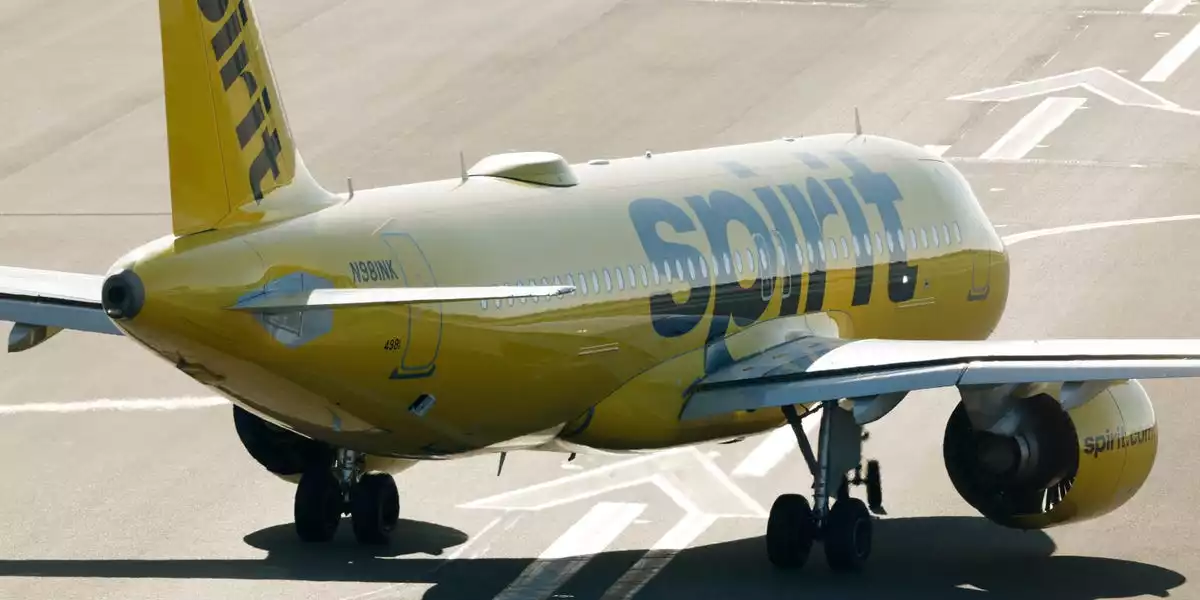

Spirit Airlines at the Crossroads: Navigating the Storm in Ultra-Low-Cost Aviation
Spirit Airlines, long synonymous with the no-frills, ultra-low-cost carrier (ULCC) model, now finds itself at a precarious inflection point. The company’s recent declaration of “substantial doubt” about its ability to remain a going concern over the next year is a stark warning—not just for investors, but for the entire North American airline ecosystem. The airline’s $245.8 million Q2-25 net loss, despite having shed $800 million in debt through a post-Chapter 11 restructuring this spring, signals deeper structural headwinds that transcend mere balance sheet management.
The Shifting Sands of Demand and Competitive Pressure
The turbulence facing Spirit is rooted in a confluence of macroeconomic and industry-specific forces. February’s tariffs have triggered a subtle, yet decisive, retrenchment in discretionary spending among middle-income households. Retail and lodging data paint a picture of consumers shifting budgets toward essentials, leaving price-sensitive leisure travel—the very lifeblood of Spirit’s revenue model—exposed to compression. In contrast, legacy carriers have deftly pivoted to premium-cabin upsell and corporate contracts, cushioning the blow of leisure demand softness.
Spirit’s challenges are compounded by a classic K-shaped recovery in air travel:
- ULCCs like Spirit: Over 85% of revenue is tied to domestic leisure, with little insulation from shocks.
- Legacy carriers: Diversified revenue streams and premiumization offset volatility.
Meanwhile, the ULCC segment is awash in capacity. Frontier, Allegiant, and upstarts like Breeze continue to chase market share, fueling fare wars on key Florida, Texas, and Mid-Atlantic routes. Spirit’s own capacity cuts, though necessary to relieve fixed-cost pressures, threaten to erode its network relevance—a delicate paradox for a carrier whose survival depends on scale.
Operational Paradoxes and the Technology Conundrum
Spirit’s strategic response has been a blend of tactical retrenchment and selective innovation. The “Go Comfy” blocked-middle-seat product marks a notable shift toward premiumization, but it also undermines the traditional ULCC cost advantage by reducing available seat miles (ASM). High aircraft utilization and dense seating are the bedrock of ULCC economics; any deviation, even in the name of yield improvement, risks eroding the model’s core strengths.
The carrier’s liquidity crisis is exacerbated by escalating collateral demands from its credit-card processor. Industry chatter suggests that hold-backs have climbed into the low double digits, effectively locking up revenue as restricted cash. This dynamic has forced Spirit to contemplate asset sales—aircraft, gates, and real estate—at a time when trading values are firm but sale-leasebacks threaten to inflate long-term lease liabilities.
On the technology front, Spirit’s historical prowess in algorithm-driven ancillary upsell—bags, seat selection, change fees—remains a vital revenue stream, accounting for nearly half of total income. Yet, the next leap—dynamic merchandising, bundled offers, and real-time price elasticity testing—requires capital that is in short supply. Deferred fleet renewal, particularly the lag in replacing older A320ceos with more fuel-efficient neos, further limits the carrier’s ability to leverage predictive maintenance and cost optimization platforms.
Capital, Consolidation, and the Future of ULCCs
Spirit’s capital structure is now a high-wire act. While the global shortage of narrow-body aircraft offers a lifeline—allowing asset sales at or above book value—the long-run implications of increased lease liabilities are sobering. Access to unsecured funding is narrowing, with high-yield spreads widening and Spirit’s CCC credit rating restricting bond market appetite. The remaining options—convertible notes with heavy dilution or structured deals backed by loyalty-program cash flows—are far from ideal.
The specter of industry consolidation looms large. The DOJ’s veto of the JetBlue–Spirit merger in 2023 closed one door, but Spirit’s current distress could reopen M&A possibilities through creative structures, such as slot divestitures or partial asset sales. The churn in airport real estate—particularly at capacity-constrained hubs like LGA and FLL—will reset competitive dynamics, with legacy and hybrid carriers poised to capitalize on any forced divestitures.
For industry stakeholders, the implications are clear:
- Legacy carriers: Opportunity to acquire strategic slots and gates, but risk of fare disruption if Spirit exits key markets.
- Lessors and lenders: Need to recalibrate lease rates and consider flexible, power-by-the-hour structures.
- Technology vendors: Distressed carriers are ripe for outcome-based, AI-driven solutions that can deliver immediate cost savings.
- Policymakers: Regulatory clarity on ULCC consolidation is urgently needed to safeguard competition and consumer choice.
Spirit’s predicament is not an isolated event; it is a stress test for the entire post-pandemic airline thesis. The interplay of macroeconomic shocks, financing constraints, and evolving consumer segmentation is rewriting the rules of air-travel competitiveness. As Fabled Sky Research and other analysts observe, the outcome will hinge on the industry’s willingness to embrace capital discipline, invest in technology, and navigate regulatory complexities with agility. The next cycle of North American aviation will be shaped as much by Spirit’s fate as by the strategic choices its rivals make in the shadow of its struggle.


 By
By
 By
By
 By
By
 By
By


 By
By







