


A New Era in Baltic Air Defense: Spain’s Crow System and the Rise of Effect-Centric Security
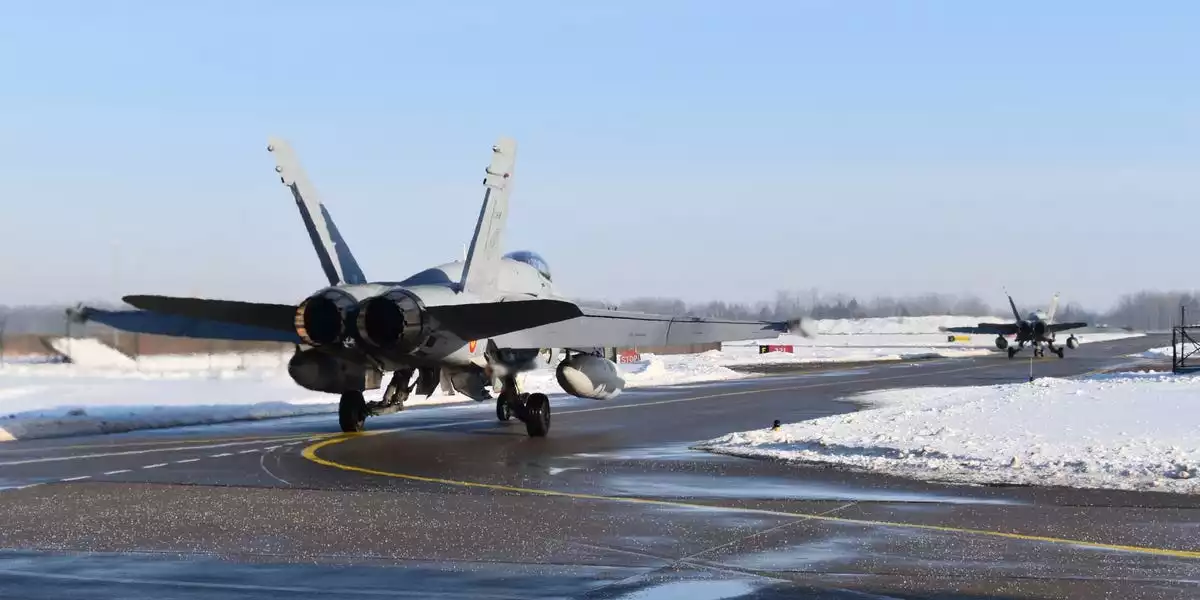
The windswept tarmac of Šiauliai Air Base in Lithuania, long a stage for NATO’s rotational air policing, now hosts a quiet revolution. Spain’s 15th Wing, arriving with its Eurofighter Typhoons, has brought with it a technological vanguard: Indra’s “Crow” counter-drone system. This marks the first deployment of such a capability by a Spanish detachment in the Baltic mission—a move that signals not just a tactical upgrade, but a profound doctrinal shift in how Europe confronts the evolving threat of small uncrewed aerial systems (sUAS).
The Drone Challenge: Gray-Zone Warfare and the Asymmetry of Response
The Baltic skies have become a proving ground for the new face of hybrid warfare. Since early 2022, NATO has logged over 400 drone-related anomalies near its eastern airspace. The economics are as stark as the threat: a €20,000 Russian drone can force a €90-million fighter into the air, exposing the unsustainable asymmetry at the heart of current defense postures. Drones, with their low cost and deniable origins, have become the tool of choice for gray-zone aggression—testing the boundaries of NATO’s resolve without triggering full-scale escalation.
Crow’s arrival is a direct response to this challenge. By fusing active radar, passive RF sensing, electro-optics, and AI-driven classification, the system offers a layered, modular defense. Its “soft-kill” electronic warfare jamming neutralizes threats without the political and operational risks of kinetic engagement, while modular “hard-kill” options—such as directed energy—stand ready for future integration. This effect-centric approach, where the outcome rather than the platform is paramount, is rapidly supplanting the old logic of air defense.
Technological Convergence: Modular Design and the Digital Battlefield
Crow’s architecture is emblematic of the broader transformation sweeping European defense:
- Open, Software-Defined Systems: Crow’s modularity enables rapid updates as adversaries iterate frequencies and protocols, compressing the adaptation cycle from years to mere weeks.
- Edge AI and Latency Reduction: Processing on the sensor head slashes reaction times, a critical edge as drones close in at speeds up to 40 meters per second.
- Electronic Warfare Meets Cyber: Over-the-air protocol exploitation blurs the line between jamming and cyber operations, feeding captured telemetry into broader intelligence networks and enhancing situational awareness.
The system’s interoperability also pressures NATO’s technology apparatus to accelerate standardization. As the alliance evaluates a patchwork of U.S., Israeli, and indigenous European solutions, the need for a universal C-UAS data schema becomes urgent—Crow’s deployment may well serve as the catalyst.
Strategic and Industrial Ripples: From Procurement to Psychological Deterrence
The implications of Crow’s deployment ripple far beyond the Lithuanian runway:
- Budgetary Realignment: European defense ministries are quietly shifting 8–12% of future air-defense budgets toward counter-drone capabilities, reallocating funds from traditional fighter upgrades and medium-range missiles to layered SHORAD (short-range air defense).
- Industrial Positioning: By field-proving Crow under NATO command, Indra strengthens its hand for the EU’s European Sky Shield Initiative—a market projected at €4–6 billion over the coming decade.
- Supply Chain Autonomy: With minimal reliance on U.S. export-controlled components, Crow aligns with Brussels’ push for strategic autonomy, reducing geopolitical risk.
- Civil-Military Convergence: Ports, airports, and energy operators are already eyeing C-UAS solutions, and military validation is accelerating civilian adoption. The boundaries between defense and commercial markets are blurring, expanding the addressable market and fostering dual-use innovation.
On the ground, the presence of Crow is more than a technical upgrade—it is a psychological signal. For Baltic capitals, it marks a transition from symbolic “flag-showing” rotations to a persistent, adaptive defense posture. For adversaries, it raises the cost and uncertainty of gray-zone operations.
The Road Ahead: Layered Defense, Data Fusion, and the Business of Security
The Spanish deployment of Crow is an early marker of a structural pivot in European security. The coming years will see:
- A surge in fast-tracked procurement of sensor-rich, AI-enabled C-UAS battalions, with Germany, Poland, and Nordic states likely leading the charge.
- A race for software-driven interoperability, where vendors unable to provide open APIs and data fusion risk exclusion from the emerging defense ecosystem.
- Rapid maturation of directed-energy “hard-kill” options, driving down the cost-per-engagement and further shifting the economics of air defense.
- Regulatory cascades as civil authorities tighten UAV corridors, generating new demand for compliance and geofencing technologies.
- Industrial consolidation as major defense primes seek to secure sensor libraries and RF intellectual property, with boutique cyber-EW firms emerging as prime acquisition targets.
For executives and technology leaders, the message is clear: positioning within this layered, software-defined defense architecture is now a prerequisite for relevance and growth. The drone age is here, and those who adapt swiftly—integrating modularity, interoperability, and dual-use thinking—will shape both the security and commercial landscapes of the decade to come.

 By
By
 By
By
 By
By
 By
By

 By
By
 By
By
 By
By







