


A rare veil over SpaceX: what Starfall’s muted flight signals to markets and governments
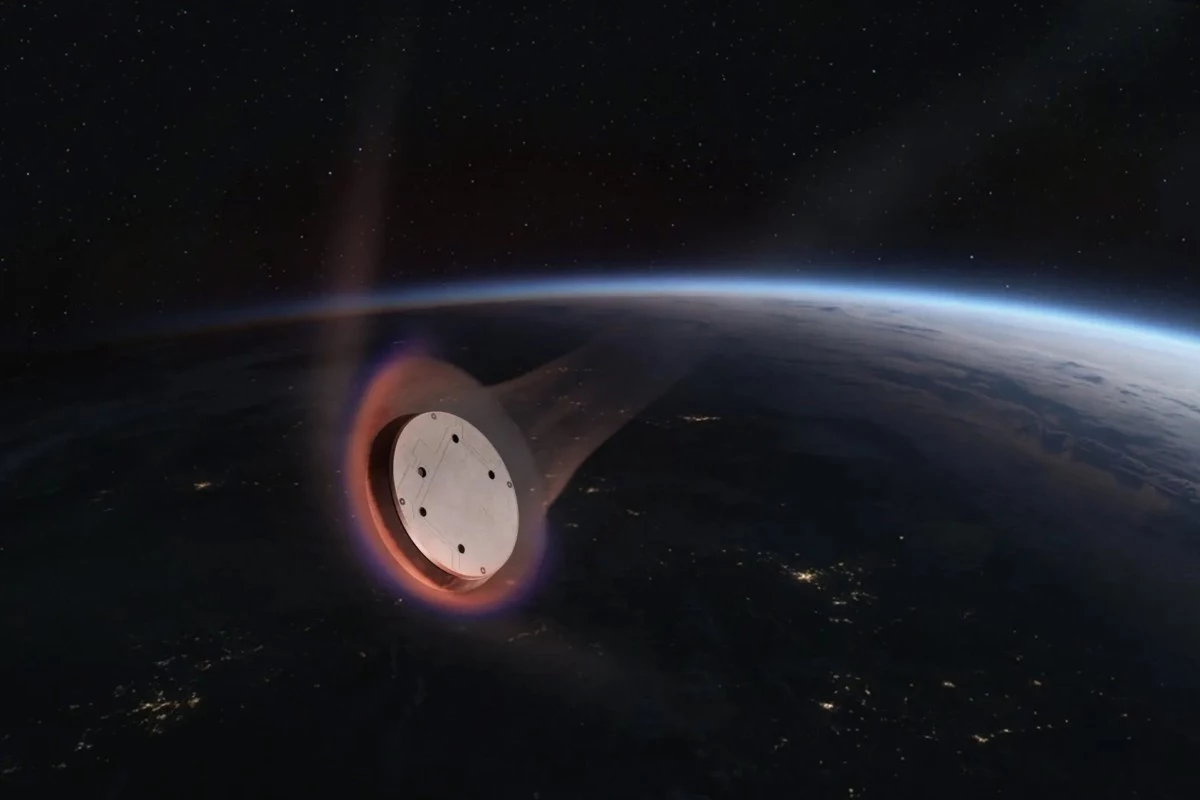
SpaceX has built its modern brand on radical visibility—webcasts, telemetry, and a public narrative of iterative engineering. That is why the clandestine test flight of “Starfall,” a new microgravity laboratory capsule, stands out as more than a one-off communications choice. Launched on a Falcon 9 from Cape Canaveral Space Force Station, the mission offered only the booster ascent on livestream. The capsule’s orbital insertion, on-orbit activities, and reentry outcome have not been publicly detailed.
For a company now operating under the scrutiny and cadence of a high-profile IPO, the decision to limit disclosure invites two parallel interpretations that can coexist without contradiction:
- Operational prudence: early-stage spacecraft testing can involve proprietary systems, sensitive partners, or unproven reentry profiles.
- Strategic signaling: selective opacity can indicate that the payload, customer set, or mission profile has dual-use relevance, even if no military application is formally confirmed.
The result is a vacuum that markets and policymakers will fill quickly—especially given SpaceX’s existing U.S. Department of Defense (DoD) relationships, including work tied to Project Cargo concepts for rapid global logistics. Starfall’s silence, in other words, becomes part of the message.
Starfall’s technical proposition: microgravity manufacturing meets rapid logistics architecture
At face value, Starfall is positioned as a microgravity R&D infrastructure platform—a capsule designed to host experiments and manufacturing processes that benefit from orbital conditions. That places it squarely in the emerging commercial thesis that “space is a factory,” not just a destination.
Key capabilities implied by the Starfall concept include:
- Microgravity research and in-space manufacturing
Starfall’s lab orientation points to high-value domains such as materials science, biomanufacturing, and precision assembly. Microgravity can enable purer crystal growth, novel alloys, and biological processes that are difficult to replicate on Earth—an argument that has long been scientifically credible but commercially intermittent due to cost and cadence constraints. SpaceX’s launch economics and operational tempo could change that equation.
- Rapid point-to-point delivery via suborbital or orbital hops
The more disruptive claim is logistics: using spaceflight to compress delivery timelines from days to hours. Even if early use cases are narrow—high-value, time-critical payloads—the architecture aligns with a future where space becomes a premium shipping lane for select categories of cargo.
- Modular payload bay design and “mission-flex” engineering
The capsule’s modularity is central to the dual-use conversation. A payload bay that can host sensitive experiments can also host tactical cargo. This is not unique to SpaceX; it reflects a broader aerospace trend toward platforms that can be reconfigured across customer types with minimal redesign—commercial by default, defense-capable by design.
Technologically, the most important detail may be what remains undisclosed: reentry performance, recovery method, and turnaround time. Those metrics determine whether Starfall is primarily a laboratory, a logistics vehicle, or a bridge between both.
The business case after the IPO: valuation narratives, defense adjacency, and new capital flows
The timing—Starfall’s opaque mission coinciding with the post-IPO spotlight—adds a distinctly financial dimension. Public markets reward not only revenue, but credible optionality: platforms that can expand into adjacent, defensible markets with large total addressable spend.
Starfall touches three investor narratives at once:
- New commercial frontiers in in-orbit manufacturing
If Starfall enables repeatable, scalable microgravity production, it could attract capital beyond traditional space venture funding—pulling in institutional investors looking for advanced manufacturing exposure, and potentially unlocking debt-market financing once cash flows become contract-like.
- Defense budget leverage and procurement gravity
With geopolitical tensions and supply-chain fragility shaping defense planning, agencies may prioritize resilient, distributed logistics. A space-enabled delivery capability—especially one that can be surged—fits the DoD’s interest in responsiveness. SpaceX’s existing defense footprint makes it a natural contender if doctrine and budgets align.
- A dual-use premium—paired with a dual-use discount
Dual-use platforms can command a valuation premium because they expand addressable markets. Yet they can also introduce a discount due to regulatory friction, classification constraints, and reputational risk. Starfall’s secrecy may be interpreted as a step toward defense relevance, which can be attractive to some shareholders and uncomfortable to others—particularly if transparency norms shift.
For competitors, Starfall also raises the bar: not merely launching payloads, but offering integrated “space logistics-as-a-service” that blends spacecraft, launch cadence, ground integration, and data systems into a single product.
Strategic and regulatory pressure points: deterrence logic, escalation risk, and the rules of dual-use space
If Starfall evolves toward rapid delivery, the strategic implications extend well beyond commercial shipping. A platform capable of high-speed global resupply could support humanitarian relief, industrial continuity, and emergency response—but it also maps cleanly onto military concepts such as contested logistics and “just-in-time” sustainment.
That convergence creates three pressure points policymakers will need to manage:
- Deterrence versus misinterpretation
A capability that can deliver cargo rapidly—potentially including sensitive items—may deter adversaries by reducing the effectiveness of interdiction. Yet it can also heighten escalation risk if launches are misread as offensive intent. Clear protocols, notification norms, and allied coordination become essential.
- Regulatory evolution and classification boundaries
The mission’s opacity is likely to intensify scrutiny across the FAA, DoD, and State Department on licensing, export controls, and what constitutes acceptable disclosure for dual-use spacecraft. The industry may see tighter frameworks around payload ambiguity, reentry profiles, and technology transfer.
- Global competitive dynamics and interoperability
China and Europe are advancing rapid-launch and space logistics concepts of their own. Starfall’s emergence accelerates a competitive cycle in which allies may push for shared standards, traffic deconfliction, and interoperability—both to enable collaboration and to reduce the risk of accidents or miscalculation.
Starfall’s most consequential impact may be cultural: it tests whether the next phase of commercial space is defined by open engineering theater or by selective silence shaped by defense adjacency and capital-market expectations. If SpaceX is moving toward a portfolio where some missions are inherently quiet, the industry will have to recalibrate what “commercial” means when the same capsule can be a laboratory one week and a strategic logistics asset the next.


 By
By

 By
By
 By
By

 By
By
 By
By







