
SpaceX’s third-quarter results turned a long-running narrative into a measurable financial shift: the company’s AI business, reported as Super Intelligence, generated more revenue than Connectivity for the first time, even as Starlink and related services remained the main source of operating profit. In its SEC-filed third-quarter release, SpaceX reported $14.575 billion in revenue for the quarter ended September 30, up 161% from $5.576 billion a year earlier, alongside $4.4 billion in net income, $2.791 billion in operating income, and $8.809 billion in Adjusted EBITDA.
Why that matters is straightforward. SpaceX is no longer asking investors, suppliers, or customers to imagine a future AI business sitting beside rockets and satellites. It is reporting one at scale. The harder question now is whether this is the start of a durable operating franchise or a capital-hungry expansion whose economics still depend on Starlink cash flow, large cloud agreements, acquisitions, and continued confidence in Elon Musk’s integrated growth strategy.
The best answer from this quarter is: both stories are visible, but they are not equally mature.
AI is now the biggest revenue line, not the biggest earnings line
The headline shift is in the segment mix. Super Intelligence posted $7.560 billion in revenue, ahead of Connectivity at $5.248 billion and Space at $1.767 billion. SpaceX said SI revenue rose 830% year over year, driven primarily by new cloud-services agreements, the acquisition of Cursor, and greater adoption of Grok.
That is a real commercial milestone. But profitability still looks much more like a Starlink story than an AI story. Connectivity generated $2.367 billion in operating income in the quarter, versus $431 million for SI. Space recorded a $7 million operating loss. So while AI is now the largest revenue segment, Connectivity remains the business doing most of the visible operating work of supporting the company.
That distinction matters for nearly everyone dealing with SpaceX. For satellite broadband users and enterprise network buyers, it suggests the connectivity business is still the stabilizing cash engine. For investors and suppliers, it means the new AI scale has not yet erased the importance of recurring satellite-service economics. And for competitors in launch and cloud infrastructure, it shows SpaceX is trying to turn several very different businesses into one financing machine.
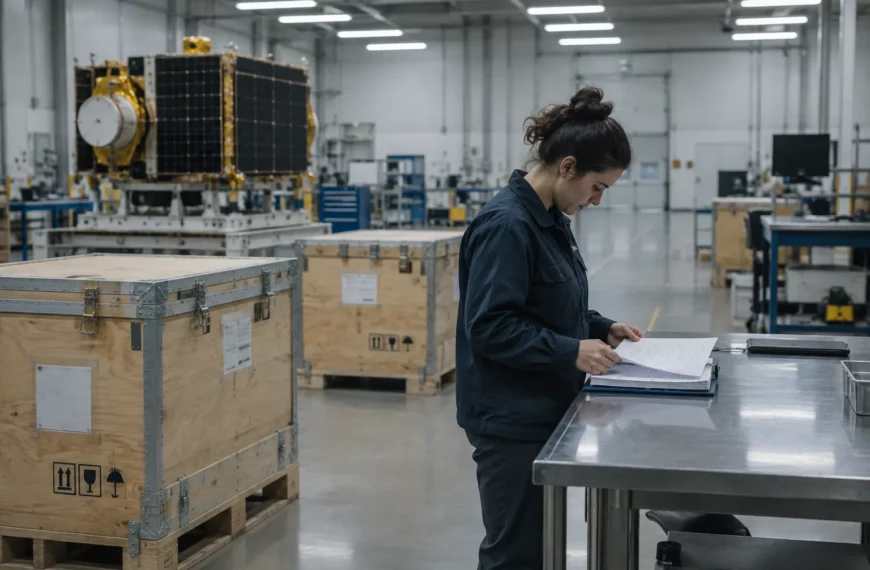
The launch side is part of that machine, not a side note. SpaceX reported 35 total launches in the quarter, including 12 customer launches and 23 internal launches. It also said its first revenue-generating Starship mission delivered 26 Starlink V3 satellites, which it described as adding about ten times the downlink capacity of a Falcon 9 Starlink launch. Even in a quarter dominated by AI headlines, the company’s core physical network kept expanding.
The AI buildout is real, but its economics are still partly hidden
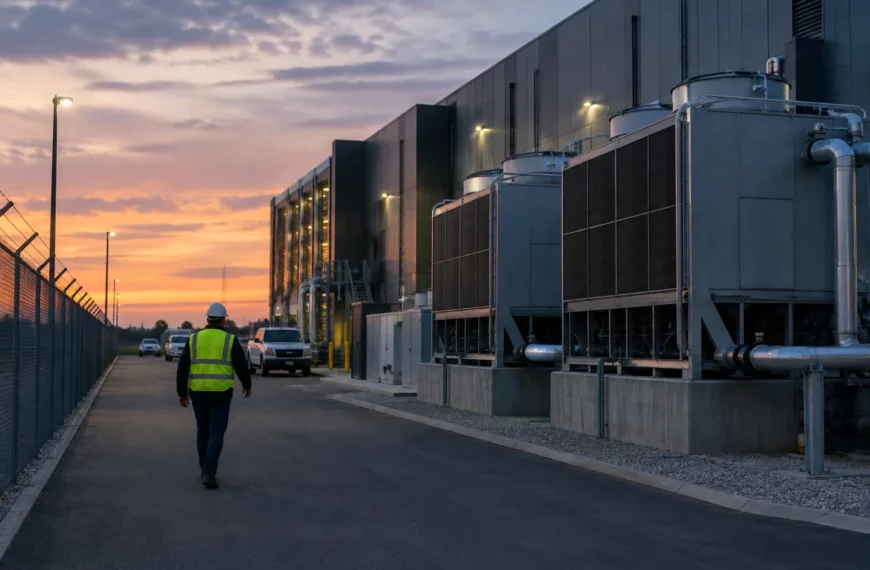
The limiting fact in these results is capital intensity. SpaceX disclosed $19.995 billion in quarterly capital expenditure, including $16.444 billion in SI infrastructure, $1.543 billion for Connectivity, and $1.606 billion for Space. It also said nameplate compute reached 1.7 gigawatts as of September 30, up from 1.4 GW at June 30 and 0.6 GW a year earlier, as it continued building Colossus II.
That spending scale changes how the AI revenue surge should be read. It is evidence of demand and execution, but not yet proof of settled economics. SpaceX said SI solutions and infrastructure revenue was $7.022 billion, including cloud-services activity, while advertising contributed another $538 million. It also said it completed its acquisition of Cursor on August 14 at an implied equity value of $60 billion.
What the filing does not show is just as important. There is no full public breakdown of SI revenue into cloud infrastructure, model subscriptions, applications, acquired software activity, or any committed-customer components. The company does not disclose customer concentration, renewal rates, average contract economics, utilization of the 1.7-GW compute fleet, power costs, or segment-level free cash flow. Those missing pieces are the difference between a fast-growing AI line item and a durable AI utility.
Margins remain hard to read for the same reason. SI posted positive operating income, but only $431 million against much larger revenue and far larger capital spending. The filing also says SI operating income reflected $1.2 billion of share-based compensation tied to Cursor. Meanwhile, SI Adjusted EBITDA was $4.953 billion, a sizable number but one that does not answer the more practical question: whether customers are paying enough, consistently enough, to cover the full cost of hardware, power, software, and depreciation over time.
That makes Starlink’s role more important, not less. SpaceX appears to be using a recurring connectivity base, a still-active launch business, public-market access, and customer contracts to fund simultaneous bets on compute, software, satellites, and applications. The quarter shows that model can produce extraordinary growth. It does not yet show how transparent the returns will be once acquisitions, internal buildouts, and multiple business lines are folded together.
The Tesla merger talks raise the stakes from operations to governance
The earnings call added a second layer of significance. Musk said SpaceX and Tesla had formed special committees of independent directors to discuss a possible merger, a development Axios reported. He said closer cooperation could benefit AI, chips, robotics, and connectivity, while also warning against treating any transaction as certain.
For now, that is a governance story, not a deal story. No valuation, exchange ratio, financing plan, committee membership, timetable, or recommendation has been disclosed. But even the existence of committees matters because it reframes how this quarter should be judged. Investors are no longer just looking at whether SpaceX can grow AI faster than Starlink. They also have to ask who would control capital allocation across rockets, satellites, data centers, software, vehicles, robotics, and energy systems if the industrial perimeter gets even wider.
There is a bullish version of that future: tighter vertical integration lowers the cost and latency of building AI infrastructure, deploying chips, extending broadband coverage, and commercializing software. There is also a more skeptical version: internal transfers, acquisitions, and overlapping businesses make performance harder to evaluate just as spending accelerates.
SpaceX has clearly answered one question. AI is no longer an adjacent project inside the company; it is its largest reported revenue segment. The unresolved question is the more important one for the next year: whether that revenue line becomes a durable, legible business in its own right, or remains part of a broader expansion whose true economics still lean heavily on Starlink profits, big contracts, and confidence that one highly integrated company can keep funding several frontier industries at once.

 By
 By
 By

 By



 By